Posted on

BOOTH: read an extract

From the Booker-shortlisted, million-copy bestselling author of We Are All Completely Beside Ourselves comes an epic novel about the infamous, ill-fated Booth family.

SIX BROTHERS AND SISTERS. ONE INJUSTICE THAT WILL SHATTER THEIR BOND FOREVER

Junius is the patriarch, a celebrated Shakespearean actor who fled bigamy charges in England, both a mesmerising talent and a man of terrifying instability. As his children grow up in a remote farmstead in 1830s rural Baltimore, the country draws ever closer to the boiling point of secession and civil war.

Of the six Booth siblings who survive to adulthood, each has their own dreams they must fight to realise – but it is Johnny who makes the terrible decision that will change the course of history – the assassination of Abraham Lincoln.

Booth is a riveting novel focused on the very things that bind, and break, a family.

Read an extract below.


Sixteen years pass. The family grows, shrinks, grows. By 1838, the children number at nine, counting the one about to arrive and the four who are dead. Eventually there will be ten.

These children have:

A famous father, a Shakespearean actor, on tour more often than at home.

A paternal grandfather, skinny as a stork, with white hair worn in a single braid, his clothing also fifty years out of fashion, breech trousers and buckle shoes. He’s come from London to help out during their father’s long absences. He was once a lawyer, treasonably sympathetic to the American revolutionaries, enthusiastic for all things American. Visitors to his London house were made to bow before a portrait of George Washington. Now that he lives here, he hates it. He likens the farm to Robinson Crusoe’s island, himself a marooned castaway on its desolate shore. He’s rarely sober, which makes him less helpful than might have been hoped.

An indulgent mother. A dark- haired beauty with retiring manners, she’d once sold flowers from her family nursery on Drury Lane. She’d first seen their father onstage as King Lear and was astonished, when meeting him, to find that he was young and handsome. He’d had to perform the Howl, howl, howl speech right there in the London street before she’d believe he was the same man. “When will you spend a day with me?” he’d asked within minutes of learning her name. “Tomorrow?” and she’d surprised herself by saying yes.

During their brief courtship, he’d sent her ninety- three love letters, pressing his suit with his ambition, his ardor, the poems of Lord Byron, and the promise of adventure. Soon enough, she’d agreed to run away with him to the island of Madeira, and from there to America.

Perhaps adventure was more implied than promised outright. After they’d left their families in England, after they’d had their first child, after they’d arrived in Maryland and leased the farm on a thousand- year lease, after he’d arranged to move the cabin onto it, only then did he explain that he’d be touring without her nine months of every year. For nine months of every year, she’d be left here with his drunken father.

What else could he do? he asked, leaving no pause in which she might answer; he was a master of timing. He needed to tour if they planned to eat. And clearly, she and the baby couldn’t come along. There is nothing worse than an unhappy, complaining shrew for a wife, he’d finished, by way of warning. He didn’t plan on having one of those.

So here she’s been, on the farm, for sixteen years now. For seventeen years, almost without break, she’s been either expecting a baby or nursing one. It will be twenty continuous years before she’s done.

Later, she’ll tell their children it was Lord Byron’s poems that tipped the scales. She’ll mean this as a caution but she’ll know it won’t be taken as such. All her children love a good romance.

None of the children know that they’re a secret. It will come as quite a shock. They’ve no cause for suspicion. Much like the secret cabin, everyone they know knows they’re here.

Posted on

WE MOVE: READ AN EXTRACT

A debut brimful of the music and movement of multicultural London, to stand besides White TeethBrick Lane and The Buddha of Suburbia.

Here, beneath the planes circling Heathrow, various lives connect. Priti speaks English and her nani Punjabi. Without Priti’s mum around they struggle to make a shared language. Not far away, Chetan and Aanshi’s relationship shifts when a woman leaves her car in their drive but never returns to collect it. Gujan’s baba steps out of his flat above the chicken shop for the first time in years to take his grandson on a bicycle tour of the old and changed neighbourhood. And returning home after dropping out of university, Lata grapples with a secret about her estranged family friend, now a chart-topping rapper in a crisis of confidence.

Mapping an area of West London, these stories chart a wider narrative about the movement of multiple generations of immigrants. In acts of startling imagination, Gurnaik Johal’s debut brings together the past and the present, the local and the global, to show the surprising ways we come together.

We Move publishes 7th April. Find out more here.

Read an extract below:


After he’d done the evens, Paddy did the odds. For the five years that it had been on his route, the road was like any other, neat rows of newly planted trees casting speckled shadows over semidetached homes. But doing his rounds a few weeks ago, Paddy saw a group of old men dragging a piano out from fifty-eight and onto the pavement. And from then on, it was the road with the piano.

At first, Paddy thought it was for the taking. He could see it in his dining room, his little one learning to play. But one of its legs was bike-locked in place. There was a stool tucked under it. Wasn’t a sign or anything. It was simply there.

Passing it each day, Paddy would run his finger along the keys, high to low. He hadn’t seen anyone play it until now. He posted a letter for fifty-five and looked across the road. A young man sat down on the stool.

*

Umer rested his fingers on the keys, playing silent notes, waiting for the 90 to go. In the month since he started working, he’d walked one way to the chicken shop. But today, he’d left a little earlier than he needed to and, on a whim, gone a different way. He wondered how long the piano had been here, only minutes from his home, without him knowing. He tentatively voiced a chord.

He tried to improvise a little something, but repeating the movement, he realised it was a song he knew, nothing new under the sun and that. He switched up, jumping into a stride with a Fats Waller pomp, before stumbling onto a minor refrain that he came at sideways, thinking Thelonius Monk. Over the static of growing traffic, he looped a Dillalude, gliding into a familiar Soulquarian groove. Melodies came and went like passing thoughts, and cars, with their windows down to let out smoke, slowed to hear him hum Badu over The Twelfth of Never.

*

Priyanka’s bus pulled up. Hearing music, she looked out the window. A man was playing a piano on the street. He was wearing a red cap and matching polo shirt. She took a photo and sent it to her group chat. The replies were instant.

‘He’s kind of fit you know’

‘TF is he wearing?’

‘Have we finally found priya’s type?’

‘Thought this day would never come’

Priyanka replied with a Forever Alone meme.

‘All that time playing pain gonna final come in useful’

The girls used to crowd the practice room at break when she was preparing for her piano exam. She’d run through her pieces, and they’d chat away. She’d taken up the piano to strengthen her university applications. It was supposed to indicate she was a person beyond her studies. But then the music became its own type of academic pursuit. The bus moved on, and Priyanka glanced back at the house behind the piano, all its windows open.

*

Reggie stood in the family room listening to the music. The piano was Vi’s. He’d given most of her things away, but the piano had remained, silent for months.

She’d been standing right here, by the window, when it started. She coughed. ‘Must be something going around,’ she said.

They went to the GP. They went to the hospital. Lung cancer.

A few weeks later, he went for a check-up of his own. The doctor found a benign lump and suggested watchful waiting, whatever that meant. He’d left Vi at home to rest. When he reached the doorstep, he could hear her playing her piece upstairs. He put the key in the door but didn’t turn it, listening.

Vi was determined to keep living life. She filled the calendar the piano with all sorts. Janelle, their daughter, came with them to appointments, closing her hair salon in the middle of the day. Reggie rolled the strange words around in his head: cisplatin, etoposide. They sat next to Vi during chemo, watching, waiting. At home, he cooked and cleaned. There were still bins to take out, grass to cut. There was respite in scrubbing tiles, relief scouring mould from grout.

After chemo, Vi flushed her system clean with water. They were both in and out of the bathroom all day. That was the extent of his own little mass, an endless feeling of needing to go, and the frustration of never arriving. He went to check-ups almost hoping for the thing to malign. It would be neat, he thought, that after a full life together, they would die together. He couldn’t imagine life without her, and there was something romantic in the thought of dying in each other’s arms. Or at least in neighbouring beds.

When Reggie was finally admitted – a routine procedure, the doctor said – Vi was an inpatient. Janelle taught them how to talk to each other through computers. The connection in the hospital was off and on. When the call buffered, Reggie hung up and redialled. They picked up where they left off, going through old stories, playing the hits. After years of marriage, they knew them all by heart. But they were like old songs, the kind that when they came on you couldn’t not sing along. Vi did the one where her foot got trod on by Nina Simone. Reggie that one about the salmon.

The connection cut. Vi froze, lit blue by her screen. Reggie redialled.

‘Where was I? Right, so I climbed through the window–’

‘Some might say fell.’

They were young again, talking all night, the first signs of the sunrise filling their separate rooms.

‘Sing the sun awake,’ he said.

‘It’s late,’ Vi said. She always did this dance.

‘It would make my day. Do the one you wrote.’

She sang under her breath. People were sleeping. Her voice was fragile but perfectly clear, like thin ice. There was a delay in the connection, and he watched her mouth move a second or so before any sound came out, like she was miles away. She froze. 

He made his recovery in time for the funeral. 

The piano player finished and walked off. The day passed as it usually did, both slow and quick. When clouds appeared, Reggie went out with two rainbow-striped umbrellas and attached them to the piano. The rain cleared and the sun returned, casting multicoloured shadows across the keys. He brought the umbrellas in. He was woken by music in the middle of the night.

Posted on

Spring 2022 Highlights

Begin 2022 with satirical literary fiction, short stories and even a memoir on the intersections of race and art. We’re spotlighting our Spring 2022 highlights, from Pola Oloixarac’s examinations of art and violence in Mona and Gurnaik Johal’s short stories, to essays on race by Esi Edugyan and epic historical fiction by Karen Joy Fowler. Ultimately, these are page-turning reads that will grip you from the very first page.

Tell us what you’re reading by tweeting us @SerpentsTail.

Mona by Pola Oloixarac

The brilliant and provocative UK debut of a Latin American star of world literature, Mona is a wicked satire of the literary elite, exploring both art and violence.

We Move by Gurnaik Johal

Mapping an area of West London, the stories in We Move chart a wider narrative about the movement of multiple generations of immigrants. In acts of startling imagination, Gurnaik Johal’s debut brings together the past and the present, the local and the global, to show the surprising ways we come together.

Out of the Sun by Esi Edugyan

History is a construction. What happens when we bring stories consigned to the margins up to the light? How does that complicate our certainties about who we are, as individuals, as nations, as human beings? Two-time Booker Shortlistee and internationally bestselling author Esi Edugyan delivers a searing analysis of the relationship between race and art.

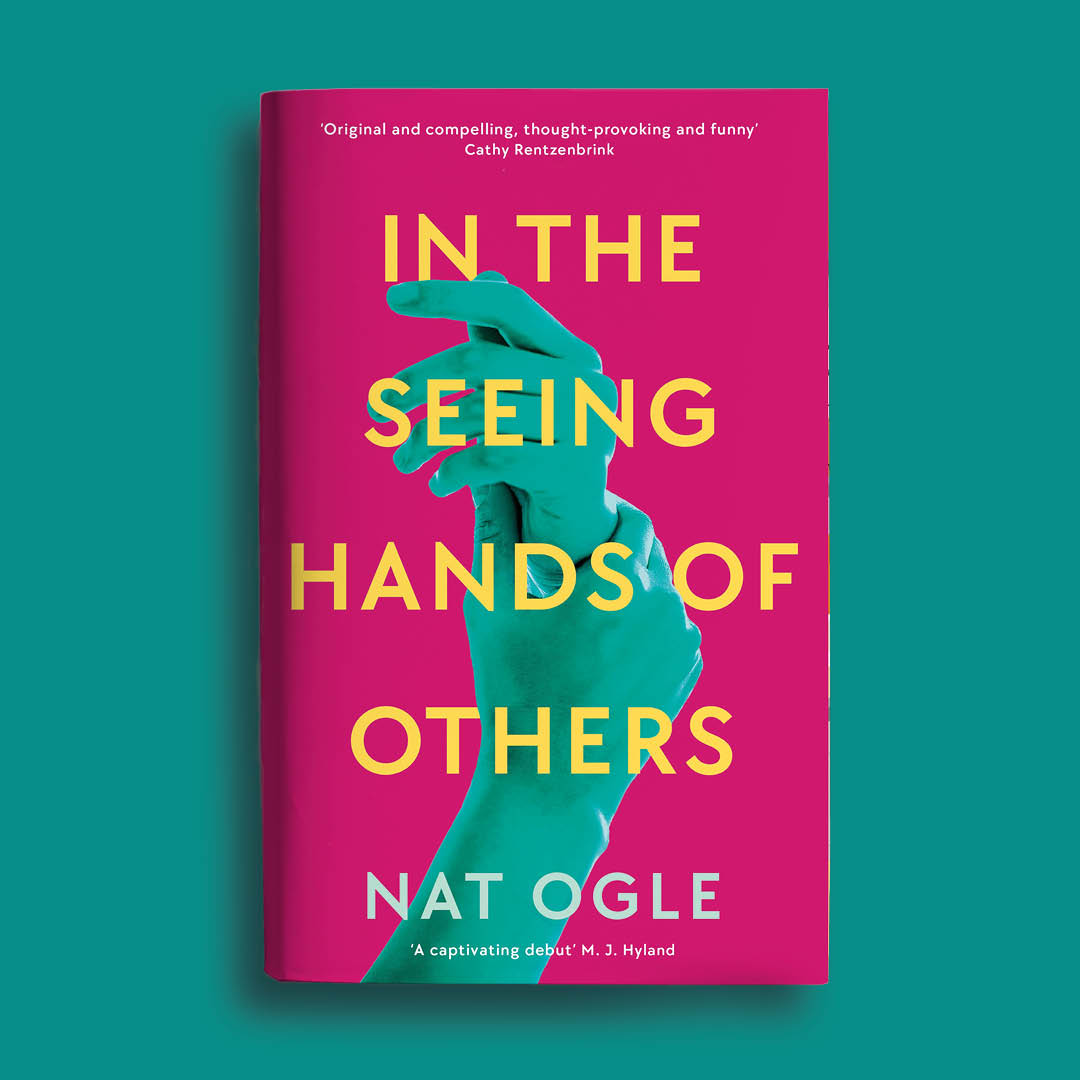
In The Seeing Hands of Others by Nat Ogle

This original and provocative fiction telling the story of a contentious trial, pieced together in documents from the accused and accuser, a ground-breaking debut novel that combines the investigatory pleasures of a legal drama with a provocative and literary exploration of the limits of empathy.

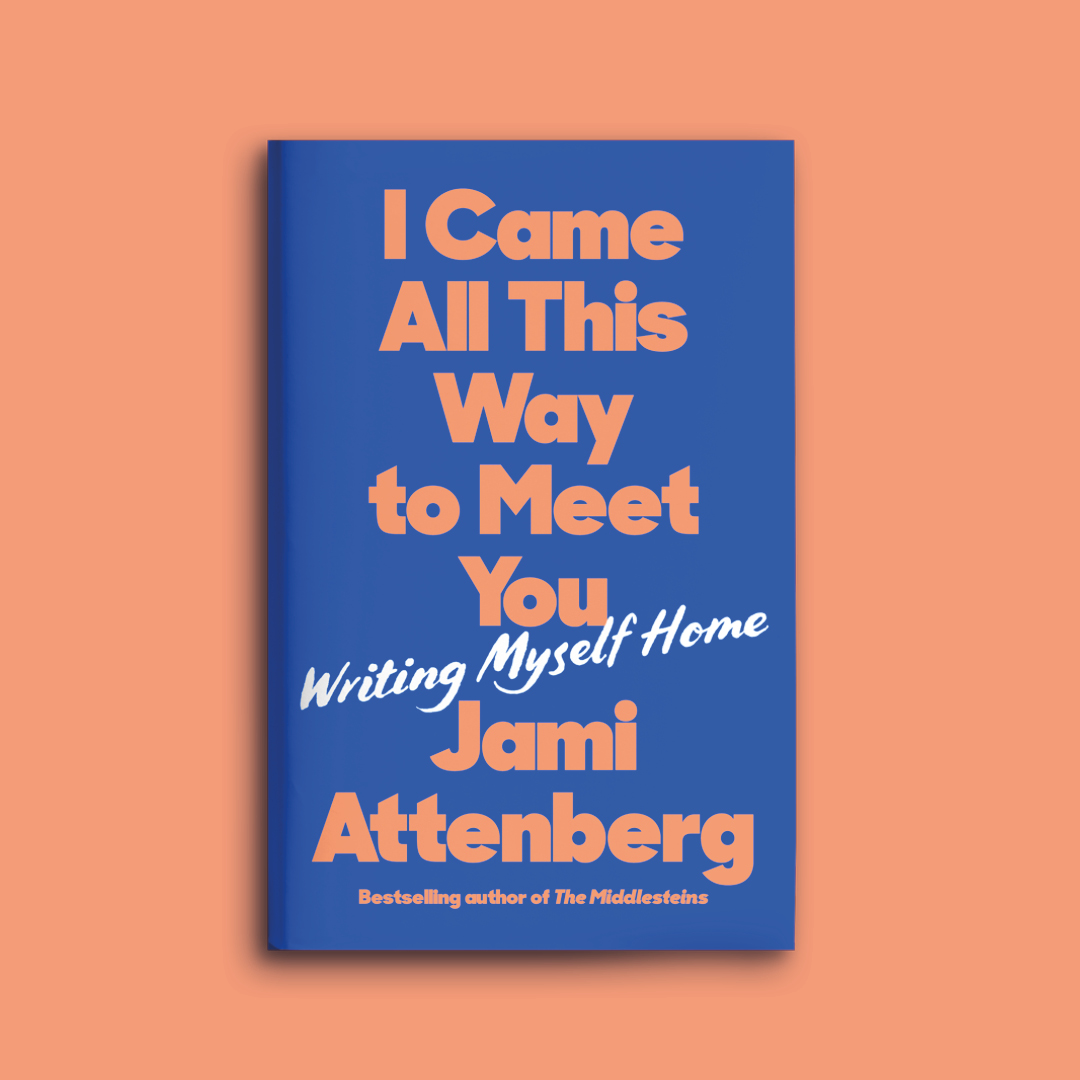
I Came All This Way to Meet You by Jami Attenberg

This is a fantastically fierce and funny memoir of how the New York Times-bestselling author Jami Attenberg embraced her creativity – and how it saved her.

Booth by Karen Joy Fowler

Booth tells the story of the brilliant and disastrously ill-fated Booth family. From the award-winning author of We Are All Completely Beside Ourselves, Booth is a riveting novel focused on the very things that bind, and break, a family.

The Cherry Robbers by Sarai Walker

The Cherry Robbers is a wonderfully atmospheric,  propulsive novel about sisterhood, mortality and  forging one’s own path – perfect for readers who love Shirley Jackson and Jeffrey Eugenides’s The Virgin Suicides.

Sunken City by Marta Barone

In Sunken City, A young woman retraces the footsteps of her elusive father through one of the darkest periods of Italian history. This elegant, heartfelt novel will appeal to fans of Rachel Kushner’s The Flamethrowers and Elena Ferrante’s Neapolitan novels.

An Exciting and Vivid Inner Life by Paul Dalla Rosa

A story collection that perfectly captures life in the internet age, this is a superb literary debut for fans of Garth Greenwell, Brandon Taylor, and Mary Gaitskill.

Posted on

You Will Write Again: A Letter from Jami Attenberg

Ahead of the publication of Jami Attenberg’s fierce and funny memoir I Came All This Way To Meet You we’re sharing a piece from her CRAFT TALK newsletter – an inspiring and affectionate letter to fellow writers.

Exploring themes of friendship, independence, class and drive, I Came All This Way to Meet You focuses on how Jami embraced her creativity, and the way in which it saved her. It publishes on 13th January. Order your copy here.

CRAFT TALK is Jami’s weekly newsletter about writing, creativity and productivity. You can subscribe here.

Hi friends.

I have been working on this letter for a few days and was having a lot of trouble getting it done and I could not figure out why, and then last night I was messing around online and your honor, I’d like to present exhibit A in the defense:

So is today the day where instead of banging my head up against the wall, I choose to write in my journal, do a little soft writing, where I’m gentle to my brain and amble along the page like a deer in the woods? Is today the day I just read the two books I have been dying to read and which, at last, are finally sitting in my possession? Is today the day I forgive myself for not being able to be a high-functioning individual in a low-functioning society? Can I declare today, December 20, 2021, National Give Yourself A Fucking Break Day? Why yes, I can.

Give yourself a fucking break today, if you need it. If you’re having trouble right now, I promise you, you will write again. What are you worried about? That you’ll end up living high up in a broken-down castle somewhere like a character in some Gothic novel, and all the townspeople whisper about how you were once a writer but Then Something Happened and you never wrote again?

Well listen: Nothing has happened, not in that kind of way, and you wish you lived in a castle. But, of course, everything has happened and it is hard right now but we will get through all this and then there will be more things to get through because that is how life works. The words will always be there for you, though, I promise, even if your brain, which transmits those words, needs a little time to pause or heal or relax or take a goddamn nap because this world, right now, at least for today, wins a little bit. But just the battle and not the war, baby. I promise.

You will write again.

Posted on

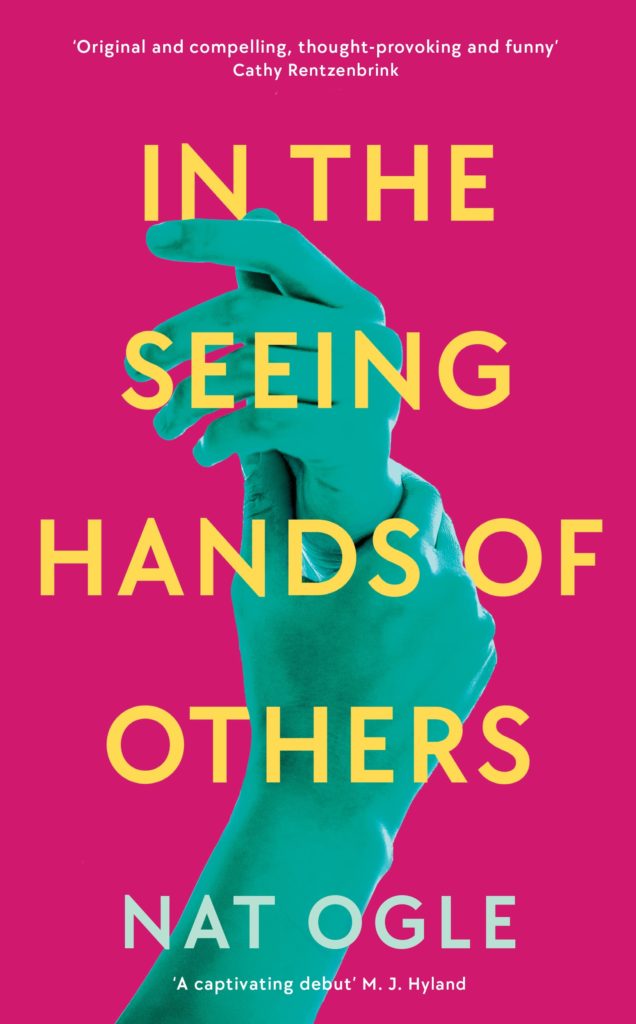
In the Seeing Hands of Others: read an extract

‘Life can be devastating and devastated at any point, but this is exactly why it can be beautiful.’

In the Seeing Hands of Others by Nat Ogle is a ground-breaking debut novel telling the story of a contentious trial, pieced together in documents from the accused and accuser.

Follow the blog of a nurse on a dialysis ward attempting to live in the aftermath of bringing a rape trial to court in which the defendant was exonerated. Read the transcripts of the police interviews with her, and the accused, the emails and texts between them submitted for trial; his journal, his conversations on 4chan, his drama scripts, him, him, him. How will the nurse, Corina, ever get him out of her head?

In the Seeing Hands of Others is a highly original debut novel. Provocative, blackly funny and moving, it announces a new voice unlike any other.

Publishing 13th January. Find out more here.
Read an extract below:


COPIED POSTS FROM CORINA SLATE’S
BLOG, ‘WITNESS’
SEPTEMBER 2016 (2)

On Borough High Street, buses push bright, cold wind. The sun is hot, just far away. A rough sleeper holds himself in a ski jacket and sleeping bag by the cash machine outside the Sainsbury’s. I want a Dairy Milk, 20 Superkings. It’s so far from here to my bed. I want someone kind, quiet there waiting for me. A female Michael Palin. Clare Balding?

‘I don’t have any change on me,’ I say.

I don’t expect him to believe me. He nods. I think to ask him if he wants me to buy him something to eat, but nearly bump into a man in a suit in the doorway.

‘Oops. Sorry, petal,’ says the man.

And I find that I can’t move. I feel the sun inside my clothes. The world around me deflates, flattens. Traffic. Gliding past. Everything gliding past on stretchers. Someone is stealing my breath, chasing my pulse. The buildings are toppling over like playing cards. Onto me. The roads are falling into the earth. I’m about to die. I’m about to puke. I’m about to shit myself. Black stars eat into everything. I count my breaths. That’s too many breaths. Speeding up? Don’t know what I can do. There’s nothing I can do. Automatic doors keep trying to close. They slide a little way together, detect me stood there, eyes closed, sticky with sweat, then, embarrassed, they open again. There’s nothing that I can do.

There was no turning back when my birthday drinks collided with your mate’s stag do in Soho.

‘Weird thing is that I kept thinking how great it would be to bump into you this weekend,’ you said, ‘and in spite of how unlikely, I did sort of expect it was inevitable.’ I said I felt the same, though I’m not sure that I did.

You bought us a round. ‘Where is he, then?’ you said.

‘He couldn’t make it,’ I said. ‘Rehearsals, then after-rehearsal drinks.’

‘Sounds about right. Well, let’s forget about him.’

I was glad for the encouragement, and I don’t think that I did think about him. Not when you were making us laugh with tales of kitchen mishaps. Not when we were dancing together. Not when we all ended up at your hotel bar. Not when you waited with me for my Uber. Not when you said, ‘It’s weird, but I feel sort of safe from the world when I’m around you.’ Not even when I kissed you. Only after that, when we were on our way up to your room, but not caring.

In the morning, when you woke up, you made a sound like you were disappointed in something, which scared me, but I quickly learnt it’s just a sound you made to displace silence, which you found uncomfortable. I remember lying next to you, holding your hands to my face. Your thumbs, thin at the knuckle, wide around the nail, like a spade, always tucked in behind your fingers. I would pull them out, fan your hands, slip my fingers between yours, my thumbs around yours.

Posted on

Serpent’s Tail Gifting Guide 2021

The countdown to Christmas has begun! Whether you’re shopping for a friend who loves their feminist fiction or a family member who is obsessed with trying out new recipes, we’ve curated a diverse selection of reads so that you can say ‘bye’ to any and all Christmas shopping panicking.

For all our latest news and new reads, join our newsletter.

Stay up to date on social media @SerpentsTail.

PASSING: TAKING NETFLIX BY STORM

Get your family and friends this favourite taking the world – and Netflix – by storm. Now a major film starring Tessa Thompson, Ruth Negga and Alexander Skarsgård, Passing by Nella Larsen is a story about childhood friends Claire and Irene. Both are light-skinned enough to pass as white, but only one of them has chosen to cross the colour line and live with the secret hanging over her. 

IN THE DREAM HOUSE

‘Ravishingly beautiful’ Observer
‘Excruciatingly honest and yet vibrantly creative’ Irish Times
‘Provocative and rich’ Economist
‘Daring, chilling, and unlike anything else you’ve ever read’ Esquire
‘An absolute must-read’ Stylist

In the Dream House is Carmen Maria Machado’s engrossing and wildly innovative account of a relationship gone bad. Tracing the full arc of a harrowing experience with a charismatic but volatile woman, this is a bold dissection of the mechanisms and cultural representations of psychological abuse.

BASICALLY, ALL OF THE GAITSKILLS

Spend this holiday season with the one and only Mary Gaitskill. Lovers of essays will devour Oppositions, a collection of provocative and searchingly analytical writing. If you’re into fiction, This is Pleasure is also a masterful fictional contribution to the #MeToo debate.

IF YOU LOVED SQUID GAME

We all watched Squid Game, right? Looking for another riveting story that focuses on power, corruption as well as critiques the capitalist system? Well, look no further. The Disaster Tourist by Yun Ko-Eun is a satirical Korean eco-thriller with a fierce feminist sensibility.

Yona has been stuck behind a desk for years working as a programming coordinator for Jungle, a travel company specialising in package holidays to destinations ravaged by disaster. When a senior colleague touches her inappropriately she tries to complain, and in an attempt to bury her allegations, the company make her an attractive proposition: a free ticket for one of their most sought-after trips, to the desert island of Mui.

She accepts the offer and travels to the remote island, where the major attraction is a supposedly-dramatic sinkhole. Yona realises that the company has dangerous plans to fabricate an environmental catastrophe to make the trip more interesting, but when she tries to raise the alarm, she discovers she has put her own life in danger.

DETRANSITION, BABY: AN IRRESISTIBLE READ

Longlisted for the Women’s Prize 2021 and Top Ten The Times Bestseller, Detransition, Baby by Torrey Peters is a uniquely trans take on love, motherhood, and those exes who you just can’t quit.

This phenomenal book is for anyone who wants to get lost in a page-turner – think a ‘modern Sex and the City’. We promise you, once you start reading this, you’re gonna wish for that first-read butterflies all over again.

COOK AS YOU ARE: REAL-LIFE RECIPES

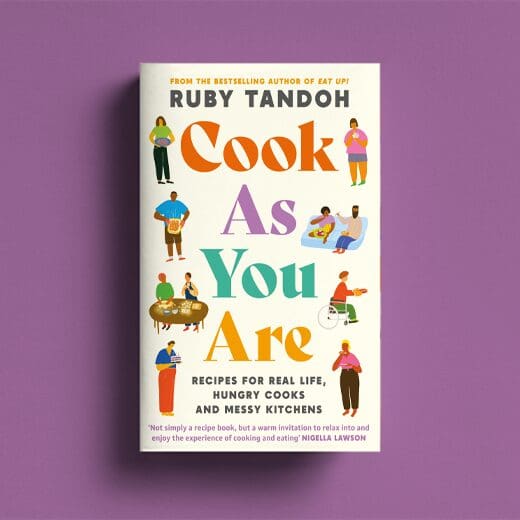
If the home cook in your life is on a quest for new recipes, they’ll be in great hands with Ruby Tandoh’s new book. Cook As You Are is for all of us – the real home cooks, juggling babies or long commutes, who might have limited resources and limited time. From last-minute inspiration to delicious meals for one, easy one-pot dinners to no-chop recipes for when life keeps your hands full.

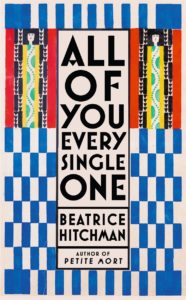
ALL OF YOU, EVERY SINGLE ONE

All of You, Every Single One by Beatrice Hitchman is an exhilarating queer love story set in early twentieth-century Vienna.

‘I know,’ he says, ‘too much. You’ll learn to be too much, too.’ Then, gently, ‘I think it might help.’

When Julia flees her unhappy marriage for the handsome tailor Eve Perret, she expects her life from now on will be a challenge, not least because the year is 1911. They leave everything behind to settle in Vienna, but their happiness is increasingly diminished by Julia’s longing for a child.

Ada Bauer’s wealthy industrialist family have sent her to Dr Freud in the hope that he can fix her mutism and do so without a scandal. But help will soon come for Ada from an unexpected quarter and change many lives irrevocably.

All of You Every Single One is an epic novel about family, freedom and how true love might survive impossible odds.

LIBERTIE

‘A soaring exploration of what “freedom” truly means … an elegantly layered, beautifully rendered tour de force that is not to be missed’ Roxane Gay

With rave reviews from Roxane Gay and a Times Book of the Month, Libertie by Kaitlyn Greenidge is a book about what freedom actually means – and where to find it.

LOSE YOUR MOTHER

From Saidiya Hartman comes a profound and harrowing meditation by a descendant of slaves who journeyed to Africa to understand her past.

The slave, Saidiya Hartman observes, is a stranger torn from family, home, and country. To lose your mother is to be severed from your kin, to forget your past, and to inhabit the world as an outsider. In Lose Your Mother, Hartman traces the history of the Atlantic slave trade by recounting a journey she took along a slave route in Ghana.

There are no known survivors of Hartman’s lineage, no relatives to find. She is a stranger in search of strangers, and this fact leads her into intimate engagements with the people she encounters along the way, and with figures from the past, vividly dramatising the effects of slavery on three centuries of African and American history.

SEA CHANGE: FOR THE HISTORY BUFFS

‘Unsettling and strange, Sea Change, cements Nathan’s reputation as one of our most interesting historical novelists.’ The Times

From acclaimed author of The Warlow Experiment, Sea Change by Alix Nathan is the moving story of a mother and daughter separated in Regency England.

FOR PROFANE AND OPINIONATED WOMEN EVERYWHERE

Essex Girls are disreputable, disrespectful and disobedient. They speak out of turn, too loudly and too often, in an accent irritating to the ruling classes. Their bodies are hyper-sexualised and irredeemably vulgar. They are given to intricate and voluble squabbling. They do not apologise for any of this. And why should they? Essex Girls by Sarah Perry is the ultimate gift for opinionated women everywhere.

Posted on

Passing: New Netflix Tie-in Edition

To coincide with the new Netflix adaptation of Passing featuring Tessa Thompson and Ruth Negga, we are very excited to be publishing the official tie-in edition of Nella Larsen’s Harlem Renaissance classic novel.

Childhood friends Clare and Irene are both light-skinned enough to pass as white, but only one of them has chosen to cross the colour line and live with the secret hanging over her. Clare believes she had successfully cut herself off from any connection to her past. Married to a racist white man who is oblivious to her African-American heritage, it is vital to her that the truth remains hidden. Irene is living as a middle-class Black woman with her husband and children in Harlem, taking on an important role in her community and embracing her origins.

Both women are forced to re-examine their relationships with each other, with their husbands and with the truth, confronting their most closely guarded fears. Nella Larsen’s powerful, tragic and acutely observant writing established her as a lodestar of America’s Harlem Renaissance. Almost a century later, Passing and its nuanced exploration of the many fraught ways in which we seek to survive remains as timely as ever.

Watch the trailer here:

Our new edition of Passing by Nella Larsen publishes 18th November.

Posted on

Mary Gaitskill: a retrospective

Teenage runaway; young stripper; writer of powerful, haunting stories. From Bad Behaviour in 1988, a story collection depicting seedy New York life, to Veronica in 2006, which follows a rollercoaster of a friendship between two women, Mary Gaitskill’s writing is often disturbing and always meticulously perceptive. In November 2021, we are pleased to publish a collection of Mary’s tender yet daring essays Oppositionsalongside striking reissues of the novella This is Pleasure, the Women’s Prize for Fiction-longlisted novel The Mare and the short story collection Don’t Cry.

In this retrospective we explore Mary’s published books and their recurring themes of feminism, relationships and sexuality.

Tell us which of Mary Gaitskill’s works you’ve read – or plan to read – over at Twitter @serpentstail and Instagram @serpentstail.

OPPOSITIONS (2021)

Oppositions is a collection of nuanced and provocative essays covering a broad range of subjects written with Mary Gaitskill’s characteristic linguistic flair. Spanning thirty years of her writing, and covering subjects as diverse as Dancer in the Dark, the world of Charles Dickens and the Book of Revelation with her classic blend of sincerity and wit, Oppositions is never less than enthralling.

‘Mary Gaitskill is willing to think about the problematic with complexity and humanity, and without taking sides or engaging in all the fashionable moral hectoring that passes for serious thought these days.’ Eimear McBride

THIS IS PLEASURE (2019; reissued 2021)

A provocative, nuanced novella about power, consent and friendship – and a masterful fictional contribution to the #MeToo debate.

Following the unravelling of the life of a male publisher undone by allegations of sexual impropriety and harassment, and the female friend who tries to understand, and explain, his actions, it looks unflinchingly at our present moment and rejects moral certainties to show us that there are many sides to every story.

‘Gaitskill achieves a superb feat. She distils the suffering, anger, reactivity, danger and social recalibration of the #MeToo movement into an extremely potent, intelligent and nuanced account.’ Guardian

Now available in a beautiful reissue.

THE MARE (2016; reissued 2021)

The Mare is Mary Gaitskill’s first novel in over a decade. Ginger is in her forties and a recovering alcoholic when she meets and marries Paul. When it becomes clear it’s too late for her to have a baby of her own, she tries to persuade him to consider adoption – but he refuses. As a compromise, they sign up to an organisation that sends poor inner-city kids to stay with country families for a few weeks in the summer, and so one hot July day eleven year old Velveteen Vargas, a Dominican girl from one of Brooklyn’s toughest neighbourhoods, arrives in their lives, and Ginger is instantly besotted.

While Velvet returns her affection, she finds the intensity of it bewildering. Velvet discovers she has a natural talent for riding and a deep affinity with the damaged horses cared for there. But when Ginger begins to entertain fantasies of adopting her, things start to get complicated for everyone involved.

‘Visceral and haunting, and the telling, with its shifting first person narrative, is nothing short of masterful’ GQ

Now available in a beautiful reissue.

DON’T CRY: STORIES (2009; reissued 2021)

A set of short stories which once again delves into the messy, broken and often out-of-control lives of ‘normal’ people. As the New York Times writes,

‘The people in Gaitskill’s stories often behave unconventionally and impulsively; they may seem to have an agency outside their author’s control, doing what not even she could expect, but they never escape her pitiless eye and meticulous hand.’

Read an extracted short story, Mirrorball 

Now available in a beautiful reissue.

VERONICA (2005; reissued in 2016)

Shortlisted for the National Book Award, Veronica is the story of the friendship between Alison and Veronica, who meet amid the nocturnal glamour of 1980s New York: one is a former modeling sensation, the other an eccentric middle-aged proofreader.

Over the next twenty years their friendship will encompass narcissism and tenderness, exploitation and self-sacrifice, love and mortality.  Moving seamlessly between the glamorous and gritty ’80s, when beauty and style gave licence to excess, and the broken world of the decade’s survivors twenty years later, Gaitskill casts a fierce yet compassionate eye on the two eras and their fixations.

BECAUSE THEY WANTED TO (1997)

Because They Wanted To by Mary Gaitskill | 9780241464144 ...

In these stories, ‘Mary Gaitskill charts the twists and turns of emotion and desire, in fanatically analytical prose that zips along in a fever of self-consciousness that would seem loony if her observations weren’t so sane’ New York Times

Read an extracted story: Tiny Smiling Daddy

TWO GIRLS, FAT AND THIN (1991)

Two Girls Fat and Thin by Mary Gaitskill | 9780241464151 ...

Mary’s first novel explores the experiences of those alienated from society. A journalist, Justine (‘thin girl’) interviews Dorothy (‘fat girl’) about her time as a member of a cult led by an author. Though they have very different backgrounds, the two girls find they have both experienced vicitimisation at the hands of their parents.

Kirkus reviews wrote,

‘Gaitskill fully understands the psycho-dynamics of being a misfit, and hence the appeal of such as Rand. But her fine and disturbing novel is also a stunning work of the imagination–genuine and luminous.’

Two Girls is one of the books referenced in the Rumpus article ‘What Men Talk About When They Talk About Mary Gaitskill’, which argued that men feel uncomfortable reading Gaitskill’s work and thus are inclined to review it negatively. This in turn prompted Mary Gaitskill’s ‘open letter’, in which she rebuffs this claim: ‘in truth some of my best support has come from men’.

BAD BEHAVIOUR (1988)

😂 Bad behavior gaitskill. Bad Behavior by Mary Gaitskill ...

In her first collection of stories Mary Gaitskill explores love, lust, infatuation and power within relationships. In a blog written for Waterstones ‘On Mary Gaitskill’s Bad Behaviour, author Zoe Pilger wrote:

‘Like the HBO TV series Sex and The City, which came a decade later in the late 90s, Bad Behaviour documents the lives of women trying to find their way in New York. Unlike the writers of Sex and The City, however, Gaitskill doesn’t pretend that the apotheosis of a woman’s life is finding ‘The One’.’

The story entitled ‘Secretary’ inspired the controversial film of the same name, starring Maggie Gyllenhaal.

Visit our fanzine for more Mary Gaitskill: marygaitskill.tumblr.com

Posted on

The Appeal is on the Waterstones Book of the Year shortlist!

The Appeal, the bestselling modern-day Agatha Christie by author Janice Hallett, has been shortlisted for the 2021 Waterstones Book of the Year!

The Appeal is – in Waterstones’ words – a gripping whodunnit set in a sleepy town during the amateur dramatics society’s disastrous performance. It was inspired by author Janice Hallett’s own lifelong interest in amateur dramatics. A bookseller favourite, the pitch-perfect debut went on to be Waterstones’ most successful Thriller of the Month and is now shortlisted for Waterstones Book of the Year.

Janice Hallett says: “To say I feel honoured The Appeal is on this shortlist would be a cliché and an understatement. It means the world to me that Waterstones has chosen to highlight a book that’s not only by a debut author, but also one that has an unusual, experimental structure. This demonstrates just how forward-thinking and fearless their booksellers are when it comes to championing new fiction. I can’t thank them enough for getting behind The Appeal.”
Bea Carvalho, Waterstones Head of Fiction, says: “In a brilliant year for Crime Fiction, The Appeal stood out for its playfulness, originality, and sheer enjoyability. A sharp, smart whodunnit which unfolds through a series of documents, allowing the reader to take on the role of detective, it is a highly addictive read which is the very definition of ‘unputdownable’. Our most successful Thriller of the Month ever, The Appeal has been championed by booksellers everywhere for good reason: it is cosy crime at its absolute best, and a pitch-perfect crowd-pleaser which begs to be reread and recommended.”

Waterstones have a glorious red hardback exclusive edition this Christmas – order your copy now!

Posted on

Black History Month: Recommended Reading

For Black History Month, we asked some of our Serpent’s Tail authors – present and future – as well as members of our publishing team to write a little something about their favourite book by a black author. Take a read of their excitingly varied recommendations below!


Ghulami ain Azadi Ja Ibratnak Nazara (Eye-Opening Accounts of Slavery and Freedom) by Mussafir
Chosen by Alice Albinia, author of Cwen

Pakistan has a small black community, the Sheedis, descendants of slaves brought from east Africa. In 1952 a Sheedi writer who went by the pen-name of ‘Mussafir’ (traveller) wrote a polemical book in Sindhi, a language of southern Pakistan. Ghulami ain Azadi Ja Ibratnak Nazara (Eye-Opening Accounts of Slavery and Freedom) describes both the inter-racial aspect of early Islam, the slavery era from eye-witness accounts (Mussafir’s own father was sold into slavery in Zanzibar), and how this mistreatment has lasted into modern Pakistan (seventy years on, not much has changed). This important book has not yet been published in English.


Quicksand & Passing by Nella Larsen
Chosen by Flora Willis, Head of Marketing 

Probably my favourite book in the Serpent’s Tail Classics series is Nella Larsen’s Quicksand & Passing (two novellas in one book). A key figure of the Harlem Renaissance, Larsen writes powerfully about being mixed race at this time. Her women are both fierce and vulnerable, navigating an often hostile world. It’s soon going to be a Netflix film with Ruth Negga and Tessa Thompson – look out for our new edition.


Zong! by M. NourbeSe Philip
Chosen by Nat Ogle, author of
In the Seeing Hands of Others (publishing January 2022)

Zong! is a majestic and mournful memorial to the 150 enslaved Africans who were thrown overboard the slave ship Zong in the belief that its owners could collect insurance monies on destroyed “cargo”. It’s a reparative invocation of the massacred, composed entirely from the texts of the legal case between the owners and their insurers. Voices irreconcilable with the coloniser’s syntax emerge from vast breaths of remembrance, drifting, fragmenting and assembling over the “water / of / w/ant” for justice. In its disentangling and abstracting the legal document, where human experience intersects with cold-blooded taxonomy, where lives are rendered into contestable property, Zong! reclaims the human from inhumanity: my high-water mark for documentary literature formed through a poetics of care.


The Sum of Us by Heather McGhee
Chosen by Georgia Poplett, Editorial Assistant 

What was the fastest way to drain a swimming pool in 1950s America? The answer, as Heather McGhee says in The Sum of Us: integrate it. This grim reality forms the central image of the system undercutting the story of American racism in McGhee’s trailblazing book. A former Demos president and expert in economic and social policy, she investigates why white voters support racist legislation – even when they disadvantage themselves in the process. McGhee writes with clarity and compassion, making this an exceptional read which should be on everyone’s bookshelf.


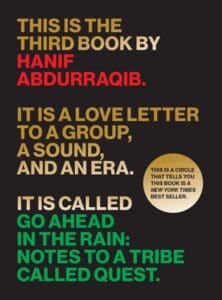
Go Ahead in the Rain: Notes to A Tribe Called Quest by Hanif Abdurraqib
Chosen by Gurnaik Johal, author of We Move (publishing April 2022)

Charting the career of A Tribe Called Quest from the 90s to 2016, Go Ahead In The Rain is an intimate exploration of one of America’s most influential bands. Abdurraqib situates Tribe in a long tradition of American musicians but grounds the book in a fan’s perspective, making it as much a personal coming of age story as a music biography. Written in rhythmic prose and made up of essays, memoir and letters, the book is as compellingly patched together and richly textured as a Tribe sample, and I’d recommend it to anyone who enjoys reading about music.


Dirty South by Alex Wheatle
Chosen by Niamh Murray, Campaigns Director

I loved Alex Wheatle’s Dirty South when we published it for Serpent’s Tail a few years back – set in Brixton, it follows a teenager who drifts into street dealing and evokes the lives of his friends and family brilliantly. We’re delighted to have another book from Alex on the list in 2022, part of the Quick Reads series for adults working on improving their literacy, Witness is published next spring.


White Teeth by Zadie Smith
Chosen by Rosie Parnham, Marketing Executive

Zadie Smith’s debut White Teeth is without a doubt a modern classic. Smith deftly captures our multicultural capital, following three generations of Londoners and their interlinked stories. It covers serious topics, whilst still being laugh-out-loud funny – don’t get me started on one of my favourite scenes in any book: a brilliant rant about Harvest Festival from central character Samad. It is a novel to which I return and recommend time and time again.


Posted on

A recipe from Ruby Tandoh’s Cook As You Are

A warm invitation to relax into and enjoy the experience of cooking and eating.’ Nigella Lawson

Ruby Tandoh wants us all to cook, and this is her cookbook for all of us – the real home cooks, juggling babies or long commutes, who might have limited resources and limited time. From last-minute inspiration to delicious meals for one, easy one-pot dinners to no-chop recipes for when life keeps your hands full, Ruby brings us 100 delicious, affordable and achievable recipes, including salted malted magic ice cream, one-tin smashed potatoes with lemony sardines and pesto and an easy dinner of plantain, black beans and eden rice.

This is a new kind of cookbook for our times: an accessible, inclusive and inspirational addition to any and every kitchen. You don’t have to be an aspiring chef for your food to be delectable or for cooking to be a delight. Cook as you are.

Follow @rubytandoh

Get your copy of Cook As You Are


STORECUPBOARD BROWNIES

The very best, fudgiest, most chocolatey brownies are those made with a lot of dark chocolate. But let’s be realistic: by the time your sweet-toothed cravings are baying for brownie blood, you’ve probably already eaten all the chocolate in the house, from a lone Malteser rolling round at the bottom of a blazer pocket to those last Bounties in the chocolate tin. With that in mind, this is a brownie recipe for when you weren’t planning to make brownies at all: a cocoa-based emergency recipe for when the craving strikes but your cupboards are pretty much bare.

A quick note: cocoa powder is not the same as drinking chocolate powder! The latter is bulked out with sugar and often with milk powder, too – ideal for sweet, milky hot chocolate, but it doesn’t have the chocolatey kick you’ll need for these brownies.

Bakes: 8–10 brownies

Ready in: less than 40 minutes, but you’ll need to let the brownies cool before tucking in

Make-ahead and storage tips: page 334

150ml vegetable, olive or coconut oil
175g soft light brown sugar
2 medium or large eggs
3 tablespoons milk, dairy or non-dairy
100g plain flour
50g cocoa powder
1½ teaspoons instant coffee granules
1 teaspoon vanilla extract, optional
½ teaspoon salt
Special equipment: 15

1. Preheat the oven to 180°C/fan 160°C/gas mark 4 and line your tin with baking paper. If you don’t have this exact tin size and shape, a 20cm round tin is very close in volume and is a fine alternative. It’s also worth noting that if you make half of the above quantity, it’ll fit perfectly in a 900g loaf tin – ideal for an emergency stash.
2. Whisk together the oil and light brown sugar in a large bowl (melt the coconut oil first, if that’s what you’re using and if it’s solid). Add the eggs and the milk.
3. Into this wet mix, whisk the flour, cocoa powder, instant coffee granules, vanilla extract (if you have it) and salt. Stir until the batter is more or less smooth, with no big clumps. Pour into the prepared baking tin and bake for 15–20 minutes. When ready, it shouldn’t be liquid or wobbly if you shake it, but a knife inserted into the centre should still come out with a small amount of gooey batter on it. Give them a few minutes more if necessary, but err on the side of fudgy and underdone rather than cakey and overbaked. Once they’re completely cool, cut into pieces and serve.

Variations and substitutions:
To make vegan brownies, forget the eggs, and use 150ml non-dairy milk instead of the 3 tablespoons specified above. For a gluten-free version, make the brownies as above but use a gluten-free plain
flour blend in place of the plain white flour.

These are also delicious made with butter! Just swap the oil for 180g melted butter, and decrease the amount of milk from 3 tablespoons to 1 tablespoon.

Swap the soft light brown sugar for caster sugar if that’s all you have.

Occasionally I make these with miso, which adds a gentle salty, umami edge. Leave out the salt in this case, and whisk 1–2 tablespoons white miso into the batter, to taste.

If you or your family don’t consume caffeine, you can of course use a decaffeinated coffee or leave the coffee granules out altogether. At the other end of the spectrum, if you’re a coffee aficionado and don’t keep granules in the house, just use strong espresso in place of the 3 tablespoons milk (or a long black or white coffee in place of the 150ml non-dairy milk, if you’re making the vegan version.)

As far as additions go, the world’s your oyster here. I kept the ingredient list as short as I could get away with, but if you happen to have walnuts or pecans, chunks of dark or white chocolate, freeze‑dried berries or fudge pieces in the cupboard, by all means, chuck them in.

Posted on

3 books for Women in Translation Month

Tired of staycations? Us too. How about being transported to the pine islands of Matsushima instead?

August is Women in Translation month, and our intern, Carina Bryan, has put together a list of award-winning books for you to escape into.

Tell us about your favourite woman in translation – @SerpentsTail


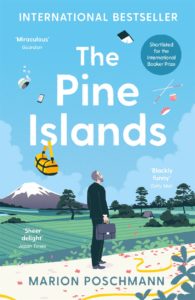
THE PINE ISLANDS – Marion Poschman (Translated by Jen Calleja)
A charming, playful, profound tale of lost souls in search of transformation in modern Japan.

SHORTLISTED FOR THE MAN BOOKER INTERNATIONAL PRIZE 2019

When Gilbert wakes one day from a dream that his wife has cheated on him, he flees – immediately and inexplicably – for Tokyo, where he meets a fellow lost soul: Yosa, a young Japanese student clutching a copy of The Complete Manual of Suicide. Together, Gilbert and Yosa set off on a pilgrimage to see the pine islands of Matsushima, one looking for the perfect end to his life, the other for a fresh start.

Playful and profound, The Pine Islands is a beautiful tale of friendship, transformation and acceptance in modern Japan.


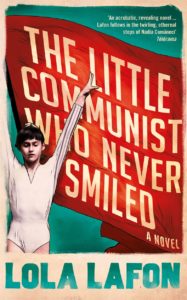
THE LITTLE COMMUNIST WHO NEVER SMILED – Lola Lafon (Translated by Nick Caistor)

The Montreal Olympics, 1976. A fourteen-year-old girl steps out onto the floor of the Montreal Forum and into history.

Twenty seconds on the uneven bars is it all it takes for Nadia Comaneci, the slight, unsmiling child from Communist Romania, to etch herself into the collective memory. The judges award her an unprecedented perfect ten, the first in Olympic gymnastics.

In The Little Communist Who Never Smiled, Lola Lafon weaves an intricate web of truth and fiction around Comaneci’s life, from her discovery by legendary gymnastics coach Béla Károlyi up to her defection to the United States in 1989.

Adored by young girls in the West and appropriated as a political emblem by the Ceausescu regime, Comaneci was a fearless, fiercely determined child whose body would become a battleground in the Cold War story of East against West. Lafon’s novel is a powerful re-imagining of a childhood in the spotlight of history, politics and destiny.


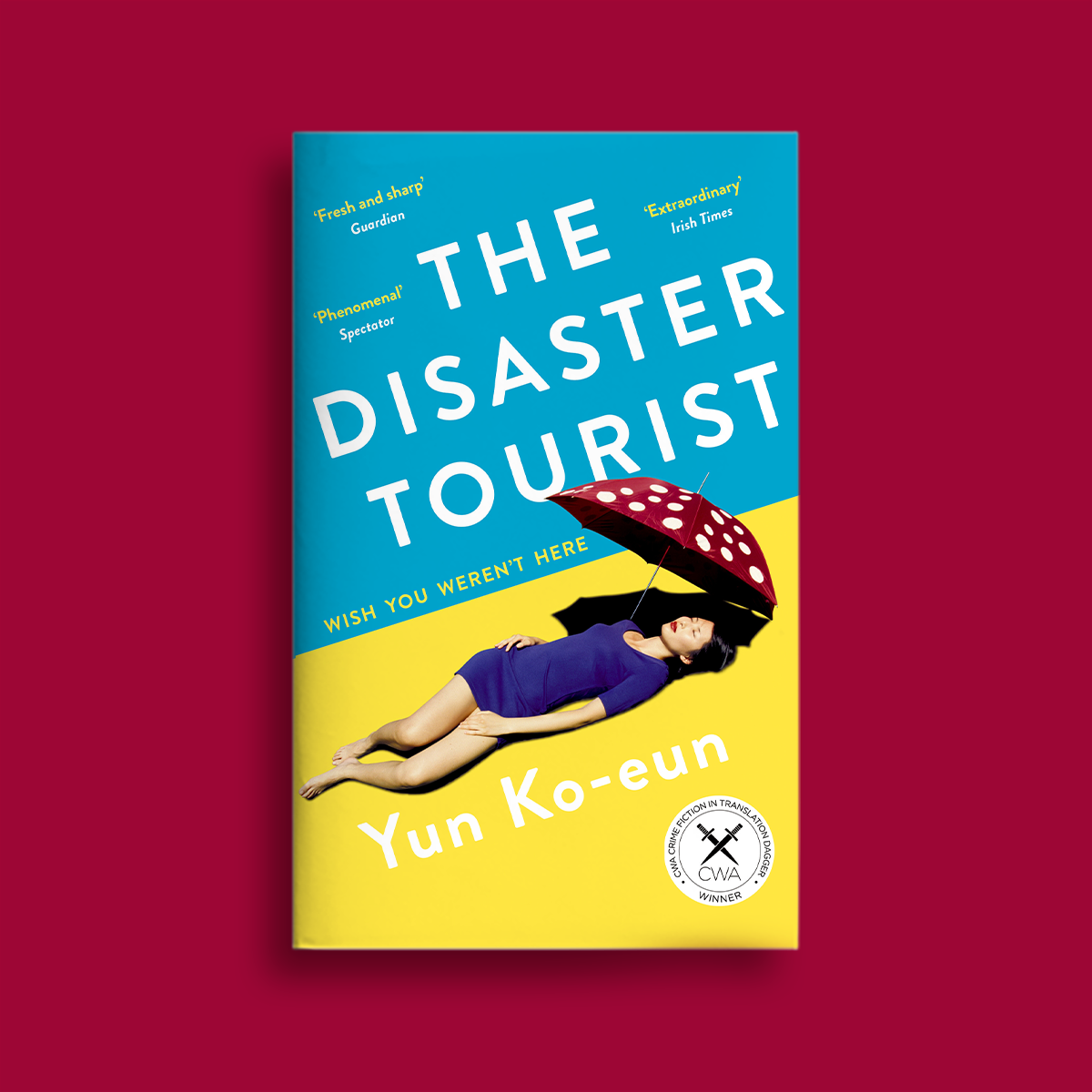
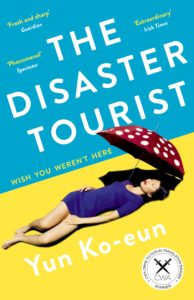
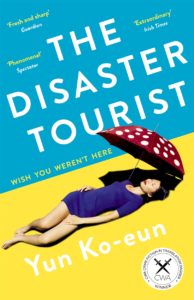
THE DISASTER TOURIST – Yun Ko-eun (Translated by Lizzie Buehler)
A satirical Korean eco-thriller with a fierce feminist sensibility.

WINNER OF THE CWA CRIME IN TRANSLATION DAGGER

Yona has been stuck behind a desk for years working as a programming coordinator for Jungle, a travel company specialising in package holidays to destinations ravaged by disaster. When a senior colleague touches her inappropriately she tries to complain, and in an attempt to bury her allegations, the company make her an attractive proposition: a free ticket for one of their most sought-after trips, to the desert island of Mui.

She accepts the offer and travels to the remote island, where the major attraction is a supposedly-dramatic sinkhole. When the customers who’ve paid a premium for the trip begin to get frustrated, Yona realises that the company has dangerous plans to fabricate an environmental catastrophe to make the trip more interesting, but when she tries to raise the alarm, she discovers she has put her own life in danger.

Posted on

Two new books coming from Catriona Ward

We are thrilled to have bought two more “twisting and chilling” novels from crime and thriller writer Catriona Ward, author of The Last House on Needless Street!

Looking Glass Sound will tell the story of unsuccessful author Tom, who has travelled to a lonely cottage on the New England coast, fleeing the break-up of his marriage. He intends to write his final novel, with the protagonist based on his nemesis, Sky, who is now dead.

The synopsis explains: “Sky and Tom were once close, but after the publication of Sky’s first novel, ‘Looking Glass Sound’, Sky’s fame and ego drove them apart. Tom’s book will be a thinly veiled account of their friendship, painting Sky as a monstrous Patricia Highsmith figure. But this final act of revenge does not go as planned. Tom discovers notes in Sky’s handwriting in the cottage, written in his favourite green ink, making crushing comments about Tom’s writing and broken heart. Is Sky haunting Tom? Or is he still alive?”

Viper published Ward’s modern gothic thriller The Last House on Needless Street in March this year, to critical acclaim. It was a BBC2 “Between the Covers” Book Club pick, a bestseller, and both a Times and Observer Thriller of the Month. The paperback is publishing on 17th September, with Ward’s next novel, Sundial, coming in March 2022.

Miranda Jewess, editorial director at the Serpent’s Tail crime imprint Viper, acquired UK and Commonwealth rights, plus audio, to Looking Glass Sound and an untitled second novel in a two-book deal from Jenny Savill at Andrew Nurnberg Associates. Looking Glass Sound is scheduled for publication in March 2023.

Jewess said: “Looking Glass Sound is a twisting and chilling tale, where nothing is as it seems and the reader never knows who to believe. To say any more would be to spoil it, which is something I adore about Cat’s novels; they ask the reader to trust her, and she always repays that trust. The response to The Last House on Needless Street was a dream come true for a young imprint, and we’re delighted that Cat will continue to publish with Viper for years to come. She’s such a talented and responsive author to work with—I feel extremely lucky.”

Ward added: “In a few short years Miranda Jewess and Viper have proved, again and again, that their innovative, dedicated and inspirational publishing can introduce unconventional, high-concept books to a wide readership. Individually and as a team Viper have enormous heart and the keenest of instincts. I feel immensely privileged to be setting out on another adventure with this dynamic, exciting imprint.”

Posted on

All of You Every Single One: read an extract

‘You’ll learn to be too much, too. I think it might help.’

When Julia flees her unhappy marriage for the handsome tailor Eve Perret, she expects her life from now on will be a challenge, not least because the year is 1911. They leave everything behind to settle in Vienna, but their happiness is increasingly diminished by Julia’s longing for a child.

Ada Bauer’s wealthy industrialist family have sent her to Dr Freud in the hope that he can fix her mutism and do so without a scandal. But help will soon come for Ada from an unexpected quarter and change many lives irrevocably.

All of You Every Single One is an epic novel about family, freedom and how true love might survive impossible odds.

Buy your copy

Read an extract below.


PROLOGUE

The lake is freezing. The words – gelid, boreal, glacial – don’t do it justice. Chunks of the whole break away, float and sink. Black oiliness, the consistency of nightmares; impossible to see where you should put your feet.

Snow is falling, silent and determined. The beach is quickly smothered – the pebbles, the upturned boat and the reeds become mere grey shapes. The lawn, sloping upwards to the house, glitters. The occupants are in the deep sleep of the very cold. They knew the storm was coming, but the body does not always understand what it’s told the first time. The blood retreats in such circumstances to the inner organs; fingers curl into soft palms; the hair forms a nest around the neck and shoulders.

The nursery is different. In this room, the fire burns all night – it’s hard enough to get a three-week-old to sleep without the added complication of the cold. The baby is awake, waving her fists in vague figures of eight, staring up at the woman bending over the crib, who makes a shushing sound, and though the child is too small to understand, or to make out more than the blurred outline of a face, she closes her eyes.

An ember from the fire lands on the rug. The woman stares at it as it flares and dies. She picks up the haversack, in which are packed cloth nappies, blankets, some stale bread that won’t be missed and fifty Kronen stolen from Herr K.’s wallet. The baby is gathered up in a bundle of warmth and cloth. She turns to the door, opens and listens: the rasp of the butler’s snoring. She spares a thought for him – he has always been kind to her – then walks down the corridor and hesitates at the top of the stairs. The child smacks her lips in the darkness as she creeps on.

In the downstairs hallway, she puts the baby, very gently, on to the carpet runner and goes to accomplish the business of covering her tracks. On her return, she unhooks her coat from the coat-rack next to the front door. It is even colder on this level, heat rising, as it will; she can feel her fingers stiffening already. She lifts the coat and shrugs it on.

An oil lamp has been wavering, unnoticed, along the corridor from the back of the house: gold corona, craggy shadows. A man’s face, bruised with sleep. His fingers, where they hold the lamp base, are a throbbing, sea-anemone pink.

‘I heard a noise,’ he says.

He must already know something is wrong, but he has always been slow to cross into the waking world. He raises one fist to grind it into his eye – trying to appear charming and childlike, even now – and with the other he puts the lamp on the hall table. The halo moves, showing him what’s on the floor: the blind-mouse eyes and pale round face, bundled in bonnet and blankets. The bag.

‘Where are you taking her?’ he asks. The beginnings of a sneer. ‘Out for a walk?’

She snatches up the first lamp and brings it round in a wide arc; it connects with his temple. The clunk of bone sinking tectonically into itself: if she’s lucky, a compound depressed fracture of the left parietal bone. He folds to the floor like a cheap prima donna, and she picks up his daughter and moves to the door. Oil has spilled on the carpet and the lamp is extinguished. There is no blood that she can see. The door creaks as it opens but it is too late to worry about that. She steps out into the suffocating quiet of the snowstorm.

In fairy tales, such things happen at midnight. In fact, it is half past two in the morning, in a home belonging to the prominent Bauer family – the engineering Bauers – in the small community of Podersdorf on the shores of the Neusiedlersee, Austria’s largest lake. It is 1913, and somebody in this house is stealing a baby.

Posted on

Heatwave Reading for Summer 2021

Summer has finally arrived with a blazing heatwave, and we have your reading covered with some books to celebrate the heat and others to cool you down (even if it’s by the coolness of the author). So pick up a book and a fan and get ready to enjoy or escape the heat. Knowing the UK weather, we know it won’t last long!

Tell us what you’re reading during this heatwave – @SerpentsTail


HEAT-SEEKERS:

THE DISASTER TOURIST – Yun Ko-eun

A satirical Korean eco-thriller with a fierce feminist sensibility.

WINNER OF THE CWA CRIME IN TRANSLATION DAGGER

Yona has been stuck behind a desk for years working as a programming coordinator for Jungle, a travel company specialising in package holidays to destinations ravaged by disaster. When a senior colleague touches her inappropriately she tries to complain, and in an attempt to bury her allegations, the company make her an attractive proposition: a free ticket for one of their most sought-after trips, to the desert island of Mui.

She accepts the offer and travels to the remote island, where the major attraction is a supposedly-dramatic sinkhole. When the customers who’ve paid a premium for the trip begin to get frustrated, Yona realises that the company has dangerous plans to fabricate an environmental catastrophe to make the trip more interesting, but when she tries to raise the alarm, she discovers she has put her own life in danger.

Get your copy


UNDER THE BLUE – Oana Aristide

A lead debut novel: a literary thriller about a pandemic, the rise of AI, and how – or why – we might save the human race.

A road trip beneath clear blue skies and a blazing sun: a reclusive artist is forced to abandon his home and follow two young sisters across a post-pandemic Europe in search of a safe place. Is this the end of the world?

Meanwhile two computer scientists have been educating their baby in a remote location. Their baby is called Talos, and he is an advanced AI program. Every week they feed him data, starting from the beginning of written history, era by era, and ask him to predict what will happen next to the human race. At the same time they’re involved in an increasingly fraught philosophical debate  about why human life is sacred and why the purpose for which he was built – to predict threats to human life to help us avoid them – is a worthwhile and ethical pursuit.

These two strands come together in a way that is always suspenseful, surprising and intellectually provocative: this is an extraordinarily prescient and vital work of fiction – an apocalyptic road novel to frighten and thrill.

Get your copy


BEFORE THE RUINS – Victoria Gosling

One long, hot summer Andy and her friends begin a game that will take their whole lives to play out.

Andy believes that she has left her past far behind her. But when she gets a call from Peter’s mother to say he’s gone missing, she finds herself pulled into a search for answers.

Bored and restless after their final school exams, Andy, Peter, Em and Marcus broke into a ruined manor house nearby and quickly became friends with the boy living there. Blond, charming and on the run, David’s presence was as dangerous as it was exciting. The story of a diamond necklace, stolen from the house fifty years earlier and perhaps still lost somewhere in the grounds inspired the group to buy a replica and play at hiding it, hoping to turn up the real thing along the way. But the game grew to encompass decades of resentment, lies and a terrible betrayal.

Now, Andy’s search for Peter will unearth unimaginable secrets – and take her back to the people who still keep them.

Get your copy


ICE QUEENS:

THE WINTER WAR – Philip Teir

So you thought life in Scandinavia was perfect?

On the surface, the Paul family are living the liberal, middle-class dream in Helsinki. Max Paul is a renowned sociologist and his wife Katriina has a well-paid government job. They live in a beautiful apartment in the centre of the city. But look closer and the cracks start to show.

As he approaches his sixtieth birthday, the certainties of Max’s life begin to dissolve. His wife no longer loves him, and his grown-up daughters – one in London, one in Helsinki – have problems of their own.  So when a former student turned journalist shows up and offers him a seductive lifeline, Max starts down a dangerous path from which he may never find a way back.

Funny, sharp, and brilliantly truthful, Teir’s debut has the feel of a big, contemporary, humane American novel, but with a distinctly Scandinavian edge.

Get your copy


ON TIME AND WATER – Andri Snær Magnason

A unique approach to climate change that recalls W. G. Sebald.

Icelandic author and activist Andri Snær Magnason’s ‘Letter to the Future’, an extraordinary and moving eulogy for the lost Okjökull glacier, made global news and was shared by millions. Now he attempts to come to terms with the issues we all face in his new book On Time and Water. Magnason writes of the melting glaciers, the rising seas and acidity changes that haven’t been seen for 50 million years. These are changes that will affect all life on earth.

Taking a path to climate science through ancient myths about sacred cows, stories of ancestors and relatives and interviews with the Dalai Lama, Magnason allows himself to be both personal and scientific. The result is an absorbing mixture of travel, history, science and philosophy.

Get your copy


MAN ENOUGH TO BE A WOMAN – Jayne County

The true story of trans punk performance art sensation Jayne County’s wild and daring life.

Born in rural Georgia in 1947, Jayne moved to New York and became part of the 60s art scene surrounding Andy Warhol’s Factory. Jayne’s story follows the arc of LGBT liberation in the US – she came of age living hand-to-mouth, faced off against police at Stonewall and came out as a trans woman while she was touring Europe with her band. She went everywhere and met everyone and lived to tell the tale.

Man Enough to Be a Woman is the funny, fierce memoir of Jayne’s extraordinary journey, now including a new epilogue where she reflects on how the world has (almost) caught up with her.

Get your copy