Posted on

The Serpent’s Tail Book Club – SEPTEMBER 2022


SEPTEMBER 2022: THE DISASTER TOURIST

This month, we’ve chosen Yun Ko-eun’s The Disaster Tourist for our Serpent’s Tail Book Club pick. Winner of the 2021 Crime Writers’ Association Crime in Translation Dagger, this is a satirical eco-thriller that deftly navigates the #MeToo movement and our climate crisis, and is perfect for fans of Sayaka Murata’s Convenience Store Woman and Han Kang’s The Vegetarian. 


Find more about the Serpent’s Tail Book Club and FAQs here.

ABOUT THE BOOK

*** WINNER OF THE 2021 CWA CRIME IN TRANSLATION DAGGER ***
**LONGLISTED FOR THE DUBLIN LITERARY AWARD 2022**
*LONGLISTED FOR THE 2021 COMEDY WOMEN IN PRINT PRIZE*

Yona has been stuck behind a desk for years working as a programming coordinator for Jungle, a travel company specialising in package holidays to destinations ravaged by disaster. When a senior colleague touches her inappropriately she tries to complain, and in an attempt to bury her allegations, the company make her an attractive proposition: a free ticket for one of their most sought-after trips, to the desert island of Mui.

She accepts the offer and travels to the remote island, where the major attraction is a supposedly-dramatic sinkhole. When the customers who’ve paid a premium for the trip begin to get frustrated, Yona realises that the company has dangerous plans to fabricate an environmental catastrophe to make the trip more interesting, but when she tries to raise the alarm, she discovers she has put her own life in danger.

ABOUT THE AUTHOR

Yun Ko-eun was born in Seoul in 1980. Her short story ‘Piercing’ won the Daesan Literary Award for College Students the year she graduated from university. She received the 2008 Hankyorek Literature Award for her novel The Zero G Syndrome and in 2015 her short story collection Aloha won the Kim Yong Ik Novel Prize.


READING GROUP QUESTIONS

  1. The original Korean title of this novel was Travellers of the Night. How much of the tone in The Disaster Tourist do you think might have changed during translation?
  2. Did the relationship between Covid, travel and tourism impact your reading of this novel?
  3.  An individual’s success is mostly perceived as a result of merit. How do encounters between rich and poor countries, through excursions such as disaster or volunteer tourism challenge this belief?
  4.  Discuss your own experiences with disaster tourism and volunteer tourism.
  5.  In Ecology without Culture, Professor Christine Marran discusses cultures defining themselves through biological elements, and introduces the concept of biotropes: invoking material elements of nature (such as Japan’s cherry blossoms) as symbols of hope or cultural support. Do you see examples of biotropes in The Disaster Tourist, and how are they used to defend Mui’s culture?
  6.  In a conversation with Yona, the resort manager says that ‘if disaster disappears from Mui, life disappears, too’. Discuss the exploitative qualities of disaster tourism, and the dangers they pose to a country’s development when such tourism is the main source of revenue.
  7.  Yona and her fellow tourists seem to believe that ‘it’s too scary to visit disaster destinations close to home’ because the distance allows them to see situations more objectively. How important do you think distance is to objectivity, and objectivity to progress?
  8.  Do you think performing natural disasters in a safe environment encourages or inhibits empathy?
  9.  Recent years have shown a rise in anti-capitalist Korean narratives that highlight growing wealth disparity and poverty. Did you see links between this novel and Bong Joon-Ho’s Parasite?
  10.  The tsunami at the end of the novel can be seen as divine intervention; nature’s response to Paul’s hubris around creating disaster on the island of Mui. Would you agree, or do you think this reading is the same human-centric narrative that Yun Ko-eun is satirising?
Posted on

The Serpent’s Tail Book Club – AUGUST 2022

Beatrice Hitchman is an author and academic. Her first novel Petite Mort was nominated for the Desmond Elliott Prize, the Polari Prize, the HWA Debut Prize and the Authors’ Club Best First Novel Prize. She currently works as a Lecturer in Creative Writing at the University of Brighton.


READING GROUP QUESTIONS

  1. If you could spend one day and one night in Julia and Eve’s Vienna, what would you do in that time?
  2. Dora (A Case Study) by Sigmund Freud bears a loose relation to the character of Ada. What do you think about the ways that the true nature of Ada’s suffering is rendered in the book and how it compares to that of the historical individual?
  3. Eve and Julia weather a number of storms over the course of their relationship but remain loyal to one another. What becomes the focus of their story when the possibility of lasting romantic love is no longer in question?
  4. If you could run away and start over again, where would you go? How have things changed between 1911 and today for people who need a fresh start?
  5. Frau Berndt points out that the group’s plan to rescue Elsa plays into some peoples’ worst stereotypes about queer and Jewish people, but with a benevolent aim in mind. How do the characters use their identities (perceived or real) to subvert people’s expectations of them?
  6. Do you believe that Isabella ever really felt anything for Ada? How much do you think she knew about Emil’s behaviour?
  7. How do the events of the first half of the novel prepare the reader for the second half, after the time jump?
  8. Was it fair for Eve and Julia to keep the identity of Elsa’s biological parents a secret from her into her adulthood?
  9. What do you think the metronome signifies for Max and Elsa?
  10. Frau Berndt thinks of the friends as all being her children. How do the characters expand and challenge the definition of a family over the course of the novel?


AUGUST 2022: ALL OF YOU EVERY SINGLE ONE

This month, we’ve chosen Beatrice Hitchman’s All Of You Every Single One for our Serpent’s Tail Book Club pick. This is an exhilarating queer love story set in early twentieth-century Vienna and has recently been longlisted for the Polair Prize for LGBTQ+ literature. Scroll down for more about this gripping novel, reading questions and to apply for a set of books for your book group.

Find more about the Serpent’s Tail Book Club and FAQs here.


ABOUT THE BOOK

An exhilarating queer love story set in early twentieth-century Vienna

‘The exquisite story of two women trying to make a life together in wartime Austria, and all the love, friendship and danger that implies’ – Sophie Ward

All of You Every Single One is an epic novel about family, freedom and how true love might survive impossible odds.

When Julia flees her unhappy marriage for the handsome tailor Eve Perret, she expects her life from now on will be a challenge, not least because the year is 1911. They leave everything behind to settle in Vienna, but their happiness is increasingly diminished by Julia’s longing for a child.

Ada Bauer’s wealthy industrialist family have sent her to Dr Freud in the hope that he can fix her mutism and do so without a scandal. But help will soon come for Ada from an unexpected quarter and change many lives irrevocably.

ABOUT THE AUTHOR

Beatrice Hitchman is an author and academic. Her first novel Petite Mort was nominated for the Desmond Elliott Prize, the Polari Prize, the HWA Debut Prize and the Authors’ Club Best First Novel Prize. She currently works as a Lecturer in Creative Writing at the University of Brighton.


READING GROUP QUESTIONS

  1. If you could spend one day and one night in Julia and Eve’s Vienna, what would you do in that time?
  2. Dora (A Case Study) by Sigmund Freud bears a loose relation to the character of Ada. What do you think about the ways that the true nature of Ada’s suffering is rendered in the book and how it compares to that of the historical individual?
  3. Eve and Julia weather a number of storms over the course of their relationship but remain loyal to one another. What becomes the focus of their story when the possibility of lasting romantic love is no longer in question?
  4. If you could run away and start over again, where would you go? How have things changed between 1911 and today for people who need a fresh start?
  5. Frau Berndt points out that the group’s plan to rescue Elsa plays into some peoples’ worst stereotypes about queer and Jewish people, but with a benevolent aim in mind. How do the characters use their identities (perceived or real) to subvert people’s expectations of them?
  6. Do you believe that Isabella ever really felt anything for Ada? How much do you think she knew about Emil’s behaviour?
  7. How do the events of the first half of the novel prepare the reader for the second half, after the time jump?
  8. Was it fair for Eve and Julia to keep the identity of Elsa’s biological parents a secret from her into her adulthood?
  9. What do you think the metronome signifies for Max and Elsa?
  10. Frau Berndt thinks of the friends as all being her children. How do the characters expand and challenge the definition of a family over the course of the novel?


Posted on

BOOTH longlisted for the Booker Prize 2022

We are delighted with the news that Booth, Karen Joy Fowler’s epic historical novel, has been longlisted for the Booker Prize 2022!

About the book

From the Booker-shortlisted, million-copy bestselling author of We Are All Completely Beside Ourselves comes an epic novel about the infamous, ill-fated Booth family.Junius is the patriarch, a celebrated Shakespearean actor who fled bigamy charges in England, both a mesmerising talent and a man of terrifying instability. As his children grow up in a remote farmstead in 1830s rural Baltimore, the country draws ever closer to the boiling point of secession and civil war. Of the six Booth siblings who survive to adulthood, each has their own dreams they must fight to realise – but it is Johnny who makes the terrible decision that will change the course of history – the assassination of Abraham Lincoln.Booth is a riveting novel focused on the very things that bind, and break, a family.

Discover the full longlist


Posted on

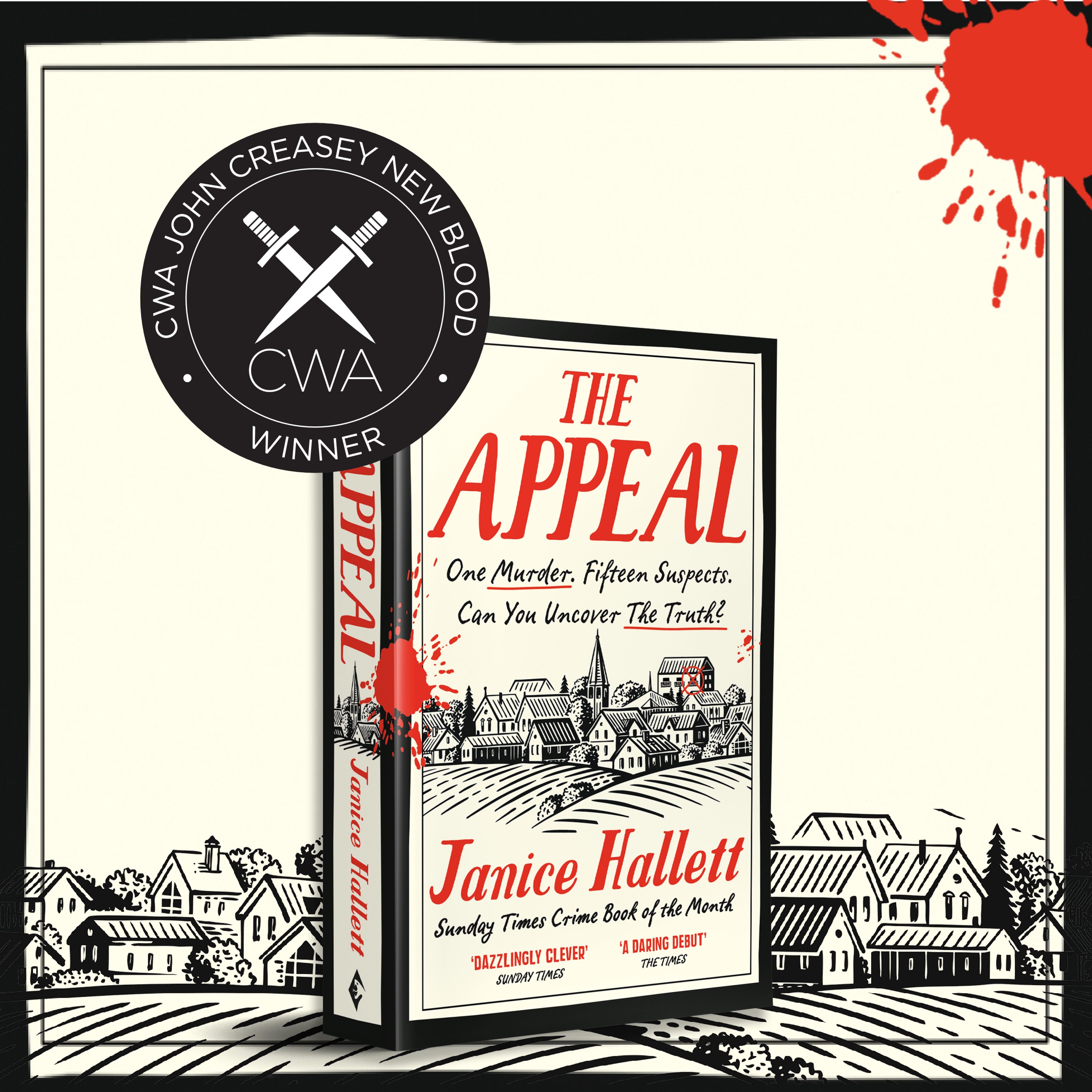
The Appeal Wins at the CWA

We are proud to announce that The Appeal by Janice Hallett won the John Creasey (New Blood) Dagger award for the best debut novel. The Appeal is a Sunday Times Crime Book of the Year which was praised by judges as a “dazzlingly clever cosy crime novel”.  The CWA Daggers is the premier crime-writing awards in the UK, so we could not be more thrilled to see Janice’s fantastic cosy crime novel take home this crown.

Learn more about The Appeal below:

***

‘This dazzlingly clever cosy crime novel completely trumps Richard Osman’ – SUNDAY TIMES
‘Witty, clever and completely addictive’ – MAIL ON SUNDAY
‘Agatha Christie for the 21st century’ – THE TIMES

ONE MURDER. FIFTEEN SUSPECTS.
CAN YOU UNCOVER THE TRUTH?

There is a mystery to solve in the sleepy town of Lower Lockwood. It starts with the arrival of two secretive newcomers, and ends with a tragic death. Roderick Tanner QC has assigned law students Charlotte and Femi to the case. Someone has already been sent to prison for murder, but he suspects that they are innocent. And that far darker secrets have yet to be revealed…

Throughout the amateur dramatics society’s disastrous staging of All My Sons and the shady charity appeal for a little girl’s medical treatment, the murderer hid in plain sight. The evidence is all there, waiting to be found. But will Charlotte and Femi solve the case? Will you?

The standout debut thriller of 2021 that delivers multiple brilliant twists, and will change the way you think about the modern crime novel.

Posted on

Serpent’s Tail Book Club: JULY 2022


JULY 2022: BEFORE THE RUINS

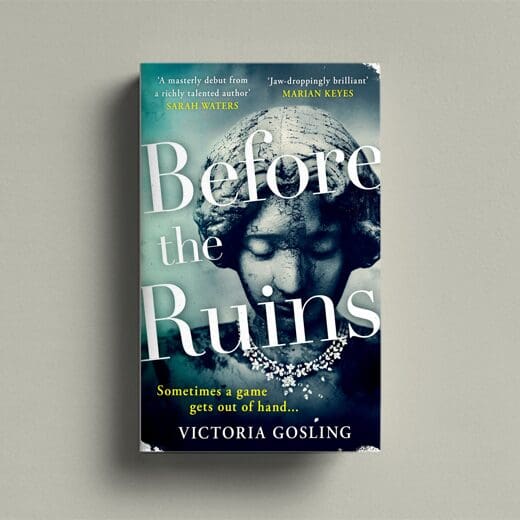
This month, we’ve chosen Victoria Gosling’s suspenseful debut novel Before the Ruins for our Serpent’s Tail Book Club pick. This is a poignant and insightful book about lost love, the power of friendship and whether missed chances are really gone forever. Scroll down for more about this gripping novel, a Q&A from Victoria and to apply for a set of books for your book group. 

Find more about the Serpent’s Tail Book Club and FAQs here.


ABOUT THE BOOK

One long, hot summer Andy and her friends begin a game that will take their whole lives to play out.

‘Engrossing, beguiling, and with an undertow of menace, Before the Ruins is a masterly debut from a richly talented author.’ Sarah Waters

‘Jaw-droppingly brilliant writing’ Marian Keyes

Andy believes that she has left her past far behind her. But when she gets a call from Peter’s mother to say he’s gone missing, she finds herself pulled into a search for answers.

Bored and restless after their final school exams, Andy, Peter, Em and Marcus broke into a ruined manor house nearby and quickly became friends with the boy living there. Blond, charming and on the run, David’s presence was as dangerous as it was exciting. The story of a diamond necklace, stolen from the house fifty years earlier and perhaps still lost somewhere in the grounds inspired the group to buy a replica and play at hiding it, hoping to turn up the real thing along the way. But the game grew to encompass decades of resentment, lies and a terrible betrayal.

Now, Andy’s search for Peter will unearth unimaginable secrets – and take her back to the people who still keep them.

ABOUT THE AUTHOR

Victoria Gosling grew up in Wiltshire and studied at Manchester University and the University of Amsterdam. She has lived in London, Australia, Brazil, the Czech Republic and Berlin. Victoria is the founder of The Reader Berlin and organises The Berlin Writing Prize. @victoriagosling


Listen to Victoria’s Before the Ruins playlist below:


Q&A WITH VICTORIA:

1. Your book is a coming-of-age story, a mystery and a thriller, with a touch of romance. Tell us about the process of writing across genres.

Initially, I was working on two separate ideas, or rather investigating two separate seams of material. One related to a group of teenagers playing a game at an abandoned manor house. The other seam was much more introspective. I had a sense of an older character, isolated, devoting herself to work and screens… then it became apparent that this character was an older version of Andy, one of the teenagers. I don’t plan novels so much as allow ideas to coalesce in my head and then try to make sense of the material. 

I was passionate about reading as a child and I think I’m always trying to satisfy both that reader—who wants missing diamonds, unsolved mysteries, murders—and a reader who is more literary-minded, who wants a response to the world in which we find ourselves, to the business of living. Only later did I realise that as a result the novel wasn’t clearly one genre or another. I hoped publishers would find it fresh but worried it’d be turned down as difficult to market. Fortunately, Serpent’s Tail saw something in it. I love their list and couldn’t be happier that Before the Ruins found a home on it.

2. Is there anything readers have picked up on that you weren’t expecting? 

I’ve had a couple of readers write to me saying they know where the diamonds are! Whether they were right or not, I cannot say…

3. Your writing has been compared to Agatha Christie, Tana French and Alan Hollinghurst. Who do you see as your writing influences?

As a child I did love Agatha Christie, particularly Crooked House. I also love Graham Greene for the compelling simplicity of his novels, and I read a lot of Joseph Conrad as a teenager. 

Discover more of Victoria’s literary influences over at her Bookshop.org shelf:


READING GROUP QUESTIONS

  1. What were your first impressions of Andy and how do they compare to your impressions of her at the end of the book?
  2. Do you believe that the friends ever came into contact with the original diamonds?
  3. How does the title relate to the events of the novel? Does it have more than one possible meaning?
  4. Games and gameplaying are a recurring theme – can you describe some of the games that Andy and her friends play with each other apart from hiding the necklace?
  5. What did you initially think had happened to Peter and why?
  6. What is the importance of social media and surveillance technology in the novel? Is it different from the friends spying on one another in the Manor House?
  7. Andy hope desperately for what she calls ‘magic’ at various points in her life. Do you think she encounters it?
  8. During her meeting with Andy, Alice says ‘None of you seemed prone to telling the truth’. What is the biggest truth revealed in the novel? How does it change things?
  9. What role does social class or the friends’ perceptions of it play in Before the Ruins?
  10. How do you see Andy and David’s relationship evolving beyond the final pages?


Posted on

Independent Bookshop Week

Independent Bookshop Week is just around the corner! Launched in 2006 as part of the Books Are My Bag campaign, this special week is a celebration of independent bookshops nationwide and the role independents play in their communities.

We asked Serpent’s Tail authors to take us on a journey through their favourite independent bookshops, from London, to Ludlow, to Vermont and beyond!

Join the conversation and let us know your favourite indie bookshop by tweeting us @SerpentsTail.

Sarai Walker – author of The Cherry Robbers

Northshire Bookstore, Vermont USA

“I love so many independent bookshops. One of my favourites is Northshire Bookstore in Manchester, Vermont. In the early 2000s, I did my master’s degree in creative writing at Bennington College, which is nearby.

I would often visit Northshire Bookstore and spend hours there browsing their amazing selection. It was such a cozy environment in which to discover new books and authors, and I always found not only books there but inspiration. A couple years ago I returned to Vermont for the first time in about 15 years. Of course I went back to Northshire and there I saw my first novel on the shelf. It was such a thrill for me to see my work available there.”

Alix Nathan – author of Sea Change

Poetry Pharmacy, Bishop’s Castle and The Montgomery Bookshop, Ludlow UK

“Living in the Marches means my two nearest independent bookshops are in England and in Wales: the famous and fascinating Poetry Pharmacy, Bishop’s Castle and The Montgomery Bookshop, cosy, book- and flower-filled in lovely Montgomery.  Not far away is Burway Books, small in size, big of heart.  In a 25-mile radius bookshops are only independent! Yet a little further, Castle Bookshop in historic Ludlow and the amazing, ever lively Booka’.  Better scrub the 25-mile radius bit as Booka is 29 miles away.  I suppose if I stretch the distance between me and Shrewsbury Waterstones to 30 miles the assertion about radius could be retained …”

Lizzy Stewart – author of Alison

The Bookseller Crow, Crystal Palace, London UK

“The experience of trying to choose a favourite bookshop is not similar to the desperate brain-rifling I have to do to choose a favourite book. It is impossible, for every mood there is a different bookshop! So I’ll have to go for the one that has been my longest serving local! Though I’ve moved away now, the Bookseller Crow in Crystal Palace served me well for six years. The selection of books is well curated and unusual, which really gives the shop an identity. The graphic novel selection is great, the kids book section is good and they have, on occasion, let me draw all over their windows!”
Jami Attenberg – author of I Came All This Way to Meet You

“It’s impossible for me to choose a favourite independent bookstore because in a way they’re all my favourites. I love how each indie bookstore I step into has its own identity and point of view. I love reading the little shelf-talker notes booksellers write for their favourite reads. I love chit-chatting with the staff, seeing how their day is going, having them point me in the right direction of something new I haven’t heard of before. I love the soundtrack playing in the background. I love the dinging of a bell on a front door whenever a new customer shows up. I love the way little communities form out of them. I love how they make a neighbourhood complete.”

Posted on

Summer Reading Guide

The ultimate summer reading guide. Begin with a gothic ghost story with a fiery feminist zeal and end with a book about the untidy, complicated underbelly of love and love’s end. Whether you’re sunbathing in your local park or vacationing through the Mediterranean, you won’t be able to step away from these stories.

Which one of these books will you be diving into this summer? Let us know by tweeting us @SerpentsTail.

OUT NOW

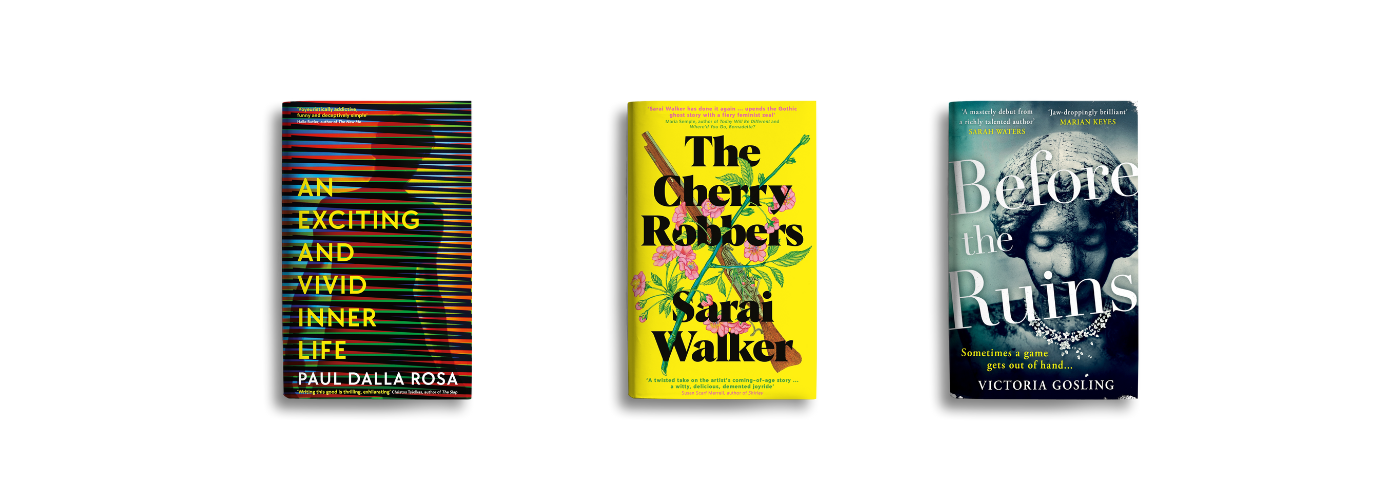
An Exciting and Vivid Inner Life by Paul Dalla Rosa

By turns unsparing and tender, Dalla Rosa explores our lives in late-stage Capitalism, where globalisation and its false promises of connectivity leave us further alienated and disenfranchised. Like the legendary Lucia Berlin and his contemporary Ottessa Moshfegh, Dalla Rosa is a masterful observer-and hilarious eviscerator-of our ugly, beautiful attempts at finding meaning in an ugly, beautiful world.

The Cherry Robbers by Sarai Walker

First they get married, then they get buried. The Cherry Robbers is a wonderfully atmospheric, propulsive novel about sisterhood, mortality and forging one’s own path.

Before the Ruins by Victoria Gosling

One long, hot summer Andy and her friends begin a game that will take their whole lives to play out.

‘Engrossing, beguiling, and with an undertow of menace, Before the Ruins is a masterly debut from a richly talented author’ – Sarah Waters

‘Jaw-droppingly brilliant writing’ – Marian Keyes

COMING SOON

Chorus by Rebecca Kauffman

Chorus is a hopeful story of family, of loss and recovery, of complicated relationships forged between brothers and sisters as they move through life together, and of the unlikely forces that first drive them away and then ultimately back home.

Teen Couple Have Fun Outdoors by Aravind Jayan

A scandalous video.
A humiliated family.
And a brother stuck in the middle.

Full of bittersweet comedy, and insight into contemporary Indian society and an online generation, this is a story about now with the feel of a classic.

Is This Love? by C.E. Riley

Did you mean to marry me? Did you understand the vows that we took?

Narrated by J in the days, weeks and months after the marriage collapses, and interspersed with the departed wife’s diary entries, Is This Love? is an addictive, deeply unsettling, and provocative novel of deception and betrayal, and passion turned to pain.

The Long Answer by Anna Hogeland

The Long Answer is a stunning novel of secrets kept and secrets shared. Deeply empathetic and hugely absorbing, it unravels the intimate dynamics of female friendship, sisterhood, motherhood and grief, and the ways in which women are bound together and pulled apart by their shared and contrasting experiences of pregnancy, abortion, miscarriage and infertility.

Posted on

The Cherry Robbers – read an extract

First they get married, then they get buried

‘Sarai Walker has done it again … upends the Gothic ghost story with a fiery feminist zeal.’ Maria Semple, bestelling author of Where’d You Go Bernadette

A New York Times spring fiction pick for 2022
A GoodReads pick for May 2022

The reclusive Sylvia Wren, one of the most important American artists of the past century, has been running from her past for sixty years. Born Iris Chapel, of the Chapel munitions dynasty, second youngest of six sisters, she grew up in a palatial Victorian ‘Wedding Cake House’ in New England, neglected by her distant father and troubled, haunted mother.

The sisters longed to escape, but the only way out was marriage. Not long after the first Chapel sister walks down the aisle, she dies of mysterious causes, a tragedy that repeats with the second sister, leaving the rest to navigate the wreckage, with heart-wrenching consequences.

The Cherry Robbers is a wonderfully atmospheric, propulsive novel about sisterhood, mortality and forging one’s own path. Read an extract below.

Follow the author on Twitter: @quesaraisera


BELLFLOWER

1950

1.

Later, once the tragedies began to happen, one after another, the children in the village made up a rhyme about us.

The Chapel sisters:
first they get married
then they get buried

It didn’t help matters that we lived in an enormous Victorian house that looked like a wedding cake. If this were a novel, that detail would push the boundaries of believability, but that’s what our house looked like and I can’t change reality. Our home, on the west side of Bellflower Village, was a foremost example of the so-called wedding-cake style of architecture. It was one of the most photographed private residences in Connecticut; I’m sure even now you can find a picture of it in a textbook somewhere.

The house, with its cascading tiers and ornamental details, looked as if it were piped with white icing. The eyes are drawn first to the central tower, looming and Gothic, perched above the rest of the house and circled with tiny dormered windows. (You could imagine Rapunzel tossing her braid out of one of those windows.) Below the tower, the sloping mansard roof banded around the top of the house, punctuated by third-floor windows, which looked miniature from the ground. A prominent widow’s walk and balustrade marked the second floor, then there was the ground floor, with
its bay windows and portico, curlicues everywhere, and tall stalks of flowers ringing the base.

It looked like something out of a fairy tale, that’s what everyone said. If you could have sliced the exterior of this wedding-cake house with a knife, you would have found inside six maidens — Aster, Rosalind, Calla, Daphne, Iris, Hazel — each of whom were expected to become a bride one day. It was the only certainty in their lives.

Dearly beloved.
Dearly departed.

2.

Aster went first. As the oldest, she was used to going first, so I suppose it’s fitting this story begins with her walking down the aisle into what came after, what my mother called the “something terrible.” Someone had to go first, and since Aster was always the kindest and most responsible, I’m certain she would have seen it as her duty to light the way for her sisters even if she hadn’t been the oldest. As it was, she didn’t know she was the beginning of a story. Only the younger among us would live to see it through.

The summer before Aster’s wedding was the last normal summer. That’s when she met Matthew. As much as I don’t want to think about him and all that he wrought, there wouldn’t have been a wedding without him.

That summer in 1949 we went to Cape Cod as we did every year, staying in a suite of three rooms at the hotel on Terrapin Cove, which was located at the elbow of the Cape. These two weeks in July were the only time of the year my mother and sisters and I traveled away from the wedding cake. Our summer vacation was our annual airing out, when the dome placed over us was lifted and we, choosing from any number of metaphors, scurried away like ants, flitted into the breeze like butterflies, scattered on the wind like petals.

Since we were used to being confined at home, we didn’t scatter far and usually spent our days on the beach spread out on an assemblage of blankets. My father, never one for leisure, stayed at home during the week so he didn’t have to miss work. He joined us on weekends, but even when he joined us, he wasn’t really there, staying in the hotel for most of the day with his papers and ledgers. He’d come outside occasionally, looking out of place in his unfashionable brown suit, squinting into the sun, his hand a visor on his brow. He’d look for his wife and daughters, an island in the sand, and once he’d spotted us, he wouldn’t wave or smile, only turn and go back inside, secure in the knowledge we were there. I assumed he had this scheduled on his calendar: 11 a.m., family time.

My sisters and I sat with our mother on the beach in front of the hotel every day of our vacation, encircled by open parasols. Belinda (I’m going to refer to her by her name as much as possible; she was her own person, after all, not simply our mother) always held a parasol over her head at the beach, as she did when she worked in her garden at home. She wore white linen dresses, her long white hair (it had turned white in her mid-forties) looped into a bun like a Victorian’s with just enough at the sides to cover her missing earlobes. Like the wedding cake, she seemed to exist outside our time. She looked like the austere, melancholy women in Julia Margaret Cameron’s photography — wide downcast eyes, an oval face with prominent cheekbones and a subtly aquiline nose, and pale skin lined like a sheet of linen paper that had been lightly crinkled then smoothed back out.

She liked the beach; it calmed her in a way home never could. She didn’t swim, didn’t partake in sunbathing or any other merriment, but she liked walks. Mostly, she read books, which she stacked neatly next to her canvas chair, Emily Dickinson’s poetry or a novel by one of the Brontës. Her nostrils would flare as she read, inhaling the salty breeze. It was as close as she’d get to taking the waters.

Posted on

Viper wins Imprint of the Year at the British Book Awards

We are thrilled to share that Viper has been named Imprint of the Year at the British Book Awards!

The annual book industry awards were announced last night, and we couldn’t have been more excited when Viper was announced as the winner in the Imprint of the Year category. The award recognises our amazing bestsellers from Janice Hallett’s The Appeal to Catriona Ward’s The Last House on Needless Street, and publisher Miranda Jewess’s work on the list.

We have only been around for a few years but we’re very proud of the impact we’ve made. We’d like to say a huge thank you to all the authors, booksellers, bloggers, readers and everyone who’s helped us become an award-winning imprint.

Discover the Viper list

Join us on TwitterFacebook and Instagram

Sign up to our newsletter

… to be the first to hear about killer new reads and breaking news from the world of crime writing.

Posted on

The Serpent’s Tail Book Club

JUNE 2022: IN THE DREAM HOUSE

We are thrilled to be launching our first ever Serpent’s Tail Book Club with Carmen Maria Machado’s incomparable In the Dream House. This is an unforgettable, genre-bending memoir of domestic violence in a queer relationship. We think it makes a great book group read for Pride Month.

Find more about the Serpent’s Tail Book Club and FAOs here.

ABOUT THE BOOK

In the Dream House is a revolutionary memoir about domestic abuse by the prizewinning author of Her Body and Other Parties.

‘Ravishingly beautiful’ Observer
‘Excruciatingly honest and yet vibrantly creative’ Irish Times

WINNER OF THE RATHBONES FOLIO PRIZE 2021

In the Dream House is Carmen Maria Machado’s engrossing and wildly innovative account of a relationship gone bad. Tracing the full arc of a harrowing experience with a charismatic but volatile woman, this is a bold dissection of the mechanisms and cultural representations of psychological abuse.

Each chapter views the relationship through a different lens, as Machado holds events up to the light and examines them from distinct angles. She casts a critical eye over legal proceedings, fairy tales, Star Trek and Disney villains, as well as iconic works of film and fiction, infusing all with her characteristic wit, playfulness and openness to enquiry. The result is a powerful book that explodes our ideas about what a memoir can do and be.

ABOUT THE AUTHOR

Carmen Maria Machado is the author of Her Body and Other Parties, which was a finalist for the National Book Award, and In the Dream House, which was the winner of the Rathbones Folio Prize. She is the recipient of a Guggenheim Fellowship and is the Abrams Artist-in-Residence at the University of Pennsylvania. She lives in Philadelphia with her wife.

Follow Carmen on Instagram @carmenmariamachado


Discover Carmen’s literary influences over at her Bookshop.org shelf.

Listen to Carmen’s In the Dream House playlist

READING GROUP QUESTIONS

Much of the memoir concerns the missing evidence of queer lives and the incomplete archive of queer stories. How does Carmen Maria Machado explore this absence in the telling of her own story?

In ‘Dream House as an Exercise in Point of View’, Carmen divides herself into an ‘I’ and a ‘You’, which inform the narration that follows through the rest of the book. How often did these two versions of the character overlap in your reading, if at all, and how conscious did you remain of their separation?

The book explores the expectation that victims of abuse must provide evidence before people can believe them. How does this contradict or compliment the idea of the absence of the archive?

At what point in the story did the Woman’s behaviour towards Carmen turn from worrying to frightening in your eyes? Why?

What would constitute unacceptable behaviour in your own relationships?

What do you make of the idea that queer abuse is about homophobia, in the same way abuse in heterosexual relationships is about sexism?

Carmen Maria Machado often focuses on the corporeal in her writing, perhaps to ground aspects of magical realism. Where is the body situated in In the Dream House and how is it framed within the narrative?

In ‘Dream House as Time Travel’, one of the questions that has haunted Carmen is whether ‘knowing would have made [her] dumber or smarter’. What do you think?

Regarding the legal framework surrounding domestic abuse, alongside the film Gaslight, Carmen Maria Machado notes that the legal system does not provide protection against verbal, emotional and psychological abuse. Although now recognised as a legal cause of action in the UK as well as many US states, how do we talk about consequences for abuse when behaviour cannot be classified as illegal?

What do you imagine the Dream House looks like?


Posted on

An Exciting and Vivid Inner Life: read an extract

A story collection that perfectly captures life in the internet age

Whether working in food service or in high-end retail, lit by a laptop in a sex chat or by the camera of an acclaimed film director, or sharing a flat in the city or a holiday rental in Mallorca, the protagonists of the ten stories comprising Paul Dalla Rosa’s debut collection navigate the spaces between aspiration and delusion, ambition and aimlessness, the curated profile and the unreliable body.

By turns unsparing and tender, Dalla Rosa explores our lives in late-stage Capitalism, where globalisation and its false promises of connectivity leave us further alienated and disenfranchised. Like the legendary Lucia Berlin and his contemporary Ottessa Moshfegh, Dalla Rosa is a masterful observer – and hilarious eviscerator – of our ugly, beautiful attempts at finding meaning in an ugly, beautiful world.

An Exciting and Vivid Inner Life publishes on 2nd June. Find out more here.

Read an extract from the short story ‘Short Stack’ below.


Sam was nineteen and still had baby fat and maybe some real fat and couldn’t enter bars without pulling out his wallet
and repeating his birthdate and star sign. The Pancake Saloon was a suburban restaurant in a franchise chain that twenty-four hours a day, seven days a week, sold pancakes drenched in concentrated high-fructose corn syrup. The restaurant had a western theme, with saloon-style doors, tables with chipped laminate designed to look like dark polished wood, and fixtures imitating nineteenth-century gas lamps that saturated the dining floor in dim, syrupy light. It was staffed exclusively by under-twenty-five-year-olds, its kitchen manned by Nepali migrants on temporary work visas.


Sam worked nights, eleven-hour shifts in the kitchen, not the restaurant. He didn’t cook or make coffee or speak Nepali; he washed dishes, and at times was good at it: stacking glasses in the commercial-grade machine, blasting syrup off plates with a high-pressure nozzle, scrubbing the rubber mats that lined the floor. He was early to work, kept his uniform ironed and was overly enthusiastic in a way most people mistook as a sign of mild developmental problems.


At times, Sam fucked up. Sam fucked up especially on weekends, in the early hours of the morning, 1 a.m., 3 a.m., when the night bus ferrying drunk people from clubs and bars in the city back to their suburban homes would unload at the stop directly in front of the Pancake Saloon. All of a sudden the restaurant would be full, and the customers, often people Sam had gone to school with but who were now in college, were loud and aggressive. They’d empty packets of sugar and cartons of creamer onto tables, vomit in toilet stalls, even perform partially clothed sex acts in open booths. The ambient pressure, almost barometric, moved into the kitchen, and Sam would begin to work in a kind of slow motion. Sam put clean dishes in the dishwasher and moved behind people without saying ‘behind’, causing people to trip, vats of thick pancake batter to spill and the cooks to loudly repeat the Nepali word for idiot.


Then, after four, there would be calm, and by five, when the night manager left to do the night’s cash drop, the floor staff would sit on milk crates behind the restaurant, next to the skip, and smoke weed, and though no one offered Sam weed, Sam would sit with them or stand in their vicinity. Servers would say things like, ‘I think the Pancake Saloon should blow up,’ or, ‘There should be a flood and the flood should wash away the Pancake Saloon.’ And as people got higher they would become more inventive. ‘There should be a flood and the flood washes away the Pancake Saloon but there’s a gas explosion and as the Pancake Saloon washes away it’s also on fire.’ And Sam would say, ‘The Pancake Saloon sucks.’ Not because he thought it sucked but because he wanted to contribute. He liked the Pancake Saloon. He liked it a lot.


If someone asked Sam when he was happiest—no one did, but he held the answer close to him in case the question ever came up in some online survey or chain Facebook post or interview for an unspecified higher position—he would say he was happiest eating a stack of pancakes drenched in high-fructose corn syrup. He was happiest eating them at the Pancake Saloon with his friends who were not his friends but his co-workers.

Posted on

The Essex Serpent TV: the trailer is here!

‘It’s when we’re most lost that the source of light is closest…’

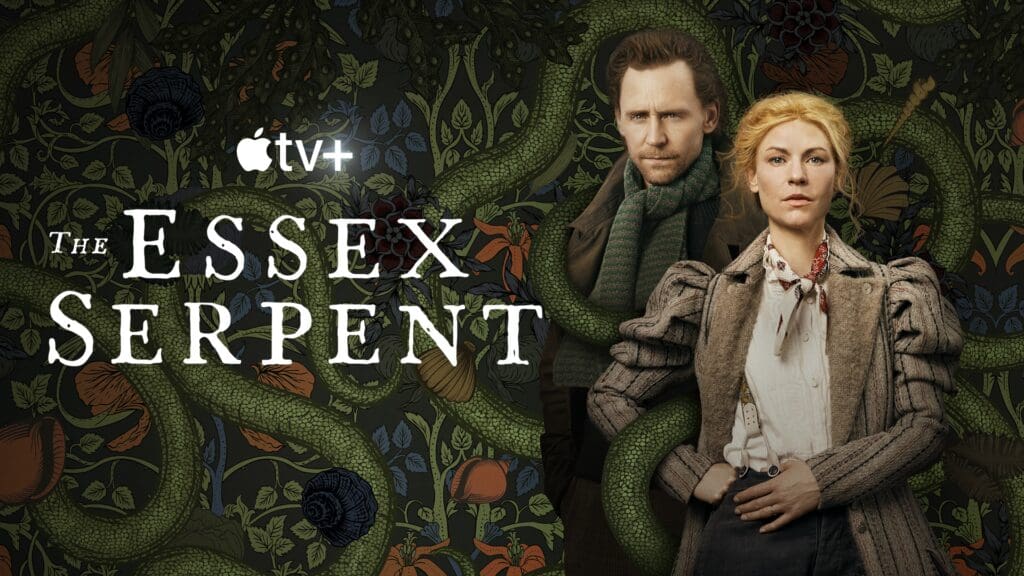
We are so excited to be sharing with you the spine-tingling trailer for the TV adaptation of Sarah Perry’s The Essex Serpent.

Starring Claire Danes as Cora and Tom Hiddleston as Will, The Essex Serpent follows London widow Cora Seaborne who moves to Essex to investigate reports of a mythical serpent. She forms an unlikely bond with the village vicar, Will, but when tragedy strikes, locals accuse her of attracting the creature. 

The Essex Serpent was first published in 2016. It was a Sunday Times bestseller and won Book of the Year at the British Book Awards as well as Waterstones Book of the Year.

Watch the trailer below – and get your copy in your local bookshop or via Waterstones, Amazon or Bookshop.org.

Coming 13th May to Apple TV.

Posted on

Join Torrey Peters on tour

The brilliant author of Woman’s-Prize-longlisted Detransition, Baby is coming to the UK! Find out where to see her, who she’s being interviewed by, and how to get tickets below.

FRIDAY 20 MAY, BRITISH LIBRARY with Shon Faye – TICKETS

SATURDAY 21 MAY, BATH FESTIVAL with Elizabeth Day – TICKETS

WEDNESDAY 25 MAY, STRANGE BREW BRISTOL with Travis Alabanza – TICKETS

THURSDAY 26 MAY, HAY FESTIVAL – TICKETS

FRIDAY 27 MAY, DUBLIN INTERNATIONAL LITERATURE FESTIVAL – TICKETS

Posted on

Alex Wheatle on the World Book Night 2022 list

We are thrilled that Alex Wheatle’s WITNESS, a thrilling, pacy story that is full of moral complexity and insight into gang violence, has been chosen as one of the World Book Night books for 2022.

ABOUT THE BOOK:

To tell the truth? Or protect his family?

Cornell is having a bad time. Kicked out of secondary school for a fight he didn’t start, he finds himself in a Pupil Referral Unit. Here he makes friends with one of the Sinclair family. You don’t mess with the Sinclairs, and when Ryan Sinclair demands Cornell comes with him to teach another student some respect, Ryan witnesses something that will change his life.

Torn between protecting his family and himself, Cornell has one hell of a decision to make.  

ABOUT WORLD BOOK NIGHT:

World Book Night is a national celebration of reading and books that takes place on 23 April every year. Print books are gifted throughout the UK and Ireland with a focus on reaching those who don’t regularly read for pleasure or have access to books, through organisations including prisons, libraries, colleges, hospitals, care homes and homeless shelters.

Witness is one of the Quick Reads titles, aiming to inspire emerging or lapsed readers to get back into books. One in six adults in the UK find reading difficult, and one in three people do not regularly read for pleasure. These books cost just £1 at bookshops, or are free at libraries across the country.

Take a look at the 2022 booklist, featuring Alex Wheatle’s WITNESS and find out how you can join in the celebrations on 23 April: https://worldbooknight.org/

Follow @WorldBookNight @readingagency and Alex Wheatle @brixtonbard

·

·

Posted on

Easter Holiday Reads

Start your Easter holidays with new fiction that won’t just grip you from the very first page, but also challenge your world views and perspectives. This Easter, we’re highlighting the best our list has to offer, including a wonderfully moving debut short story collection by Gurnaik Johal and a venomous page-turning thriller by Catriona Ward.

Tell us what you’re reading by tweeting us @SerpentsTail!

Booth by Karen Joy Fowler

A major new novel from million-copy bestselling author of We Are All Completely Beside Ourselves, Booth is a riveting novel focused on the very things that bind, and break, a family.

We Move by Gurnaik Johal

Mapping an area of West London, these stories chart a wider narrative about the movement of multiple generations of immigrants. In acts of startling imagination, Gurnaik Johal’s debut brings together the past and the present, the local and the global, to show the surprising ways we come together.

Libertie by Kaitlyn Greenidge

Immersive, lyrical and deeply moving, Libertie is a novel about legacy and longing, the story of a young woman struggling to discover what freedom truly means – for herself, and for generations to come.

Witness by Alex Wheatle

Torn between protecting his family and himself, Cornell has one hell of a decision to make. This is published as part of the Quick Reads series, which aims to share the joy of reading with adults who are improving their literacy. It is Alex Wheatle at his best: a thrilling, pacy story that is full of moral complexity and insight into gang violence.

Sundial by Catriona Ward

The new modern gothic masterpiece from the bestselling and award-winning author of The Last House on Needless Street. Perfect for readers of Push and Girl A. If Stephen King says ‘do not miss this book,’ perhaps its best we listen!

The Geometer Lobachevsky by Adrian Duncan

It is 1950 and Nikolai Lobachevsky, great-grandson of his illustrious namesake, is surveying a bog in the Irish Midlands, where he studies the locals, the land and their ways. One afternoon, soon after he arrives, he receives a telegram calling him back to Leningrad for a ‘special appointment’.