Posted on

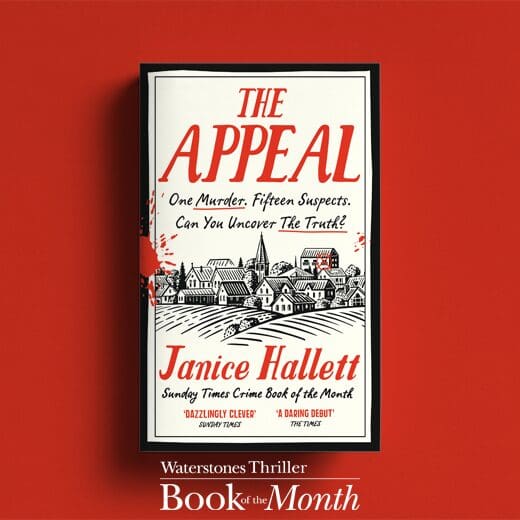
The Appeal is the Waterstones Thriller of the Month!

***Now a Top 5 Sunday Times Bestseller!***

We are thrilled to reveal that the incredible, innovative crime novel THE APPEAL by Janice Hallett has been crowned the Waterstones Thriller of the Month!

The Waterstones exclusive edition includes the first chapter from Janice’s next book, THE TWYFORD CODE – order yours here.


ABOUT THE BOOK

In a town full of secrets…
Someone was murdered.
Someone went to prison.
And everyone’s a suspect.
Can you uncover the truth?

*** THE SUNDAY TIMES CRIME BOOK OF THE MONTH ***

‘This dazzlingly clever cosy crime novel completely trumps Richard Osman. A modern Agatha Christie’ – SUNDAY TIMES

‘This is a case you’re about to become obsessed with. A triumph’ – ALEX NORTH

‘Gripping. I loved the ambitious and unusual approach’ – SOPHIE HANNAH

Dear Reader – enclosed are all the documents you need to solve a case. It starts with the arrival of two mysterious newcomers to the small town of Lockwood, and ends with a tragic death.

Someone has already been convicted of this brutal murder and is currently in prison, but we suspect they are innocent. What’s more, we believe far darker secrets have yet to be revealed.

Throughout the Fairway Players’ staging of All My Sons and the charity appeal for little Poppy Reswick’s life-saving medical treatment, the murderer hid in plain sight. Yet we believe they gave themselves away. In writing. The evidence is all here, between the lines, waiting to be discovered.

Will you accept the challenge? Can you uncover the truth?

BUY YOUR COPY

Follow @janicehallett on Twitter


Posted on

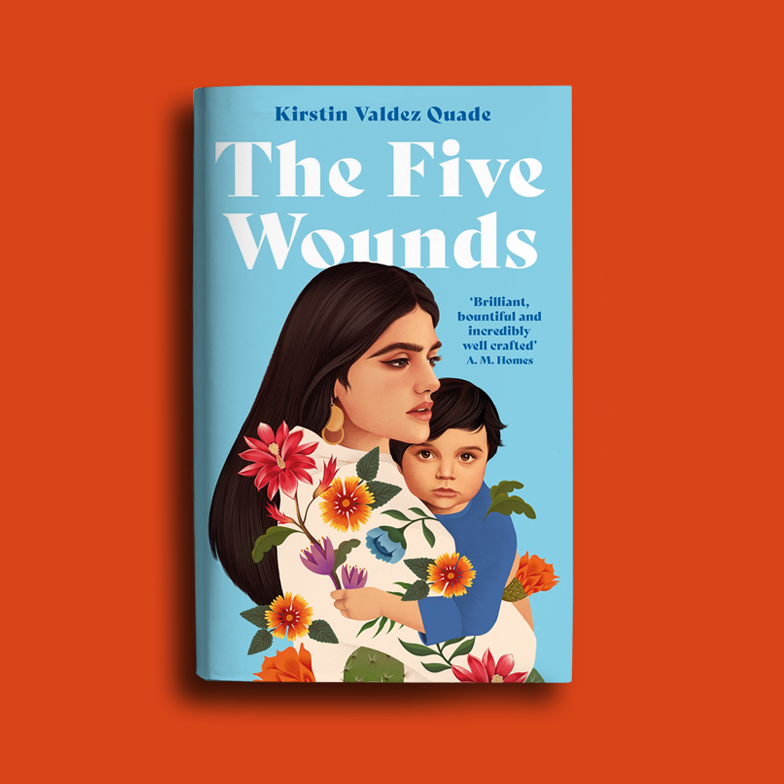
The Five Wounds: Indie Book of the Month

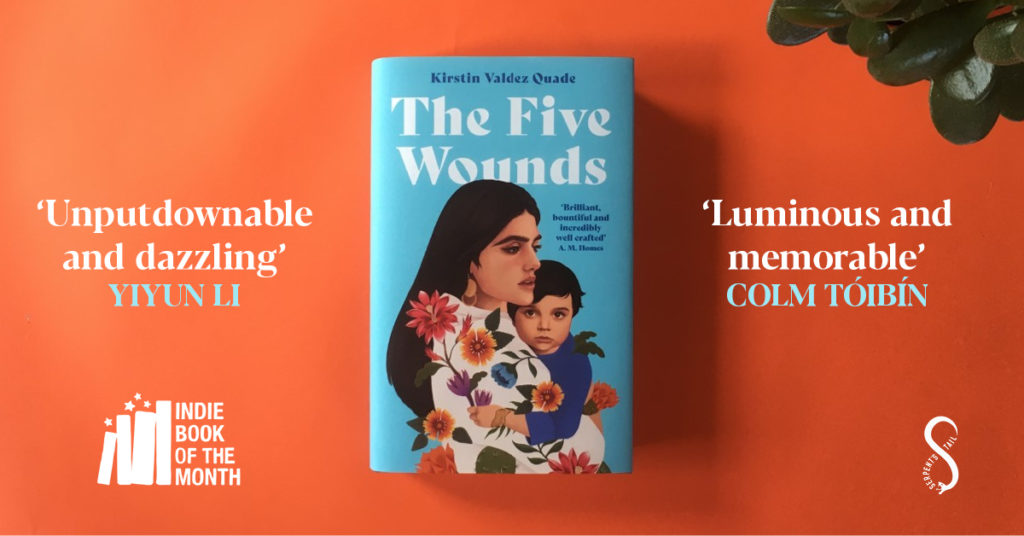
We are delighted that the incredible THE FIVE WOUNDS by Kirstin Valdez Quade has been crowned Booksellers’ Association Indie Book of the Month! Look out for this stunning story of family and sacrifice in your local independent bookshop.


ABOUT THE BOOK

From an award-winning storyteller comes a stunning debut novel following one family’s extraordinary year of love and sacrifice.

An Amazon Best Book of April 2021
Named one of the Most Anticipated Books of 2021 by Oprah Magazine, The Week, The Millions, and Electric Lit.
July 2021 Book of the Month for Roxane Gay’s Book Club

It’s Holy Week in the town of Las Penas, New Mexico, and thirty-three-year-old unemployed Amadeo Padilla is to play Jesus in the Good Friday procession. He is preparing feverishly for this role when his fifteen-year-old daughter Angel shows up pregnant on his doorstep.
Vivid, darkly funny, and beautifully rendered, The Five Wounds spans the baby’s first year as five generations of the Padilla family converge: Amadeo’s mother, Yolanda, reeling from a recent discovery; Angel’s mother, whom Angel isn’t speaking to; and Tío Tíve, keeper of the family’s history. In the absorbing, realist tradition of Elizabeth Strout and Jonathan Franzen, Kirstin Valdez Quade brings to life the struggles of her characters to parent children they may not be equipped to save.

Buy your copy


This year Amadeo Padilla is Jesus. The hermanos have been preparing in the dirt yard behind the morada.

This is no silky-haired, rosy-cheeked, honey-eyed Jesus, no Jesus-of-the-children, Jesus-with-the-lambs. Amadeo is muscled, hair shaved close to a scalp scarred from teenage fights, roll of skin where skull meets neck.

Amadeo is building the cross out of heavy rough oak instead of pine. He’s barefoot like the other hermanos, who have rolled their cuffs and sing alabados. They have washed their white pants, braided their disciplinas the old way, from the thick fibers of yucca leaves, mended rips in the black hoods they will wear to ensure their humility in this reenactment. The Hermano Mayor— Amadeo’s skinny grand- tío Tíve, who surprised them all when he chose his niece’s lazy son— plays the pito, and the thin piping notes rise.

Today Amadeo woke with the idea of studding the cross with nails to give it extra weight. He holds the hammer with both hands high above his head, brings it down with a crack. The boards bounce, the sound strikes off the outside wall of the morada and, across the alley, the Idle Hour Cantina.

Amadeo has broken out in a sweat. Amadeo sweats, but not usually from work. He sweats when he eats, he sweats when he drinks too much. Thirty- three years old, same as Our Lord, but Amadeo is not a man with ambition. Even his mother will tell you that, though it breaks her heart to admit it. Yolanda still cooks for him, setting a plate before him at his place at the table.

This afternoon, though, even Amadeo’s tattoos seem to strain with his exertion, and he’s seeing himself from outside and above. A flaming Sacred Heart beats against his left pectoral, sweat drips from the point of a bloodied dagger on his bicep, and the roses winding around his side bloom against the heat of his effort. On his back, the Guadalupana glistens brilliantly, her dress scarred with the three vertical cuts of the sellos, the secret seals of obligation. The lines, each the length of a man’s hand, are raised and pink and newly healed, evidence of his initiation into the hermandad.

Though Amadeo has lived in Las Penas his whole life, today he sees the village anew: the lines are sharper, the colors purer. The weeds along the edge of the fence, the links of the fence itself, the swaying tops of the cottonwood trees— everything is in preternatural focus. The morada is lit by the sun sinking orange at his back, the line sharp between cinderblock and sky. He brings the hammer down, hitting each nail true, enjoying the oiled rotation of his joints, the fatigue in his muscles. He feels righteous and powerful, his every movement predetermined. He feels born for the role.

Then he pounds the last nail, and he’s back in his body, and the hermanos are wrapping up, heading home.

———

When Amadeo pulls up the gravel drive to the house, his daughter Angel is sitting on the steps, eight months pregnant. She lives in Española with her mom. He hasn’t seen her in more than a year, but he’s heard the news from his mother, who heard it from Angel.

White tank top, black bra, gold cross pointing the way to her breasts in case you happened to miss them. Belly as hard and round as an horno. The buttons of her jeans are unsnapped to make way for its fullness, and also to indicate how this happened in the first place. Her birthday is this week, falls on Good Friday. She’ll be sixteen.

“Shit,” Amadeo says, and yanks the parking brake. This last week was the most important week in Jesus’s life. This is the week everything happened. So Amadeo’s mind should be trained on sacrifice and resurrection, not his daughter’s teen pregnancy.

She must not see his expression, because she gets up, smiles, and waves with both hands. The rosary swings on his rearview mirror, and Amadeo watches as, beyond it, his daughter advances on the truck, stomach outthrust. She pauses, half turns, displays her belly.

She’s got a big gold purse with her, and a duffel bag, he sees, courtesy of Marlboro. Angel’s hug is straight on, belly pressing into him.

“I’m fat, huh? I barely got these pants and already they’re too small.”

“Hey.” He pats his daughter’s back gingerly between her bra straps, then steps away. “What’s happening?” he says. It’s too casual, but he can’t afford to let her think she’s welcome, not during Passion Week, and with his mother away.

“Ugh. Me and Mom got in a fight, so I told her to drive me here.” Her tone is light. “I didn’t know where you and Gramma were. I’ve been here, like, two hours, starving my head off. Pregnant people need to eat. I almost broke in just to make a sandwich. Don’t you guys check your phones?”

Amadeo hooks his thumbs in his pockets, looks up at the house, then back at the road. The sun is gone now, the dusk a nearly electric blue.

“A fight?” In spite of himself, Amadeo takes some pleasure in Angel’s indignation at her mother. Marissa has always made him feel insufficient.

“I can’t even. Whatever,” she says with conviction. “What me and the baby need right now is a support system. That’s what I told her.”

Amadeo shakes his head. “I’m real busy,” he says, like an actor portraying regret. “Now’s not a good time.”

Angel doesn’t look hurt, just interested. “Why? You got a job or something?”

She lifts her duffel and begins to walk toward the door, swaying under the weight of luggage and belly. “My mom’s not here,” he calls. He’s embarrassed to tell her the real reason he wants her gone, embarrassed by the fervor that being a penitente implies.

“Where’d Gramma go?” There’s real worry in her voice. She holds the screen open with her hip, waiting for him to unlock the door.

“Listen, it’s a busy week.” He rushes this next part, his breath short. “I’m carrying the cross this year. I’m Jesus.”


 

Posted on

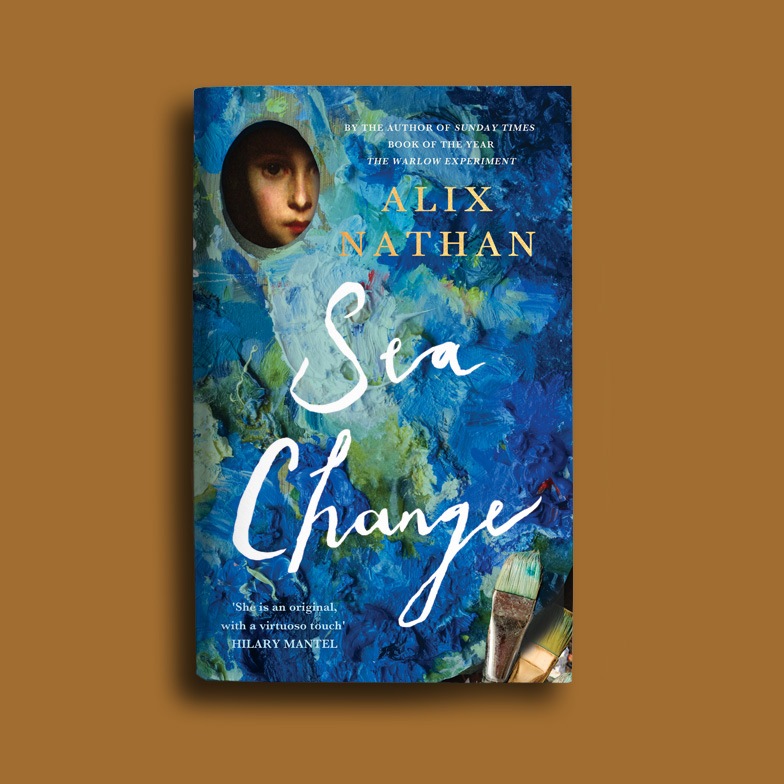
Sea Change: read the opening

From acclaimed author of The Warlow Experiment, the moving story of a mother and daughter separated in Regency England

‘I’ll be back soon, my love. Tonight, I hope.’

The last Eve saw of her mother was a wave from the basket of a rising balloon. A wilful, lonely orphan in the house of her erratic artist guardian, Eve struggles to retain the image of her missing mother and the father she never knew. In a London beset by pageantry, incipient riot and the fear of Napoleonic invasion, Eve must grow into a young woman with no one to guide her through its perils.

Far away, in a Norfolk fishing village, the Rev Snead preaches hellfire and damnation to his impoverished parishioners and oppressed wife. Snead illustrates his sermons with the example of a mute woman pulled from the sea, over whom he keeps a very close watch indeed.

Buy your copy


The celebrated Aëronaut M André-Jacques Garnerin

will Ascend in his gas Balloon

at Ranelagh

on 28 June 1802 at 5 o’clock

during an elegant Afternoon Breakfast

given by the Directors of the Pic Nic Society

in recognition of the new Peace of Amiens.

M Garnerin will be accompanied by

the renowned Artist and Engraver Mr Joseph Young

and, to prove the Safety of such Travel to

Members of the Fair Sex,

the well-known Proprietress of Battle’s Coffee House

Miss Sarah Battle

They walk through the crowd towards the enormous balloon, thirty feet in diameter, forty-five feet high, as big as a four-storey house, shifting gently against its anchoring ropes despite a hot,

almost breathless day. Its alternate dark-green and yellow segments are encased in a net, its oblong car draped in tricolours and Union Jacks. On the ground around it lies a cartwheel shape of barrels and pipes in which acid and iron filings have generated the hydrogen that fills the great globe.

The aëronaut waits for them in an elegant blue coat and French hat bearing the national cockade, chatting to bystanders and smiling, as if he were a showman at Bartholomew Fair encouraging people into his booth. Jacques Garnerin is sinewy and slight, his noble nose and thin, sharp features wind-burned, his skin toughened like a sailor’s.

Sarah, in a large beribboned bonnet, her best dress with its low neckline and short sleeves fashionable enough to quell her anxiety about what to wear, steps forward slowly, weighed by regret. Her jibe, fired off in annoyance, that women are just as able to fly in balloons as men, has brought her here. She is red with heat and self-consciousness. It’s not unlike the first day she stood at the bar in her father’s coffee house, replacing her newly dead mother, when men scanned her perpetually till she felt skinned.

Joseph strides ahead, can’t stop himself, bags and satchels hung about his tall, ungainly person.

Sarah turns to hug her daughter Eve, to kiss the girl in her pretty blue gown, who looks with bright eyes from her to the balloon and back, understanding only that her mother has chosen to travel in it, aware of a vast murmuring, a heaving sea of smiles.

‘I’ll be back soon, my love. Tonight, I hope.’ She moves over to the basket, wanting it all to be over.

Garnerin, the small, foreign entertainer, hands his two British aëronauts up steps into the car, springs into it like a boy. There’s only just room, for in the centre is ballast, bags of sand marked in quantities from kilos down to grams, suspended by four cords from the hoop at the base of the balloon’s netting. Attached to the car’s ropes are a thermometer, impressive compass, telescope and a barometer for measuring altitude. Baskets of provisions are stowed in lockers under the seat where Joseph will sit together with all his boxes of pens, pencils, chalks, brushes, paint, sketchbooks and blocks, perspective glasses and his own telescope. Jacques calculates that large Joseph, his equipment and a basket of food and drink will balance the weight on the opposite side of the car to Sarah and himself.

A band strikes up ‘God Save the King’. The Official Aëronaut of France, fidgeting throughout, stands to attention for the succeeding tune, which no one recognises.

‘But that is not the “Marseillaise”,’ says Joseph, puzzled.

‘It offend Bonaparte. I tell them they must play “Veillons au salut de l’Empire”. Soon he become Emperor.’

After four verses, during which it is the crowd’s turn to fidget and chatter, Garnerin unhooks bag after bag of ballast, hands them over the side of the car until the captive balloon pulls at its tethers.

At last he signals, assistants untie the ropes, restrain the great ball solely by muscle power. The crowds hush.

A dramatic sign, the ropes are loosed, a huge cheer breaks out, the ascent begins. Sarah feels the basket leave the ground, an upward pull through her body that makes her laugh aloud. Even as

her child slips further from her, the little girl’s face blearing in her sight, her legs weaken with pleasure and she grips the car to steady herself. Jacques, so many successful flights in hand, moves about with panache, making the balloon rise slowly, letting it hang over the gardens for maximum effect. He holds a flag of the République, gives Sarah a Union Jack and, with Joseph waving his sketchbook, they all three salute the crowds thronging the Gardens and all roads that lead to Ranelagh. The great vehicle moves massively, elegantly in a north-east direction, away from the packed banks of the river, from the waterworks, the creeks and sluice gates of Pimlico fenland. Still low enough for onlookers clustered in every window and housetop, perching in trees like cawing rooks.

Joseph, breathless with excitement, sketches rapidly as they sail over Green Park and St James’s. Ducks rise up, quacking from the lakes as the huge shadow passes. Westminster to the right, Charing Cross beneath.

‘Sarah, look! See the pillory in Charing Cross?’

‘I hope there’s no one in it.’

‘Come now, it’ll cheer a prisoner to see us fly over. At least it will distract the pelters. Here! Use my pocket telescope. I’ve not enough hands for it.’ His steel spectacles have a second set of lenses, tinted, hinged up until needed, for all like mad eyebrows.

Everywhere upturned faces.


Posted on

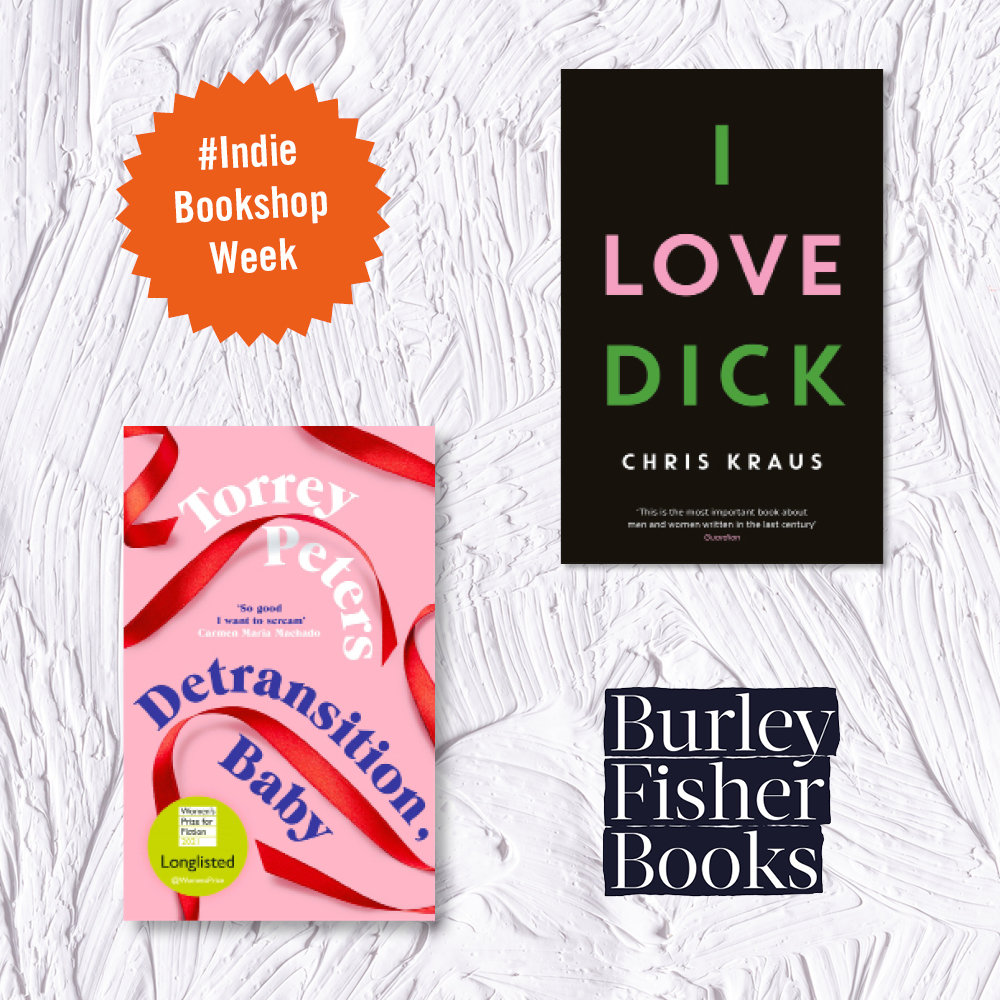
Burley Fisher’s 10 Books for Independent Bookshop Week

We are delighted to be teaming up with Burley Fisher this Independent Bookshop Week. As part of our partnership the brilliant booksellers Ant, Dan, Enya, Sam & So have picked their top 10 Serpent’s Tail reads. Discover them below, and buy them over at the Burley Fisher website.

Follow @burleyfisher.


To quote our review of Detransition, Baby, these are books where “Everything is terrible and everything is beautiful” – a Serpent’s Tail trait of seeing the world in its fullness and from the most necessary of angles.

In chronological order of publication, we’re showing some love to…

Quicksand & Passing, Nella Larsen (1928 & 1929)

A deserved all-time bestselling title for its US publisher, Nella Larsen’s two novels, written within a year of each other, come together as an excellent diptych, as both deal with psychic dualism – and in particular, the doubled double consciousness of Black women in 1920s America, drawing on Larsen’s own experience. Part of the bright, brilliant blaze of the Harlem Renaissance, Quicksand and Passing retain their incendiary charge through their incisive and intimate portrayals of tightrope navigations of intertwined racial and gendered hierarchies. With a high-profile film adaptation of Passing starring Tessa Thompson and Ruth Negga on its way, this is the perfect moment to read (or re-read) Larsen.

Jernigan, David Gates (1991)

Jernigan drinks too much and thinks too much. Set a year after the suicide of his wife, as he tries to raise his son Danny, this novel is a darkly comic and moving portrait of grief and self destruction. When Jernigan begins an affair with Martha, the mother of Danny’s girlfriend and a self-styled “suburban survivalist” who breeds rabbits in her basement, his drinking turns harder and his life begins to spiral completely out of control From the moment Jernigan starts talking, you are compelled to listen. Gates achieves the supposedly impossible, sustaining a main character who alienates everyone else in this entire and engrossing novel, except the reader.

I Love Dick, Chris Kraus (1997)

I Love Dick by Chris Kraus is an essential look at sexuality, monogamy and finding the beat to your own drum. Kraus is an American filmmaker and writer who grew to prominence in the artworld with her films. She has seven published books, including novels, essay collections and, most recently, a biography of Kathy Acker. Like Acker’s work, I Love Dick smashes together the memoir, art writing, and transgressive feminism. This tale isn’t sugar coated with attempts at morals or asking what it means to be a good or bad woman, it takes the intensity of the situation by the horns and just goes. Unashamed in its pursuit, the story feels like a social experiment gone rogue. The perfect book to read on the train.

White Bicycles: Making Music in the 1960s, Joe Boyd (2006)

If there’s someone who has seen it all in music, it’s Joe Boyd. In his book White Bicycles, the man who was pivotal in the early days of Pink Floyd, behind the desk when Nick Drake recorded River Man live with the LSO for Five Leaves Left, and managed the rise of Sandy Denny, recounts the forgotten details, secret encounters and whirlwind nights of the most important age in popular music. What’s remarkable about Boyd’s perspective is the varying vantage points he witnessed musical history from, whether as a manager, producer, club promoter or simply a friend to some of pop music’s greatest figures, there is no one who has had the access that Boyd has. It isn’t just about folk either, Boyd wanders through encounters with blues icons like Muddy Waters, psychedelic acid-rock pioneers Traffic and brushes shoulders with the likes of Miles Davis and Dylan. Always absorbing, often moving and told with great care and observation, this is a memoir of rare depth about a musical era we’d have all loved to live through.

I Hate the Internet, Jarett Kobek (2016)

The original cancel culture novel, I Hate the Internet by Jarett Kobek follows a semi-famous graphic novelist called Adeline. After a guest lecture to some students in which she gives a tirade against pop culture figures and women in technology, which is subsequently posted online, Adeline spends most of the novel trying to mitigate her negative online reputation while dealing with her ambivalent feelings about the huge boost in sales of her cult comic series that come along with it. This hilarious and anarchic novel attempts to cut up and imitate the online forms that it satirises, and it felt like the first natively post-social media novel I had read when it was published just as the first natively post-social media president took residence in the White House.

In the Dream House, Carmen Maria Machado (2019)

“I came of age, then, in the Dream House, wisdom practically smothering me in my sleep. Everything tasted like an almost epiphany.” Carmen Maria Machado dives deep into the “smothering” wisdom of folk tales to rip the roof off the Dream House of patriarchy. What does it mean to grow up with fairytales of romance that persistently cast women as passive, innocent, weak – and victims? And what happens when that pervasive fantasy meets the untold reality of violence within a lesbian relationship? In short, sharp sections that fold back and forth across time, collecting talismanic books and movies and moments that eventually plot an alternate story, Machado delves deep to offer stunning clarity as she breaks herself free. You read In the Dream House, as it was written, heart in mouth: every word tastes like blood.

Wayward Lives, Beautiful Experiments: Intimate Histories of Riotous Black Girls, Troublesome Women and Queer Radicals, Saidiya Hartman (2019)

From its epigraph from Nella Larsen’s Quicksand onwards, Saidiya Hartman’s Wayward Lives, Beautiful Experiments plunges the reader into the exhilarating, complicated, stylish, sexy, determined, brilliant world of free Black women in early twentieth century Northern US: a world gleaned mainly from sources compiled by those who sought to control these riotous women who were, as Hartman argues, making the modern world: fighting for autonomy in their identity, sexuality, work, and creativity, their relation to their bodies, their neighbourhoods and their place in history. Bursting forth from sociological and criminological archives, refusing to be hidden or controlled, these radical, rebellious voices are braided by Hartman into an utterly irresistible, unforgettable chorus.

Detransition, Baby, Torrey Peters (2021)

Detransition, Baby! sucks you in and doesn’t let up. Dark and funny, it’s outlandishness never seems far-fetched and more so focuses on allowing the characters to be flawed and loveable. The story is about Reese (a trans woman), Ames (Reese’s ex and detransitioned from being Amy), Katrina (a Jewish Chinese cis woman) and an unexpected pregnancy. It draws parallels between trans women and divorced cis women (the book’s dedication being to divorced women) and their struggles to reestablish their personhood. Refreshingly, the story never tries to equate any struggle with another, only to thread together compassion. Everything is terrible and everything is beautiful. Add it to your summer reading list and enjoy the ride!

Libertie, Kaitlyn Greenidge (2021)

Libertie Sampson doesn’t want to become a doctor. She doesn’t want to be a wife. She wants what her name offers: to be free. A freeborn Black girl who comes of age in rural Brooklyn just after the Civil War, witnessing its racist atrocities, Libertie loves and admires her doctor mother, but chafes at her strategic service to the disparaging white townspeople. She is drawn to complex figures of freedom’s possibilities and pains: first, Ben Daisy, a man escaping slavery but haunted by love; the Graces, two music students at the college where she is studying medicine (the only woman to do so), but falling in love with song; and Emmanuel, her mother’s skilful apprentice, the sophisticated scion of a middle-class family in Haiti, where she travels as his wife. Pregnancy leads her to uncover unbearable secrets in Emmanuel’s family, and her quest for freedom brings her full circle. A deeply satisfying tour de force.

Cwen, Alice Albinia (10% until end June) (2021)

At this point in 2021, we’re all about ready for a feminist revolution in government in the UK, right? But the inhabitants of an unnamed archipelago off Northumbria are deeply divided when Eve, a London incomer who has led a quiet, quirky and purposeful sea change in the governance and functioning of the islands, disappears, and an inquest takes place into just how her band of resisters took over. With deep roots in myths that placed a sacred island of women off the coast of Britain, Alice Albinia’s tale resonates in its consideration of gender politics, and in its spiritual search for reconnection.

Posted on

Pop Song: read an extract

‘…I don’t know what comes after, once I decide to let desire have its way with me. How to un-melt the melted? How to turn the ground powder back into a person? This idea points to a knowledge that I don’t have: how to love without losing the self.’
Plumbing the well of culture for clues about love and loss – from Agnes Martin’s abstract paintings to Anne Carson’s Eros the Bittersweet to Frank Ocean’s Blonde – this brilliant work of debut nonfiction explores the state of falling in love, whether with a painting or a person.

Pham creates a perfectly fractured portrait of modern intimacy, triumphant in its vulnerability and restlessness. Pop Song is a book about distances: the miles we travel to get away from ourselves, or those who hurt us, and the impossible gaps that can exist between two people sharing a bed.

Here is a map to all the routes by which we might escape our own needs before finally finding a way home.

Read an extract below.

Follow Larissa on Twitter.


Ways of knowing

when it’s time to go

A starting gun

A text message

A plane ticket

A phone call

Last call

An upside-down shot glass in front of you at the bar

An orgasm in an unfamiliar room

A failure to come

A silence

The moon is visible


The moon isn’t visible, and you want to find it

You’re the happiest you think you’ll ever be at this party

Everyone else around you is hailing a cab

The sun is setting

The pool is closing

They’ve turned off the fog machines

The sun is rising

The sun is rising and a song you love has started to play

Posted on

Serpent’s Tail x Burley Fisher for IBW + Pride Month

We are thrilled to be teaming up with the brilliant Burley Fisher this Independent Bookshop Week. Burley Fisher were shortlisted for Independent Bookshop of the Year and made a name for themselves delivering books by bike during lockdown last year. Their fierce championing of LGBTQ+ authors and those from underrepresented backgrounds make them the perfect partner for Serpent’s Tail.

PRIDE POP-UP BOOK STALL

Our activity begins with a pop-up book stall in celebration of Pride Month, along with the excellent Cipher Press, this Saturday at Broadway Market in East London. There will be books, bunting, bookmarks, treats from Meringue Girls and plenty of coffee nearby, so do come down and say hi!


IN-STORE AND ONLINE

Independent Bookshop Week begins on the 19th June. Look out a takeover on our instagram account, and pop in store for tote bags, bookmarks, and free coffee (while stocks last). Get 10% off a list of handpicked books – from Nella Larsen to Alice Albinia – in-store and on the BF website.

ISOLATION STATION – THE PODCAST

In a special episode of Burley Fisher’s podcast, Sam Fisher and So Mayer speak to Serpent’s Tail publisher Hannah Westland about radical and readable books, Torrey Peters and what it’s like to be head of an indie publisher.

CARMEN MARIA MACHADO IN CONVERSATION – ONLINE EVENT

You can join in the fun wherever you are with an amazing online event with the inimitable, Rathbones Prize-winning author of In the Dream House and Her Body and Other Parties, Carmen Maria Machado.

Get your free tickets here 

Follow all the activity online at @burleyfisher and @serpentstail, #IndieBookshopWeek and #PrideMonth.


Posted on

The Last Thing He Told Me: Q&A with Laura Dave

Laura Dave’s The Last Thing He Told Me is Reese Witherspoon’s Book Club pick for May, a #1 NYT bestseller and a #1 Amazon bestseller!

‘Holy Moly!… you will NOT be able to put this book down! If you’re looking for the ultimate page-turner, I highly recommend The Last Thing He Told Me by Laura Dave.’
Reese Witherspoon

We’re absolutely thrilled with your response to Laura Dave’s The Last Thing He Told Me. Since we’re all dying to know more, our fearless editor Miranda Jewess did a Q&A with Laura. Read on to discover how Laura came up with the novel and all about the forthcoming TV series starring Julia Roberts.

Laura Dave also has a special message for her Viper readers. Click here to watch.


1. The Last Thing He Told Me is quite different from your previous novels. What inspired you to write your first domestic thriller?

I absolutely love thrillers and read them constantly. But when I started writing The Last Thing He Told Me, I wanted to do it a little differently than I’d seen done before. I wanted to write a thriller rooted in hope. What I mean by that is I didn’t want the smoking gun to be that the husband turns out to be evil, or that the main character was wrong to trust herself, or that the story would hinge on betrayal. As my main character (Hannah Hall) navigated the twists and turns of her dilemma, I wanted her to find her way to somewhere unexpected, somewhere better. Instead of the constant reversals leading her to seek revenge or reimagine her entire life, Hannah found herself becoming the hero of her own life.

2. The heart of the novel is the relationship between Hannah and her stepdaughter Bailey. Was this inspired by a real mother/daughter dynamic?

I had my first child several years into working on this novel and it changed everything about the story I was hoping to tell. I understood Hannah in a new way, and her desire to be there for Bailey in the middle of her own struggle. The full landscape of Hannah’s narrative concretized for me. This involved reconsidering Hannah and Bailey’s relationships with their birth mothers, their ideas about motherhood and love, and of course the joy we can find in our found families.

3. The novel is going to be made into a TV series, with Julia Roberts starring as the main character, Hannah. Do you think the character will change through her depiction?

I’m writing the limited series now with my husband, the screenwriter Josh Singer. It’s been a dream to write this with Julia Roberts in mind, and to bring her energy to Hannah’s character.

4. Was the brilliant ending planned or did it change as you wrote? No spoilers!

I worked on this book for many years, on and off, and had many different endings that I considered along the way. But it was after I gave birth to my son in 2016 that I realized Hannah’s story, in the most primal sense, was the story of becoming a mother. For me, the book is the call to that—and the ending is the answer. Once I found it, I never wavered in believing that was where this novel needed to end. I’ve started imagining the sequel to this book. So it is possible this ending will turn out to be more of an intermission… and this family will have a new act, after all.

5. What book or author do you recommend to everyone?

Heartburn by Nora Ephron and Defending Jacob by William Landay.

Posted on

The Last Thing He Told Me is Reese Witherspoon’s Book Club Pick for May

We’re delighted that Laura Dave’s The Last Thing He Told Me is Reese Witherspoon’s Book Club pick for May!

Not only is this gripping book soon to be a major TV series starring Julia Roberts, a #1 Amazon bestseller, a Vogue Best Books to Read in 2021, an Amazon Best Book of May 2021, a Reader’s Digest 50 Best Books to Read This Year and a NetGalley Book of the Month for May, it is now also a Reese Witherspoon pick for May!

See what Reese had to say:

‘Holy Moly!… you will NOT be able to put this book down! If you’re looking for the ultimate page- turner, I highly recommend The Last Thing He Told Me by Laura Dave.

This story centers around Hannah, who is settling into her new role as a wife & stepmother when her husband suddenly disappears leaving her with an ominous note and a request to protect his daughter.
There’s so much to love about this thrilling, roller coaster of a novel: mysterious identities, unreliable friendships, dubious loyalties and terrifying chase sequences through the streets of Austin, Texas.

Pick up a copy and join me to discuss our May 2021 pick!’

See her announcement on Reese’s Book Club:

‘Love note to self: the May #ReesesBookClub pick is a juicy, secret-filled read that you’ll finish in a day and talk about for months.

“The Last Thing He Told Me” by Laura Dave gives new meaning to the phrase ‘you can never judge a book (OR suspicious husband) by its cover’ with her gripping tale of love, deception and disappearance.

If the thrilling start doesn’t hook you—a missing husband, a duffel bag of cash, a cryptic note and teenage stepdaughter drama—wait till you find out how it ends. Warning: there’s so many secrets that you may start to question if you can even trust yourself.’

Learn more about the book:

IT WAS THE LAST THING HE TOLD ME: PROTECT HER

Before Owen Michaels disappears, he manages to smuggle a note to his new wife, Hannah: protect her. Hannah knows exactly who Owen needs her to protect – his sixteen-year-old daughter, Bailey, who lost her mother tragically as a child. And who wants absolutely nothing to do with her new stepmother.

As her increasingly desperate calls to Owen go unanswered, his boss is arrested for fraud and the police start questioning her, Hannah realises that her husband isn’t who he said he was. And that Bailey might hold the key to discovering Owen’s true identity, and why he disappeared. Together they set out to discover the truth. But as they start putting together the pieces of Owen’s past, they soon realise that their lives will never be the same again…

A beautiful and thrilling mystery, perfect for readers of Lianne Moriarty and Celeste Ng.

Pick up a copy of the hardback, order the ebook, or download the audiobook today, but make sure you #CancelYourPlans before reading. You won’t want to stop.


Posted on

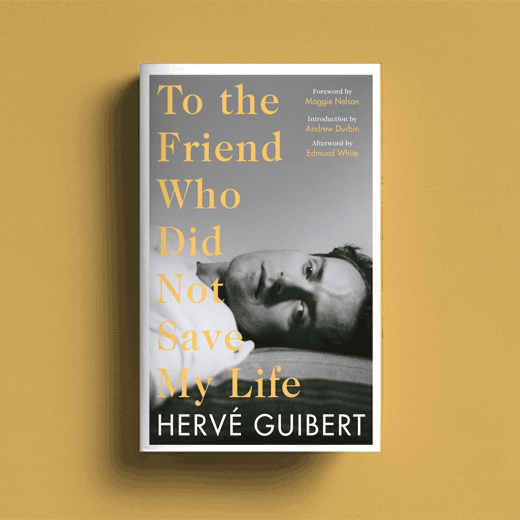
Coming soon: Hervé Guibert’s To the Friend Who Did Not Save My Life

We are thrilled to be publishing To the Friend Who Did Not Save My Life, a ‘hugely significant autobiographical novel about queer friendship, gay life and the early days of the AIDS crisis’ by French writer and photographer Hervé Guibert (1955-1991) on the Serpent’s Tail Classics list this July.

To the Friend Who Did Not Save My Life will feature a newly commissioned foreword by Maggie Nelson, an introduction from Frieze editor Andrew Durbin and an afterword from Edmund White in a translation by Linda Coverdale.

Nelson said: “It’s an absolute honour to write an introduction to Hervé Guibert’s To the Friend Who Did Not Save My Life, which is one of the most important books to me (my intro will try to explain why). Its reprint is a cause for celebration and I’m thrilled to be a part of it.”

Dunnigan said: “To the Friend Who Did Not Save My Life is a book that, once read, will live with you for a long time. Guibert’s story of a friendship betrayed and of living with AIDS is devastating, darkly funny and full of tenderness, and speaks to that ‘borderline of uncertainty, so familiar to all sick people everywhere’.

“His razor-sharp writing, visceral honesty and irreverent confrontation with death make this an unforgettable and heartbreaking book of lasting importance. Thirty years after it was first published, we are so proud to be bringing this special book back to Serpent’s Tail – its brilliance should attract lots of attention and many new readers.”

Pre-order your copy

Posted on

Libertie by Kaitlyn Greenidge: read the opening

‘A feat of monumental thematic imagination’ – The New York Times

May 2021 Book of the Month for Roxane Gay’s Book Club

Coming of age as a free-born Black girl in Brooklyn after the Civil War, Libertie Sampson was all too aware that her purposeful mother, a practicing physician, had a vision for their future together: Libertie would go to medical school and practice alongside her. But Libertie, drawn more to music than science, feels stifled by her mother’s choices and is hungry for something else – is there really only one way to have an autonomous life? And she is constantly reminded that, unlike her mother who can pass, Libertie has skin that is too dark. When a young man from Haiti proposes to Libertie and promises she will be his equal on the island, she accepts, only to discover that she is still subordinate to him and all men. As she tries to parse what freedom actually means for a Black woman, Libertie struggles with where she might find it – for herself and for generations to come.

Libertie comes out on 29th April.

Pre-order your copy

Follow the author @SurlyBassey on Twitter


Se pa tout blesi ki geri

Not all wounds heal

1860

I saw my mother raise a man from the dead. “It still didn’t help him much, my love,” she told me. But I saw her do it all the same. That’s how I knew she was magic.

The time I saw Mama raise a man from the dead, it was close to dusk. Mama and her nurse, Lenore, were in her office—Mama with her little greasy glasses on the tip of her nose, balancing the books, and Lenore banking the fire. That was the rule in Mama’s office—the fire was kept burning from dawn till after dinner, and we never let it go out completely. Even on the hottest days, when my linen collar stuck to the back of my neck and the belly of Lenore’s apron was stained with sweat, a mess of logs and twigs was lit up down there, waiting.

When the dead man came, it was spring. I was playing on the stoop. I’d broken a stick off the mulberry bush, so young it had resisted the pull of my fist. I’d had to work for it. Once I’d wrenched it off, I stripped the bark and rubbed the wet wood underneath on the flagstone, pressing the green into rock.

I heard a rumbling come close and looked up, and I could see, down the road, a mule plodding slow and steady with a covered wagon, a ribbon of dust trailing behind it.

In those days, the road to our house was narrow and only just cut through the brush. Our house was set back—Grandfather, my mother’s father, had made his money raising pigs and kept the house and pens away from everyone else to protect his neighbors, and his reputation, from the undermining smell of swine. No one respects a man, no matter how rich and distinguished-looking, who stinks of pig scat. The house was set up on a rise, so we could always see who was coming. Usually, it was Mama’s patients, walking or limping or running to her office. Wagons were rare.

When it first turned onto our road, the cart was moving slowly. But once it passed the bowed-over walnut tree, the woman at the seat snapped her whip, and the mule began to move a little faster, until it was upon us.

“Where’s your mother?”

I opened my mouth, but before I could call for her, my mother rushed to the door, Lenore behind her.

“Quick,” was all Mama said, and the woman came down off the seat. A boy, about twelve or thirteen, followed. They were both dressed in mourning clothes. The woman’s skirt was full. Embroidered on the bodice of her dress were a dozen black lilies, done in cord. The boy’s mourning suit was dusty but perfectly fit to his form. At his neck was a velvet bow tie, come undone on the journey. The woman carried an enormous beaded handbag—it, too, was dusty but looked rich. It was covered in a thousand little eyes of jet that winked at me in the last bit of sun.

“Go, Lenore,” my mother said, and Lenore and the woman and the boy all went to the back of the wagon, the boy hopping up in the bed and pushing something that lay there, Lenore and the woman standing, arms ready to catch it. Finally, after much scraping, a coffin heaved out of the wagon bed. It was crudely made, a white, bright wood, heavy enough that Lenore and the woman stumbled as they carried it. When the coffin passed me, I could smell the sawdust still on it.

My mother stepped down off the stoop then, and the four of them lifted it up and managed it into the office. As soon as they got it inside, they set it on the ground and pushed it home. I could hear the rough pine shuffling across the floor.

“You’re early.” Mama struggled with the box. “Don’t start with me, Cathy,” the woman said, and Lenore looked up, and so did I. No one, except Grandfather before he died, dared call Mama “Cathy.” To everyone except for me, she was always “Doctor.” But Mama did not bristle and did not correct, as she would have with anyone else.

“Word was you’d be here at midnight.”

“We couldn’t leave,” the woman said. “He wasn’t ready.”

The woman knelt down in her dusty skirts and drew a long, skinny claw hammer from the handbag. She turned it on its head and began to pull at the nails on the coffin’s face. She grunted. “Here, Lucien.” She signaled to the boy. “Put some grease into it.” He fell down beside her, took the hammer from her hands, and began to pull at the nails she’d left behind.

Mama watched, eagerly. We all did. I crossed the room to stand beside her, slipped my hand into hers.

Mama started at my touch. “If you’d only come later.”

The woman’s head jerked up, her expression sharp, and then she looked at my hand in Mama’s, and her frown softened.

“I know we’ve done it differently. This time we really tried,” she said. “Besides, my Lucien sees all this and more. If you do this work, Cathy, your children will know sooner or later.”

Posted on

#ChooseBookshops – Queer Bookshops to Buy From Today

This Monday 12th April bookshops in England and Wales are reopening! We can’t wait to be back among the books. Good job we’ve barely spent anything over the last few months of lockdown…

We love all bookshops, but have been overwhelmed by the support shown recently by queer bookshops for our Women’s Prize longlisted novel Detransition, Baby by Torrey Peters.

To celebrate, we’re sharing a list of fantastic UK LGBT+ bookshops to shop with today.

Help share the word on Twitter.

QUEER LIT, MANCHESTER


Queer Lit started with 700 books but have now grown to stock over 1200 fabulous Queer titles. Follow them at @QueerLitUK

LIGHTHOUSE BOOKS, EDINBURGH


Lighthouse Bookshop is a queer-owned and woman led independent community bookshop based in Edinburgh. Follow them at @Lighthousebks

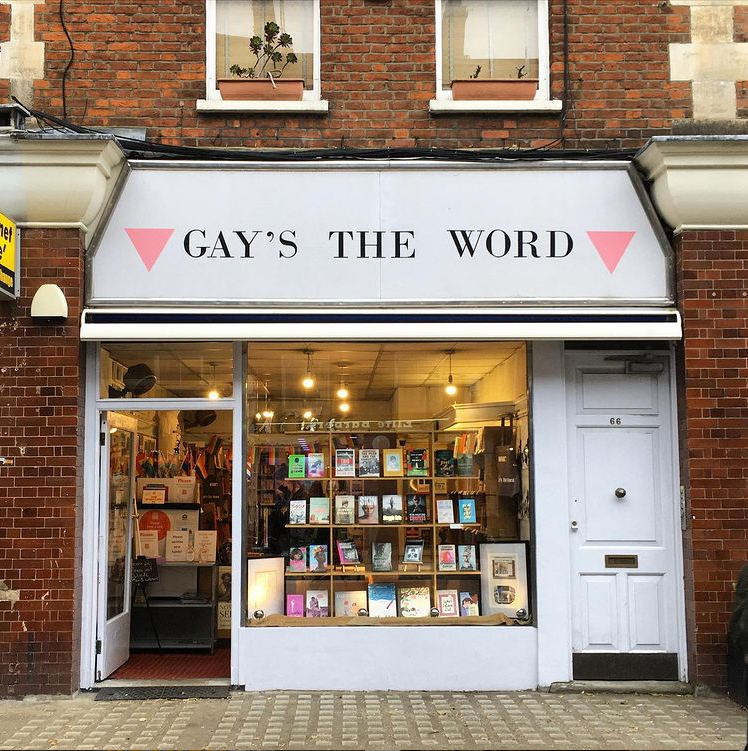
GAY’S THE WORD, LONDON


Gay’s The Word is the UK’s oldest LGBT bookshop, set up in January 1979 by a group of gay socialists as a community space where all profits were funnelled back into the business. This ethos continues today. Follow them at @GaystheWord.

CATEGORY IS BOOKS, GLASGOW


Category is Books was started by wusband and wusband team, Charlotte (they/them) and Fionn (‘Fin’) Duffy-Scott (they/them), who hope to create a space for the LGBTQIA+ community to learn about, be inspired by and share in our love of queer history, culture, writing and storytelling. Follow them at @CategoryisBooks.

PANED O GE, CARDIFF


Paned o Gê is an independent, queer bookshop, cafe, bar and event space in Cardiff; a social enterprise designed to highlight, promote and celebrate LGBTQ+ and Welsh talent and creators. Follow them at @panedoge

THE BOOKISH TYPE, LEEDS


The Bookish Type started out as pop-up bookstalls at events at various venues. The owners Ray and Nicola then set up a website and finally opened a bricks and mortar bookshop in September 2020. Follow them at @TypeLeeds

PORTAL BOOKSHOP, YORK


Portal Bookshop sells Science Fiction, Fantasy and all of the LGBTQIA books we can source from the UK, the US and beyond. Follow them @PortalBookshop

SHELFLIFE BOOKS & ZINES, CARDIFF


Shelflife Books & Zines is a not-for-profit radical bookshop in Cardiff working with independent publishers and DIY zine-makers to make space for marginalised and under-represented voices. Follow them @ShelflifeCdf

Posted on

Detransition, Baby and the Women’s Prize: A thank you

We at Serpent’s Tail would like to thank the Women’s Prize and the literary community for their support for our extraordinarily talented author Torrey Peters’s Detransition, Baby. In the past 48 hours we have been overwhelmed by the outpouring of love for Torrey’s brilliant, timely and original book. Detransition, Baby is closely concerned with the things cis and trans women have in common and what they can teach one another, and it is beautiful to see such heartfelt and thoughtful responses to its message of solidarity. We abhor bullying and personal attacks on writers and are very grateful to everyone who has taken the time to state their support for Torrey, for trans people more generally and to celebrate the vitality of women’s writing.

We’re so glad that this remarkable novel will reach even more readers as a result of the increased attention. Particularly heartening are the efforts of queer and feminist bookshops including QueerLit, the Second Shelf, Lighthouse Books and others in promoting Torrey’s novel and donating money to trans-led organisations. We see and appreciate all of the generous individuals who have taken part in pay-it-forward schemes to purchase copies for others who want to read Detransition, Baby. Thank you also to everyone who has amplified our giveaways and recommended this very special novel to their friends and loved ones. As a result of all your kindness and enthusiasm, we are going into our third reprinting of the novel.

All our thanks and lots of love from Serpent’s Tail

Posted on

Carmen Maria Machado wins the Rathbones Folio Prize

We couldn’t be more delighted that Carmen Maria Machado has won the prestigious Rathbones Folio Prize 2021 with her ground-breaking memoir In the Dream House.

The judges called it ‘A breathtakingly inventive, unflinchingly honest examination of domestic abuse in a female relationship’.

Tracing her relationship with a charismatic but volatile woman, Machado breaks down the idea of what the memoir form can do and be – and approaches a subject for which literary treatment has been extremely rare.

In a unanimous decision, the judges Roger Robinson, Sinéad Gleeson and Jon McGregor deemed In the Dream House the best book on what was a strong and widely discussed 2021 shortlist, also containing novels, auto-fiction, poetry, and poetry with photography.

Sinéad Gleeson said: “Carmen Maria Machado’s In the Dream House is an exceptional, important book. It takes everything a reader expects from a memoir, and upends and deconstructs it, playing with the possibilities of the form. Machado explores queerness, domestic violence and bodies in a
multi-genre masterpiece, told in taut, stunning prose.”

Find out more at the Rathbones Folio Prize website

Buy your copy

Follow @carmenmmachado

Posted on

New book coming from Karen Joy Fowler

We are completely beside ourselves to be publishing Booth, Karen Joy Fowler’s first novel since the international phenomenon We Are All Completely Beside Ourselves!

Karen Joy Fowler’s 2014 novel We Are All Completely Beside Ourselves has sold 900,000 copies in the UK across all formats and was one of the bestselling novels of 2014. It was shortlisted for the 2014 Man Booker Prize and won the 2014 PEN/Faulkner Award for Fiction.  

Karen Joy Fowler said, ‘I’m thrilled to be working again with the wonderful team at Serpent’s Tail. They’ve been very patient as this book was a long time coming — current events continually drawing my attention away from historical ones. But those long ago issues remain relevant and the Booths proved a particularly useful lens through which to tell a story about family, fame, and the Civil War. Plus lots of Shakespeare.’

commissioning editor Rebecca Gray said, ‘How do you follow up the book of a lifetime? For Karen, the answer is by writing another masterpiece. This is an utterly different book to We Are All Completely Beside Ourselves, but it’s just as imaginative, thought-provoking and resonant. It takes a story we think we know and turns it inside out, creating a novel that is historically and politically serious, and an absolute pleasure to read, too. The characters feel alive on the page, the setting is beautifully done, and once again Karen finds a voice that rises off the page. This is a deep dive into history that shows how Britain and the US have intertwined stories, and how the past casts long shadows into the present. When I began reading the book I wondered if it was her Wolf Hall, and by the end I knew that it was.’

ABOUT BOOTH:

Booth is the magisterial, vivid and tragic story of a family who changed the course of American history. Junius is a famous and charismatic English actor, and self-styled rival to Edmund Kean who thrills America with his renditions of Shakespeare, when he isn’t drunk and sinking the family ever further into debt. Growing up in nineteenth century rural Maryland, his children become intimately familiar with hardship, early death and the horrors of slavery. Of the six Booth siblings who survive to adulthood, each one has their own dreams they must fight to realise – but it is Johnny who makes the terrible decision that will ensure their names are known to this day.

ABOUT KAREN JOY FOWLER:

Karen Joy Fowler is the author of seven previous novels including The Jane Austen Book Club and three short story collections. Her most recent novel, We Are All Completely Beside Ourselves was shortlisted for the Man Booker Prize 2014, won the PEN/Faulkner Prize 2014 and has sold over a million copies globally. She lives in California, USA. www.karenjoyfowler.com

Press contact: Anna-Marie Fitzgerald – Senior Publicity Manager – [email protected]

@SerpentsTail on Twitter and Instagram

Posted on

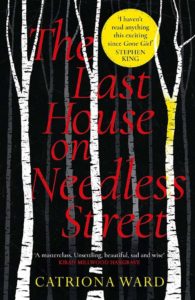
The Last House on Needless Street: Q&A with Catriona Ward

The Last House on Needless Street is finally out!

We know you all have many questions for Catriona Ward, author of The Last House On Needless Street. Everything from the gripping plot twists that no one sees coming, to the intricacy of the characters that readers are coming to love. Today, we’re delighted to share this Q&A our lovely editor Miranda did with Catriona. Read on to get the scoop.

1. Everyone who has read The Last House on Needless Street raves about all the many twists and turns. Did you plan them in detail, or write furiously and edit afterwards? 

I knew where the book had to end up, so I wrote my way furiously towards that. It was like spinning a vast spiderweb. Each plot thread was integral yet interconnected to a hundred others, and each change affected and reverberated through the whole. It felt impossible at times but I just had to believe it would come together. And some of the most satisfying twists were the ones I discovered as I wrote.

2. A character in The Last House on Needless Street who has become an early reader favourite is the snooty cat, Olivia. Is she a complete creation, or is she based on a real cat?  

Growing up, I had a black cat called Velvet. She was born in Kenya, and came with us when we moved to Madagascar, the US, Yemen, Morocco and finally the UK where she passed away peacefully at the age of 19. Whenever I opened a book she would appear and curl up next to me. I spent most of my childhood reading – so we spent a lot of time together. I think Olivia is very much her own cat, however. As I was planning the book she strolled in from nowhere, as cats tend to do. She was already very full of opinions.

3. The Last House on Needless Street is quite different to your two previous novels, Rawblood and Little Eve, which were more straight historical gothic. Why did you decide to write a modern gothic thriller? 

I was born in the US and lived there as a child. I wanted to mine new areas of experience for this book – my US background, my lifelong fascination with serial killers and those wild forests of Washington State. It felt like time to push my boundaries as a writer and turn my love of the gothic to something strange and altogether different.

4. Who are the writers who most inspire you, and whose work you return to again and again? 

Kelly Link makes the magical seem everyday, and vice versa. I always leave her work enriched. Shirley Jackson understands that sometimes it’s the mundane that terrifies, rather than the monstrous. Growing up, Stephen King was my gateway to horror. His writing was a huge influence and still lives in my imagination today.

5. Can you tell us something about your next book, Sundial?

A mother takes her teenage daughter on a bonding trip to her abandoned childhood home, Sundial, which sits in the great expanses of the Mojave desert in Southern California. Each thinks the other is planning to murder her out there. It sounds sinister, and it is – but it’s also about compassion, sacrifice, and the complicated love that can hold families together.


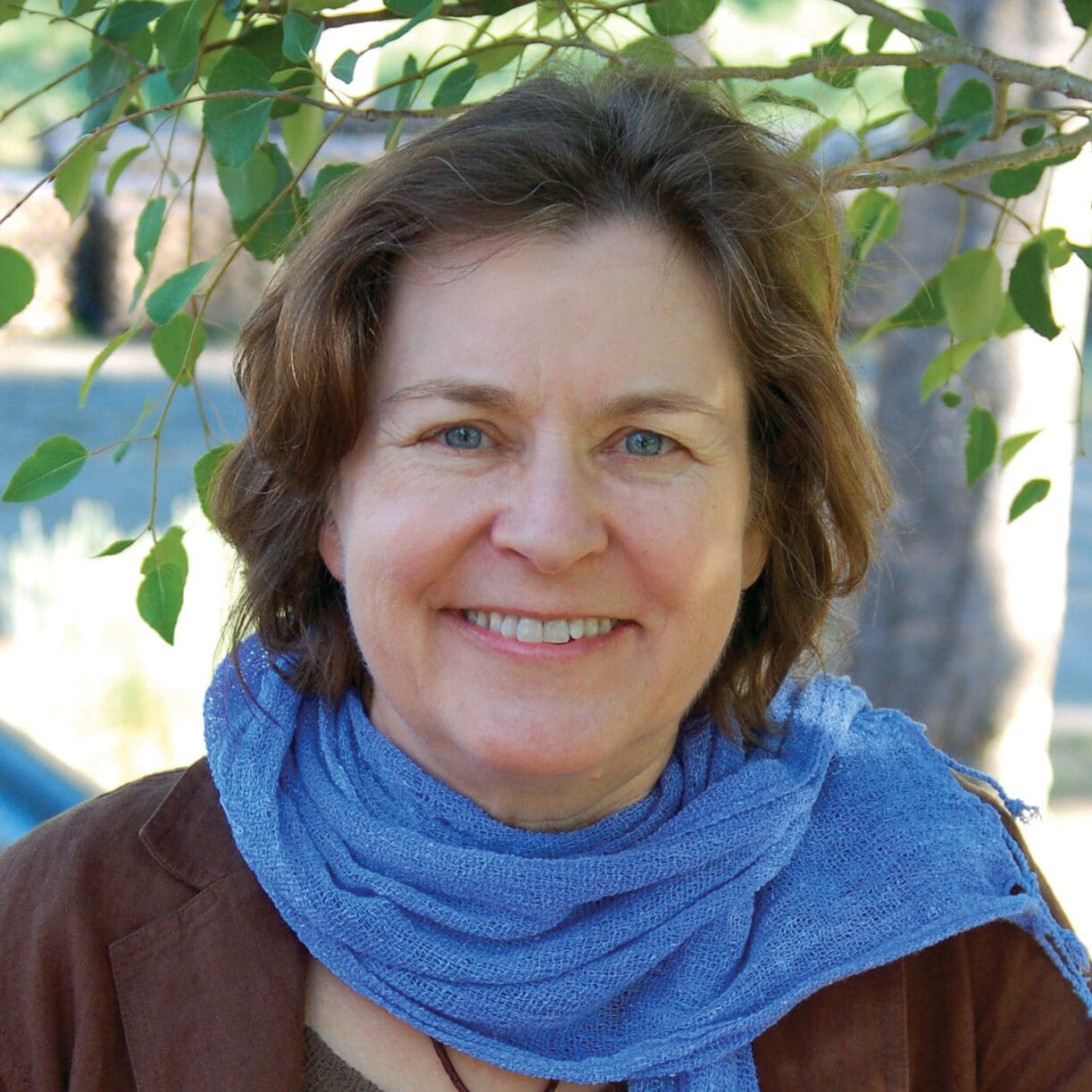
Catriona Ward was born in Washington, DC and grew up in the US, Kenya, Madagascar, Yemen, and Morocco. Her debut Rawblood won Best Horror Novel at the 2016 British Fantasy Awards, and was a WHSmith Fresh Talent title. Little Eve won the Shirley Jackson Award, was a Guardian best book of 2018 and won the Best Horror Novel at the 2019 British Fantasy Awards. She lives in London and Devon.

You can follow Catriona Ward on Twitter here and Miranda Jewess on Twitter here.