Posted on

Medusa of the Roses – Read an Extract

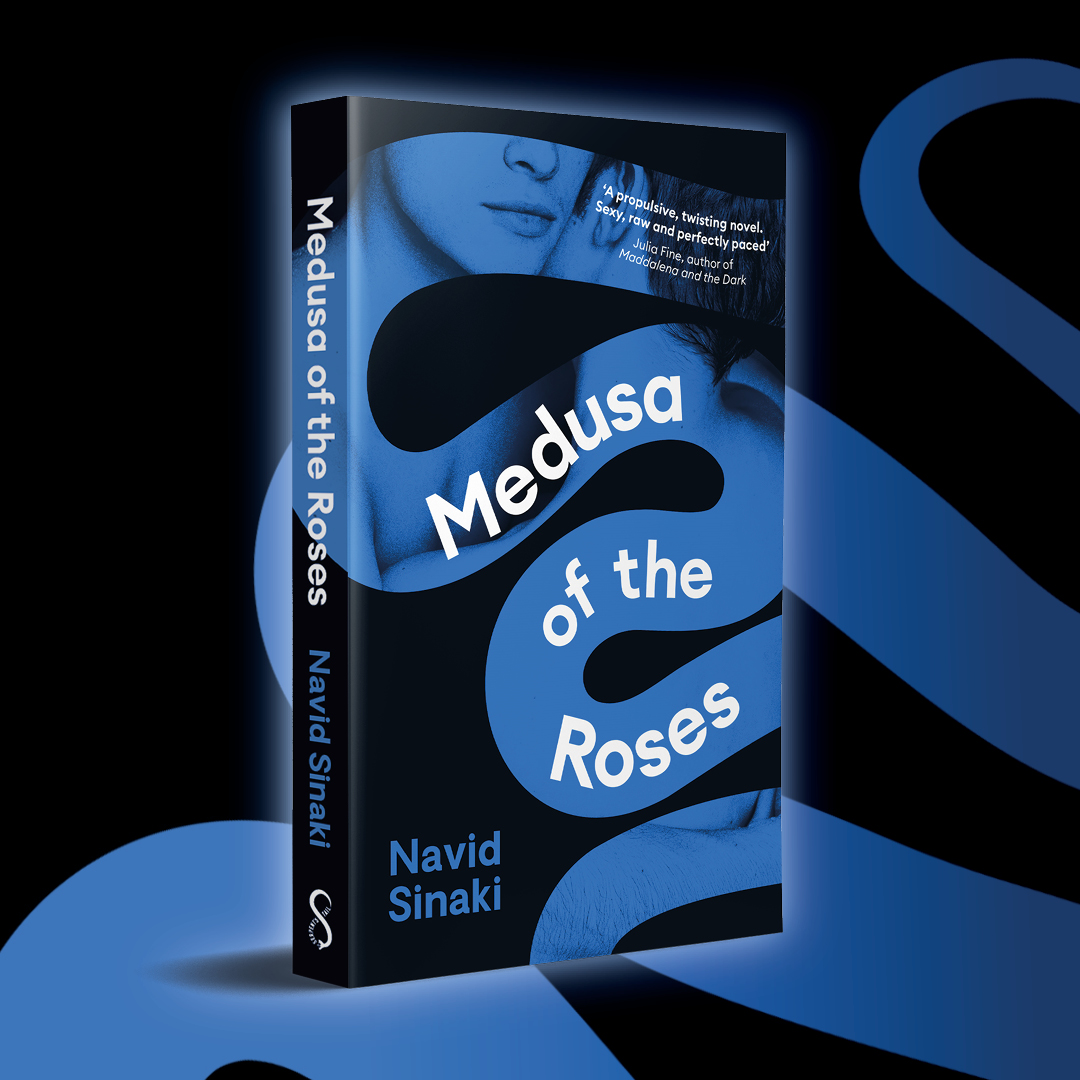
Anjir and Zal have been together ever since they first knew what love was. But living in Iran, the two men must keep their relationship hidden, potentially on pain of death.

Medusa of the Roses is Navid Sinaki’s transgressive, lyrical and deeply moving literary debut. Read an extract from the opening of this powerful novel below.

Available from: Waterstones | Bookshop.org | Amazon


Tiresias was mine. I always played the part of the man from Greek mythology who turned into a woman simply by striking two snakes.

It would have made the most sense if we pretended to be Zal and Rudabeh, even though we were two boys. Zal, who I always loved more than a friend, shared his name with a fabled Persian prince. And like Rudabeh, I was told my hair could pass for snakes. But I chose Tiresias when we played in a garden where gravity was especially cruel. Since our house was built on a slant, cherries from a neighbor’s tree rolled into our yard from one side and out the other before we could catch the fruit. Pomegranate trees kicked up rocks in search of water that was always out of reach. Nectarines didn’t just fall, they were impaled by stones. If ever one fell on my head, I’d pretend I deserved it in preparation for juices I’d eventually catch on my neck.

Sometimes I wore a veil for the role. A simple lace tablecloth completed my metamorphosis. In the myth, Tiresias eventually struck another two snakes and returned from being a woman to being a man, so we looked for the fruit vendor who hammered his cantaloupes at the end of the day. He would rather they rot than go for free. He also sold oranges I peeled to see what it felt like to walk around with foreskin, as I assumed they did in ancient Greece.

“It’s hard to love you,” Zal began to say when we were older. Not because I was a boy who wore veils and a fake foreskin. “Because you’re so infatuated with death.”

Perhaps he was right. I was the boy who gathered moths for spiders’ webs. I would polish the light bulbs when a memorial was strung for a kid who had drowned. I’d cry at spring because, with the dry leaves gone, for months nobody would talk about death.

Zal, let our words be a ribbon between the mouths of painted angels. If I start a conversation with you and keep it to myself, at least that won’t end.

Posted on

Serpent’s Tail Summer Reads 2024


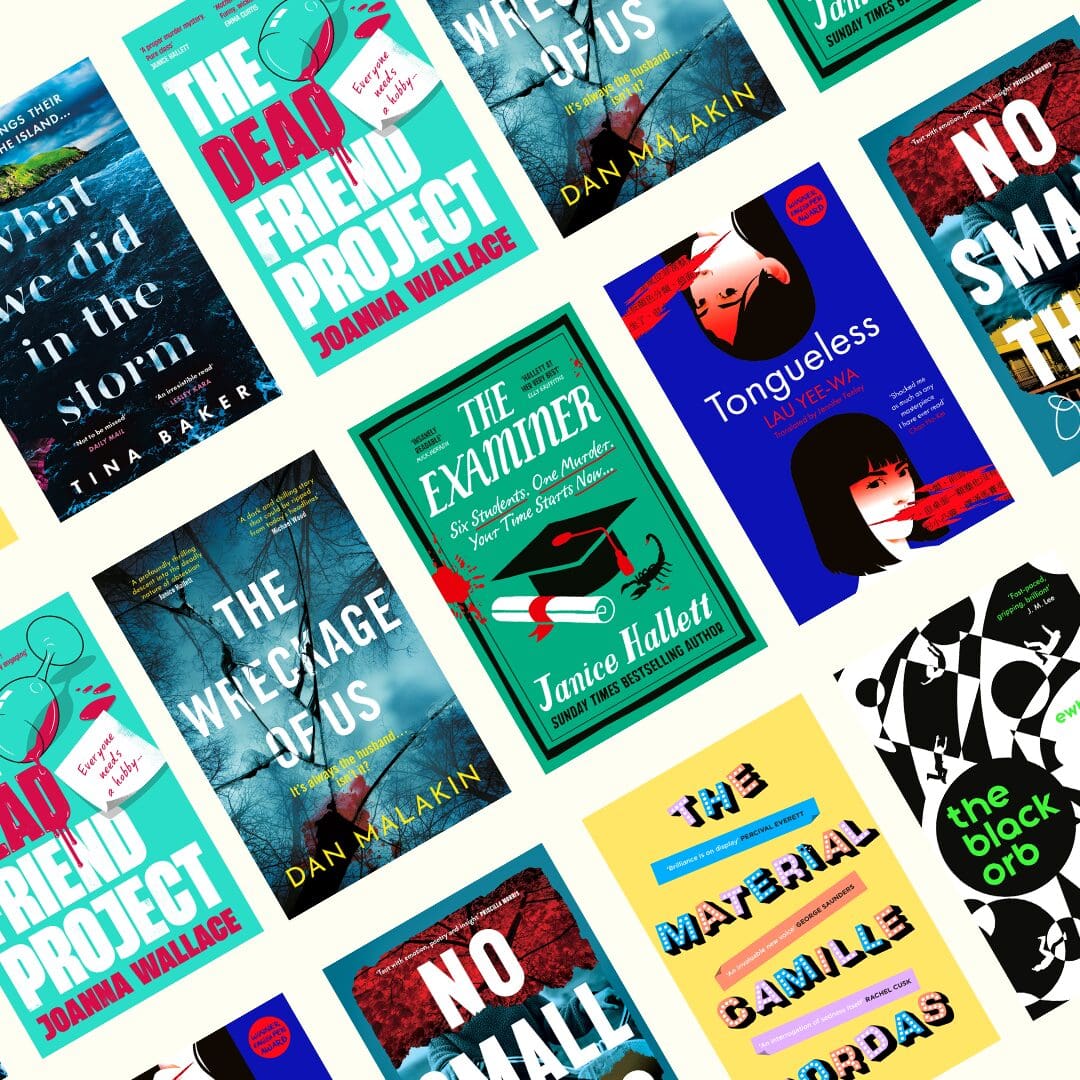
Whether you’re heading off somewhere hot or relaxing at home this summer, we have got some incredible new titles that you won’t be able to put down. From tender debuts about mothers and daughters, to translated slow-burn horrors, we’re sure that you’ll find your book of the season below!

What do you plan on reading this summer? Let us know on X @SerpentsTail, or over on Instagram @serpentstail

Powerful Debuts

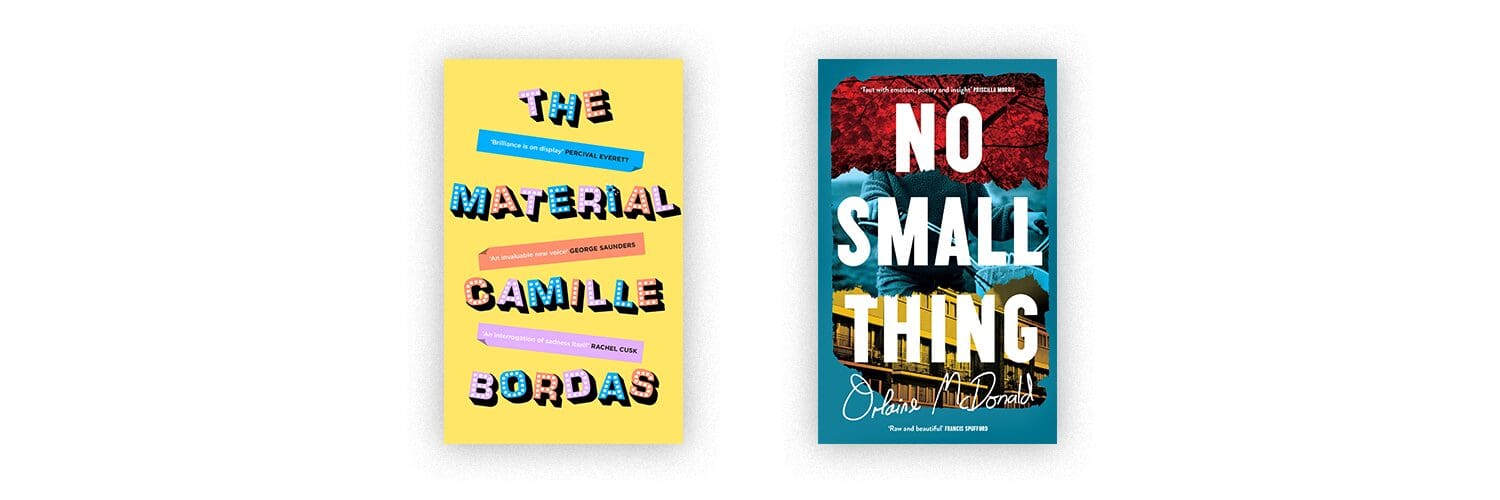
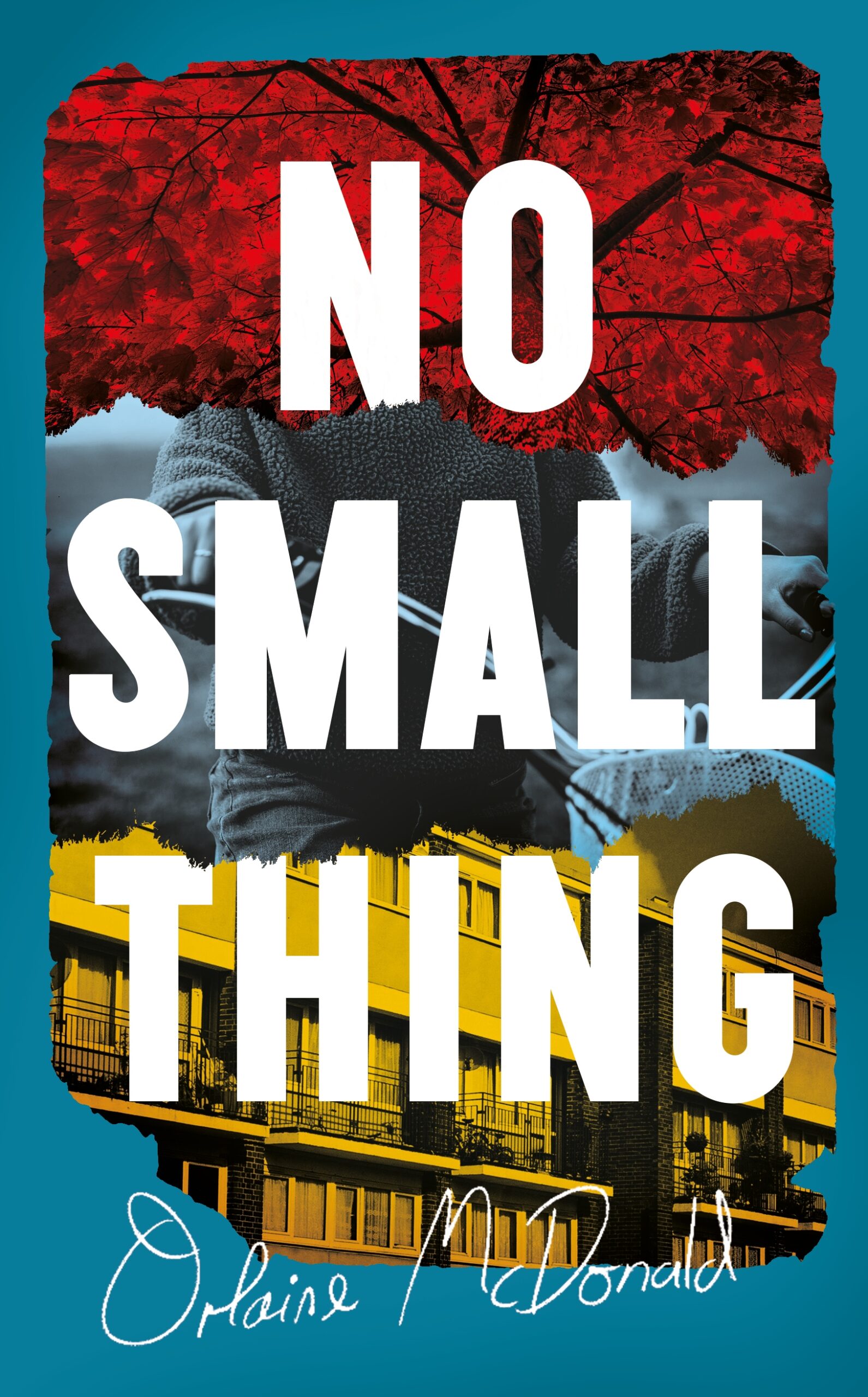
No Small Thing by Orlaine McDonald

An exceptional Black British debut filled with desire and jeopardy and set on a south London estate.

‘A gem of a book about mothers and daughters, about being Black and working class in today’s London. Beautiful writing, taut with emotion, poetry and insight’ Priscilla Morris, Women’s Prize shortlisted author of Black Butterflies.

The Material by Camille Bordas

Every comedian knows that there’s a line between sharp and cruel, that sad becomes funny at the right angle, that any moment in life, however painful or triumphant, has the potential to become a punchline. At the Chicago Stand-up School, success is about the material. A literary star ascending, Camille Bordas, makes her UK debut with a novel about the funniest people’s saddest stories.

Translated Fiction

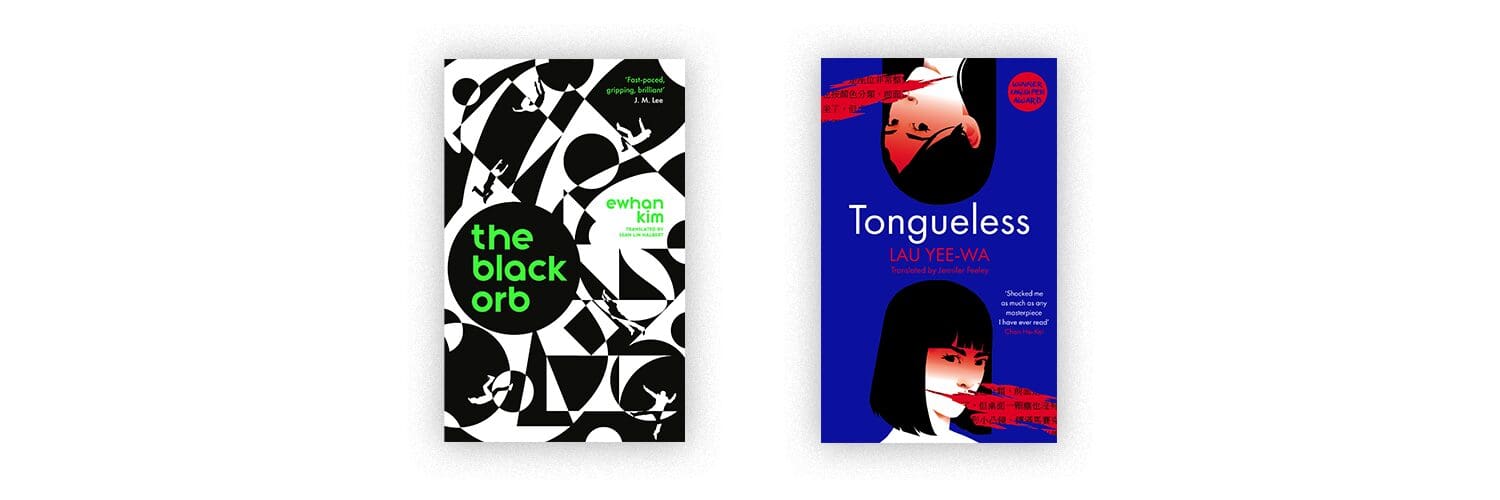
The Black Orb by Ewhan Kim

One evening in downtown Seoul, Jeong-su is smoking a cigarette outside when he sees something impossible: a huge black orb appears out of nowhere and sucks his neighbour inside. A piercingly dark and surreal speculative novel on mass panic, disaster response and modern masculinity.

Tongueless by Lau Yee-Wa

A provocative contemporary Hong Kong noir, blending together politics and personal rivalry into an explosively exciting debut. Tongueless is a taut, compelling novel of betrayal, power imbalance and rapid social change.

Female-led Thrillers

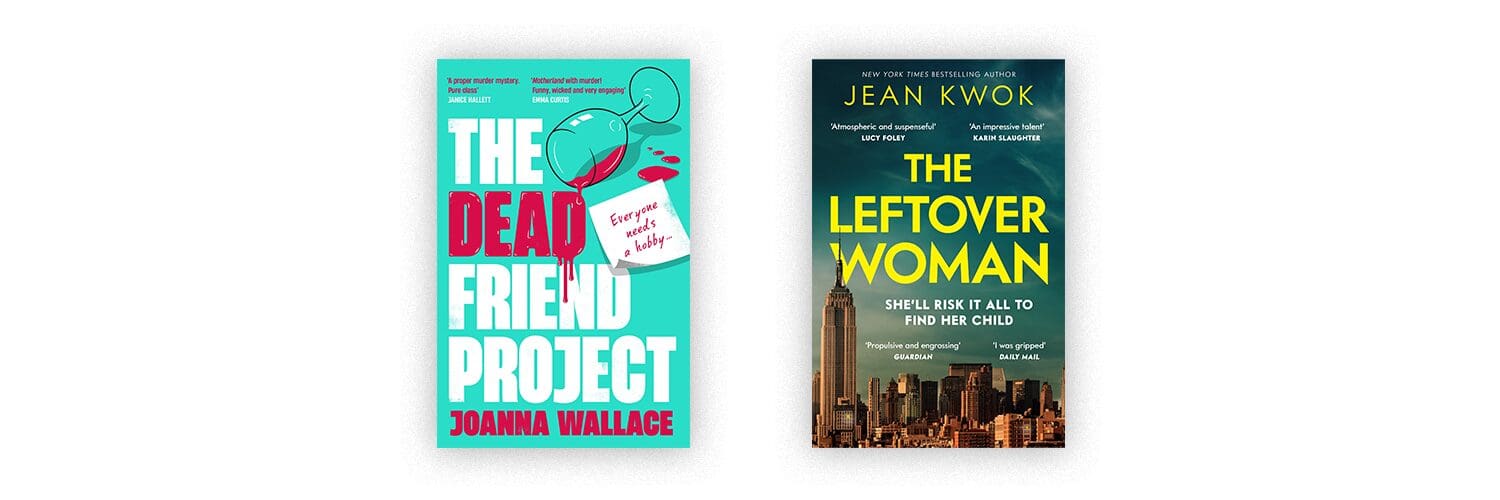
The Dead Friend Project by Joanna Wallace

Things haven’t been going well for Beth ever since her best friend Charlotte died. After discovering something strange about the day that she passed away, Beth begins to question whether Charlotte’s death was really an accident… With a newfound purpose and a glass of wine in hand, it’s time for Beth to uncover what really happened.

The Leftover Woman by Jean Kwok

Two women in a divided city, separated by wealth and culture, yet bound together by their love for the same child. And when they finally meet, their lives will never be the same again… From The New York Times bestselling author Jean Kwok comes an evocative family drama and a riveting mystery about the ferocious pull of motherhood for two very different women.

Atmospheric Crime

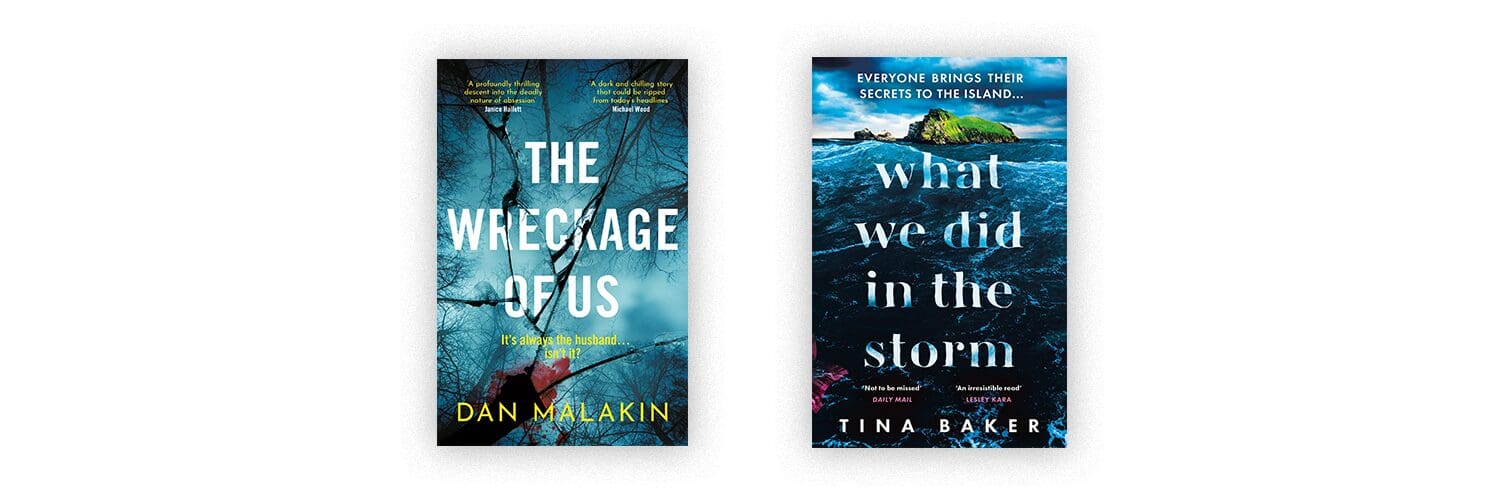
The Wreckage of Us by Dan Malakin

Astrid Webb is missing. The police have found her car crashed near the woods, the driver’s door open, the seat spotted with blood. But there’s no sign of Astrid herself, a sick woman who rarely left her house, who surely couldn’t have left the scene of the accident without help…

The blistering new thriller from the bestselling author of The Regret and The Box

What We Did In The Storm by Tina Baker 

Everyone brings their secrets to the island… Set on Tresco on the Scilly Isles, this ensemble thriller explores emotive themes of class, wealth, complex relationships and abuse of power, with Tina Baker’s trademark wit and pathos.

‘If you like your crime offset by an idyllic location, like Midsomer Murders and Death In Paradise, then this is the book for you’ Heat 

Coming Soon

The Examiner by Janice Hallett

What could possibly go wrong on an art course? The answer is: murder. When the external examiner arrives to assess the students’ coursework, he becomes convinced that a student was killed on the course and that the others covered it up. But is he right? Only a close examination of the evidence will reveal the truth. The new genre-busting crime novel from the bestselling author of The AppealThe Twyford Code and The Mysterious Case of the Alperton Angels

Coming out 29th August 2024

Posted on

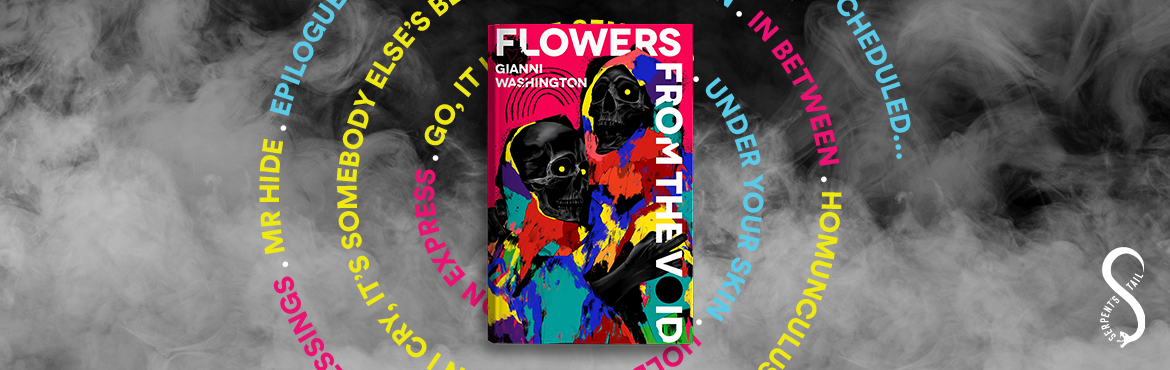
Q&A with Gianni Washington


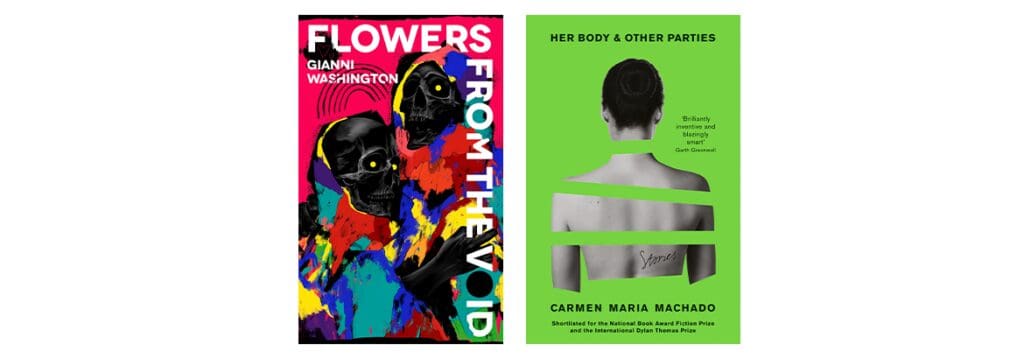
We asked you to send over your questions for Gianni Washington, author of the debut horror short story collection Flowers From the Void. Here’s what she had to say!


Writing a book is a great challenge but what was the most joyful part? 

Sending the final-final version in after making the last of a billion small changes. Getting to that point of satisfaction and acceptance after all the work I’d done made me want to cartwheel around the room.


As a first-time author, what was the most surprising part of the publishing process?

How closely I got to work with the people bringing my book into the world. I expected to form a relationship with my developmental editor, but to have the rest of the process be mostly out of my hands. It was such a pleasure to communicate with my copyeditor, managing editor, publicist, and marketing guru like pals and to be so involved in the book-birthing process beyond writing the initial manuscript.


Would you say there is a central theme that runs across the stories? If so, what is it?

Emotional isolation for sure. I’m super interested in how we perceive our own experience of living versus what we think others experience. More people than you think tend to feel like outsiders and would describe themselves as such—it’s mind-boggling.


Are there any short stories, collections or authors that you drew inspiration from when writing this collection? 

The Illustrated Man by Ray Bradbury inspired my use of a framing device, plus his stories are weird and fun—I love them. Ditto Perchance to Dream by Charles Beaumont, Get in Trouble by Kelly Link, St. Lucy’s School for Girls Raised by Wolves by Karen Russell, Trigger Warning by Neil Gaiman—actually Neil Gaiman in general. Also Stephen King, Shirley Jackson, Gabrielle Wittkop, Thomas Ligotti, James Baldwin, Toni Morrison, Vladimir Nabokov… the entire list would make you grow old to read.


What would you like to see more of in the horror genre (books or film)?

This is directed more at film, but I’d like to see more characters getting into bizarre situations despite making the choices a person would likely make irl. It’s fun to watch characters venture into dark, creepy spaces with zero backup or run to the top floor of a building instead of to an area they could logically escape from, but it’s weirdly satisfying to me when a character does everything right and things STILL turn out bonkers.


If you were to base a short story on an existing horror film, which film would you pick?

Either Constantine or The Cabin in the Woods. I really enjoy exploring the “forces greater than humanity” idea; I love how these films do it and the questions they call to mind.


What’s are you planning on writing next?

I’m currently working on a semi-linked collection of short stories about death as concept, experience, and entity. But there’ll be a novel about twins set in North Carolina to occupy you in the meantime 🙂


Flowers From the Void is a collection of 13 grotesquely gothic short stories to keep you awake all night. A reaper readies herself for her next gruesome assignment and a bereaved African witch prepares for a showdown with a rigidly traditional white Salem coven while an outcast teenage boy is lured into a pact with a schoolfriend that will cost him far more than he ever imagined. Out now!


Posted on

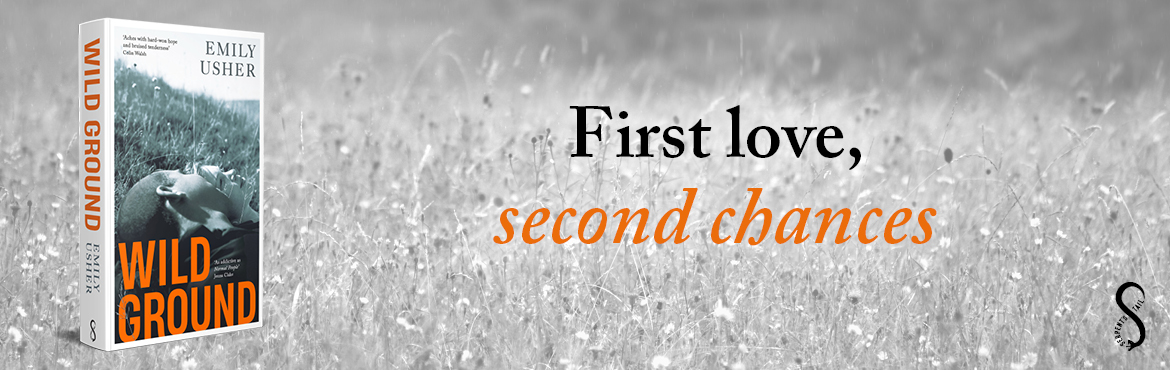
Wild Ground – Read an Extract

A working-class Romeo and Juliet that will break your heart, this bittersweet debut follows two teenagers whose all-consuming relationship is tested by the forces of prejudice and addiction.

In this extract from Emily Usher’s powerfully tender novel Wild Ground, we’re introduced to central character Neef in her new life in London, reflecting on her past and her first love…

Available from: Waterstones | Bookshop.org | Amazon


The caff I live above isn’t mine. I don’t even run it, just work there, six days a week with Sundays off, and only then because it’s closed. I’ve tried to talk Fionnoula and Ali into keeping it open, seems daft to close it on a Sunday, all the extra trade we’d get from people passing through Streatham on a weekend. But Fionnoula won’t hear of it. Sundays are a day of rest, she says. Fionnoula goes to Mass every week, but still calls herself a bad Catholic. It’s like a private joke between her and Ali. The Bad Catholic and the Bad Muslim, they’ll quip, exchanging this look that’s only for them. They’ve been together for years and years, longer than I’ve been alive, she likes to tell me. But they’ve never married. Mostly because they couldn’t figure out where to do it, and besides, who would come? She laughs when she says that but I know it hurts her.

It was hard for them at the start, being together. Too hard for their families, Fionnoula says, although that’s her being kind, trying to forgive. It’s better now, down here at least. People from all corners of the earth walk past the caff every single day and still there are some who don’t like it. Folk can be strange like that. But at the start, she says, it was terrible. All the looks, the names, the turned backs. They got a brick through their window once, with a note tied to it. She’s never told me what it said. It doesn’t surprise me, though, how tough it was. It would have been strange to see the pair of them together even when I was a kid, round our neck of the woods at least. I just have to think of all the ways Danny used to get it, growing up in that pallid town where barely anyone looked like him.

The only reason I walked in the caff all those years ago was because I saw the hunched-over bloke with the ripped-up shoes
and dirty coat go in before me. I figured if they let him in, I might be all right. That bloke’s got different shoes these days, but he still wears that same old brown coat. That’s why we call him Sandy. No one knows his real name, no one’s ever asked. He drinks tea with milk and two sugars and if you put a coffee in front of him, he’ll sip it slowly with a downturned smile, but he’ll never tell you he doesn’t want it. Some days he’ll have a bit of toast; most, he doesn’t bother. He’s as thin as a rake and Fionnoula would happily feed him more if he’d have it, but he’ll only take what he needs, he has his pride. I don’t know his story, how old he is, where he comes from. All I know is that he’s there every day. Him. The old lady with the scarred face and the limp who works down the corner shop. The night cleaner whose empty eyes never seem to close. The shy musician with the long, greying dreads that fall all the way down his back. We’re all the same. A flock of silent souls circling around each other day in, day out, safe among chosen strangers. None of them know me, either. Not even Fionnoula and Ali, not really. They’d be disgusted by me if they did. They call me Jennifer, Jenny. Jen, sometimes. I don’t care which. They don’t know who I used to be, that I’ve spent almost half my life pretending to be someone else.

Fionnoula thinks I’m a dreamer but Ali knows better. Not that he’s ever said anything. It’s just the way he moves around me on
those days when he catches me staring, unblinking, at the steam curling out of the kettle, or turning circles with a damp cloth on the same patch of table over and over again. Mostly he’ll leave me be, but every so often I’ll feel his hand on my shoulder, warm and heavy, a reminder that he’s there. It brings me back somehow, when he does that. Fionnoula has another tack. She’ll swipe me round the back of the head with the corner of her tea towel, or wave her hand around in front of my eyes. He-llaaaaw? Anybody home, Lady Head-in-the-clouds? she’ll trill, her accent still so sing-song Irish no one would guess she’s lived down here all this time.

And then I’ll snap out of it, come to. Sorry, I’ll say. You caught me at it again.

It’s easier to let her think it’s a daydream, but in fact it’s the opposite of that. It’s doing anything I possibly can for it not to be a dream, for my brain not to get carried away with itself and take me to the places I want to stay away from. Sometimes it’s a song, a lyric on the radio, or a flat vowel that sounds like home. Other times it’s the gap between a stranger’s front teeth, the way someone shifts their weight, the cadence of a laugh.

When I first arrived in London, I’d see Danny everywhere. On the back of every bus, the corner of every street. But as the
years passed, I got better at blocking him out. Sometimes months would go by without me having that sense of him, the feeling that if I were to turn around he’d be there, within arm’s reach. Just the other day I followed a lad all the way down the High Road, hoping that when he turned it would be Danny’s face I’d see. I caught myself in time, the foolishness of it. Turned around and walked the other way.

I didn’t have any choice in the end, knew that if I had any chance of pulling through I would have to forget all of it, the bad and the good. But still I have these moments, these days when thinking gets the better of me. Because there were parts that were bliss, there were parts that were full and faultless and laden with joy. When Danny and I were kids, when we were innocent and daft and just the sight of each other, the split second of a look, could make us keel over laughing. And then later, in that middle bit. Fuck, that bit. It was beyond. The way everything we did, everything we felt, we did, we felt together. The way we loved and loved and loved each other. The way we loved each other.

Posted on

Q&A with Nicolas Padamsee

Nicolas Padamsee is the author of England is Mine (Serpent’s Tail, 2024), an Observer best debut novel 2024. It’s the story of David and Hassan, two second-generation immigrants struggling for a sense of identity and belonging in England’s largest metropolis. Amid a wave of online radicalisation and extremism, their fates become inextricably, catastrophically entwined.

We asked Nicolas a few questions to get an insight into his writing process and the inspiration behind this wonderfully raw, urgent debut novel.


Extremism is a word that has many connotations in the modern world, what does it mean to you?

There are few more hotly contested words today than extremism. It is deeply important that it is not thrown around with abandon and does not simply become shorthand for ideologies to which one is passionately opposed. The best definition I have come across is that provided by J. M. Berger, who classes it as ‘the belief that an in-group’s success or survival can never be separated from the need for hostile action against an out-group’ – this entails the designation of ISIS members and white supremacists alike as extremists, but not politicians who simply operate outside the mainstream, such as Jeremy Corbyn, George Galloway or Marine Le Pen, and places a valuable emphasis on the inherently social dimension of the concept.


As the founding editor of Arts Against Extremism, can you tell us a bit about this organisation and how it came to be?

Arts Against Extremism is a literary journal I set up while studying for a Creative & Critical Writing PhD at the University of East Anglia. We publish poetry, flash fiction, short stories and novel excerpts that engage with the subject of extremism – blurring black-and-white narratives and encouraging empathy for those ‘beyond the bounds of our personal lot’ (George Eliot) – as well as interviews and essays that consider how art can help to stem the tide of radicalisation. My ambition was to get more readers and writers to engage seriously with the causes and consequences of extremism; to counter it, we have to try to understand it, however uncomfortable that might be. I was inspired to set it up after reading Julia Ebner’s Going Dark: The Secret Social Lives of Extremists, in which she argues that the creative industries have the power to transcend traditional counter-extremism measures.


How has your work with Arts Against Extremism fed into the writing of England is Mine?

We have published a wide range of works, including a short story about division in Cyprus, a novel excerpt about the Bosnian War and flash fiction about Islamism. Reading and editing submissions led me to think more deeply about how radicalisation happens and how it can most effectively be portrayed in fiction. It also motivated me to spend more time wandering the sewers of the internet, which was as fascinating and illuminating as it was troubling.


The global communities that have developed around Call of Duty play a central role in David’s story. How did you approach researching this subset of online gaming culture?

I have been playing Call of Duty for over 20 years now and made many close friends doing so. During the first lockdown in spring 2020, I would regularly log on at around ten p.m. and find myself ambling up to bed to the sound of birdsong. For many people, this is their primary means of socialising – and a source of immense comfort and pleasure. I think there are a lot of men who are quite isolated and feel uncomfortable talking intimately with other men in person, but gain a certain confidence when they pick up their controller and put their headset on. In between the games – racking up frenzied, frantic Killstreaks – a lot of deep conversations do take place. At the same time, I have also seen people I used to play Call of Duty with change intensely over the past few years and move into more fringe communities.


Music is another instrumental part of David’s character. If England is Mine had a soundtrack, what would it be?

Writing England is Mine, I was heavily inspired by British indie rock – from Pet Shop Boys and The Smiths in the eighties, through Placebo and Suede in the nineties, Babyshambles and Arctic Monkeys in the noughties and Ghostpoet and Wolf Alice in the twenty-tens to PinkPantheress and Eliza Shaddad today. I also listened a lot to the subversive industrial metal of Rammstein and the dramatic military pop of Jadu.

Listen to the England is Mine playlist on Spotify and Apple Music.

Posted on

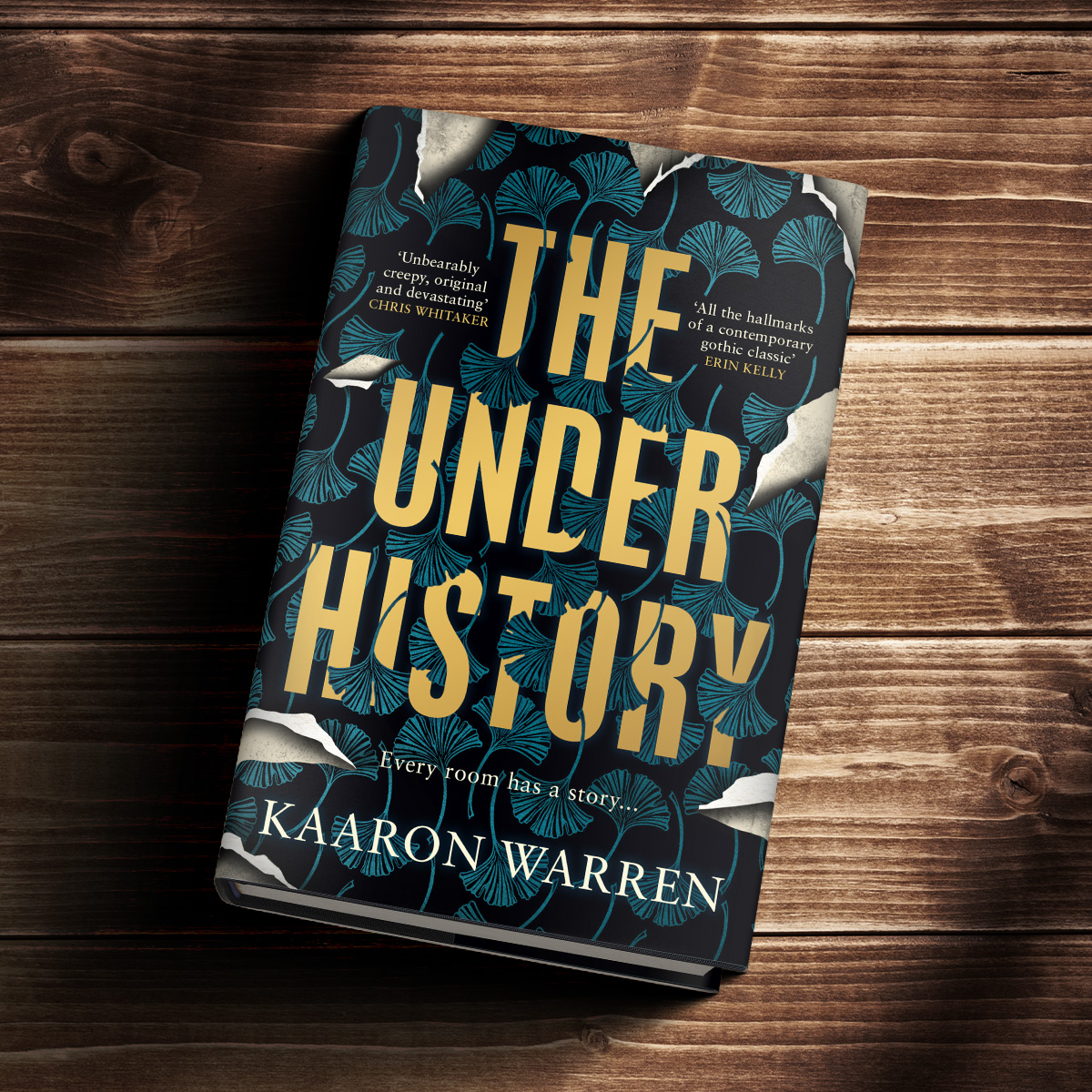
The Underhistory – Take a Sneak Peek

‘Hauntingly creepy’ – ERIN KELLY
‘A unique jewel of a book’ – LIZZY BARBER
‘A heartfelt and chilling gothic tragedy’ – CHRIS WHITAKER

People come to visit my home and I love to show them around. It’s not the original house of course. That was destroyed the day my entire family died. But I don’t think their ghosts know the difference.

Pera Sinclair was nine the day the pilot intentionally crashed his plane into her family’s grand home, killing everyone inside. She was the girl who survived the tragedy, a sympathetic oddity, growing stranger by the day. Over the decades she rebuilt the huge and rambling building on the original site, recreating what she had lost, each room telling a piece of the story of her life and that of the many people who died there, both before and after the disaster. Her sister, murdered a hundred miles away. The soldier, broken by war. Death follows Pera, and she welcomes it in as an old friend. And while she doesn’t believe in ghosts, she’s not above telling a ghost story or two to those who come to visit Sinclair House.

As Pera shows a young family around her home on the last haunted house tour of the season, an unexpected group of men arrive. One she recognises, but the others are strangers. But she knows their type all too well. Dangerous men, who will hurt the family without a second thought, and who will keep an old woman alive only so long as she is useful. But as she begins to show them around her home and reveal its secrets, the dangerous men will learn that she is far from helpless. After all, death seems to follow her wherever she goes…

Sinister and lyrical, The Underhistory is a haunting tale of loss, self-preservation and the darkness beneath.

Available from: Waterstones | Bookshop.org | Amazon


1
SINCLAIR HOUSE, 1993

Looking back, Pera figured out that at the very moment Ike shot his first victim in the jailbreak, she was cleaning up the blood spilled by a visitor who fainted after seeing the rat king. It wasn’t a big spill, but she knew from past experience that even a small amount of blood would smell bad in a couple of days. It was always the Underhistory, the cellar, that got them. Sometimes it was fright, or tiredness, or the closeness of the air. But if someone was going to collapse, that’s where they’d do it.

It was the second-to-last Sinclair House tour of the season, and admittedly her heart wasn’t in it. Usually she’d pack up and leave after the last tour, to be away during flood season. But she was tired. This year, she would stay at home.

After that tour, she had gone into town for the last time, pulling into a parking spot right in front of the hair salon and giving herself a cheer. You never wanted to be late for an appointment with Marcia.

Pera had walked through the door with minutes to spare. Marcia glanced up and rolled her eyes.

‘How are you, Marcia?’

‘Running behind, as usual. Everybody’s always late.’ Marcia had ideas about herself and cutting hair in this small country town weren’t among them. Pera cursed Claudia for being away; usually a haircut meant a house call and an excuse for gossip and champagne. Pera wasn’t keen on Marcia’s cuts but she had been desperate; she looked like an old hag. And Marcia had a loser for a husband, so Pera tried to be kind to her. ‘So, what miracle do you want me to perform today?’ Marcia said.

What Pera had seen in the mirror was not who she was. At heart, she was thirty-three. She dressed young but the wrinkles? There was little she could do about them apart from a face-lift and she didn’t want that stretched leather look.

She had picked out a new lipstick from Marcia’s selection. ‘Bit bright for your age, isn’t it?’ Marcia had said, and Pera had said, ‘You know how much I like colour!’ primping at her hair. She wasn’t bothered by these slights; they said more about Marcia than they did about her. Pera never left the house underdressed. She had a lovely silk scarf she bought in Dublin, shoes from Italy and her Chanel suits she would not be without.

The previous customer paid up, grumbling, and Pera had waited until Marcia gestured her into the chair, where she poked Pera’s hair. ‘Had a go at this yourself, did you?’ She had started combing Pera’s hair, tugging at knots Pera didn’t think were really there.

‘You’re hurting me,’ she had said. ‘Marcia? Can you be a bit more gentle?’

‘Jesus Fucking Christ,’ Marcia had said.

‘Is everything all right, Marcia?’

The phone had rung and Marcia had answered it, launching into a tirade. Pera had decided she’d rather wear her hair in a bun until Claudia came back than let this woman cut it in this state of mind, so she had removed the apron and sidled out of the shop without Marcia even noticing. She had too much to do to waste her time sitting there.

There were conversations every step as she did her shopping, with the wonderful Gwennie – seventy-five, bright and lively, she still cleaned her own gutters – and with Mrs Robertson, dressed as ever as if she were going to the opera; tailored jacket, silver and pearl brooch, diamond-studded watch. She carried a mahogany walking stick but mostly used it to wave at people.

Pera liked her small town; here, people knew her. Elsewhere she was old and could wait and wait and not be noticed in a shop. She was invisible. Here, she was still Pera from Sinclair House, the sole survivor, their famous girl.

‘I thought you were off to Melbourne?’ Mrs Robertson had asked. ‘Your annual?’

‘New Zealand, actually. Stocking up on non-perishables so I have things waiting for me when I get back.’

‘I hope you’ve let the district nurse know. You know how awful she gets when she doesn’t!’ Mrs Robertson had eyed the milk and cheese but had said nothing. ‘You enjoy yourself,’ she said, patting Pera’s arm. ‘Did you hear? Mrs Bee’s Wayne is getting out of jail. She’s had a phone call from him. She’s that pleased!’

‘I hadn’t heard,’ Pera had said. She had written to Mrs Bee, telling her the lie about New Zealand, feeling bad about it but knowing it was all part of the deception.

‘Didn’t our Marcia go out with him for a while? Lucky escape, that one! For him, I mean!’ The two women had chuckled.

‘But between you and me, I think Mrs Bee is confused. They’re not letting that boy out. They locked him up and threw away the key for what he did.’

On the way out with her shopping bags Pera tripped and fell, cutting her knees badly on the corner of the kerb and twisting her ankle as well. Everybody fussed, wanting to call an ambulance. ‘No, no, I have a tour coming,’ she said. She did have one last group.

Later, when Pera had arrived home, the man from the stables had come to take her horses away. ‘Off for a month, are you? Where is it you’re going?’

‘New Zealand! Lucky old me. I’ll send you a postcard,’ Pera had said. The lie had come smoothly off her tongue, after weeks of convincing people she was leaving town. ‘One more tour and I’ll be off to the land of the long white cloud.’ She travelled most years. She’d planned to go back to Greece, but that seemed exhausting, so she’d booked New Zealand, but even that felt too much. Instead she had decided to stock up on food, barricade herself in and sleep, read, rest.

‘I’ll take good care of these beauties,’ the man had said, stroking the mane of one of her horses.

‘You always do,’ Pera had said. She knew she should just let him keep them for good, but they provided her comfort. If she heard a whicker or neigh, she could be sure it was a real horse out there, not a ghost.

***

The blood in the cellar was cleaned away and the preparations for the last tour of the season were nearly done. On the third floor, Pera shifted the dusty mannequin dressed in a bloodied butcher’s apron to the side, pushed a panel and opened the concealed door to her private stairway.

She’d added the secret door because people had no boundaries. No matter how many ‘Private: Do Not Enter’ signs she put up, people stamped up the stairs looking for her, wanting things, asking questions. She loved her apartment; so bright and sunny, so different from the rest of the house, which was full of history and stories. Up here there was simply the present and that was refreshing. It was a perfect space for a single person, making a small fourth floor. She had two bedrooms and too many closets, full of books, jewellery, memorabilia and clothing.

She spent a moment gazing out the window at the astonishing lawn full of flowers, all of them grown from the tributes she’d laid out there decades ago. She called Mrs Bee in Queensland, worried about the gossip she’d heard about Wayne getting out of jail – he always caused her grief – but there was no answer. Pera left a message and promised herself to call back in the evening.

Then she showered, spending too long but unwilling to leave the hot, comforting pressure of the water. She sang in the shower
at the top of her voice, Puccini’s ‘O mio babbino caro’. It always calmed her.

That calm left when she saw herself in the mirror. She again cursed the fact that Claudia, dear friend and hairdresser who would usually come to her to do her hair, was away, and that bloody Marcia in town, the cow, had been so bad-tempered she hadn’t had the haircut and dye-job she desperately needed. She washed her hair, then brushed it back. She’d tie it in a bun and play the little old lady for this tour group.

They never minded that. Her ankle was sore from her fall, so she took a cane out of the umbrella stand. Even better.

When she had a tour going through, she could mark off hours reliably. If not, only the clocks marked time and they were not trustworthy.

Just this last tour, then she could rest.

Posted on

Help Wanted – Read the Opening

‘Help Wanted is like a great nineteenth-century novel about now, at once an effervescent workplace comedy and an exploration of the psychic toll exacted by the labour market’ Elif Batuman, author of The Idiot

‘An immersive, deeply affecting human drama’ Bookseller, March 2024 Book of the Month

‘Poignant, funny, stealthily ambitious’ The New York Times

At a superstore in a small town in upstate New York, the members of Team Movement clock in every day at 3.55 am. Under the red-eyed scrutiny of their self-absorbed and barely competent boss, they empty delivery trucks of mountains of merchandise, stock the shelves and stagger home (or to another poorly paid day job) before the customers arrive.

When Big Will the store manager announces he’s leaving, everything changes. The eclectic team members now see a way to have their awful line manager promoted up and away from them, and to dream of a promotion of their own. Together they set an extravagant plan in motion.

Available from: Waterstones | Bookshop.org | Amazon


1


THE FIRST HINT something was up was so subtle that it barely registered. Just before the start of Monday’s 4 a.m. shift, the members of Movement were in the employee area at the front of the store, waiting
to clock in. Everyone was there—everyone, that is, except Meredith, the person at the center of the plot that was soon to take shape, its reason for being.

Nicole turned to Little Will, Movement’s group manager. “She’s still coming back today?” Nicole asked. “She hasn’t been, like, fired?”

At twenty-three, Nicole was the youngest person in Movement.

“Nope,” answered Little Will. “She texted me last night.”

As if Nicole had demanded proof, he fished his phone from his pocket, tapped its screen several times, and passed the device to her. I’ ll be a little late tomorrow, read the message from “Meredith, boss.” I need
a little rest after vacay, you know how it is! The words were followed by two emojis: a beach ball and a glass of wine.

Nicole rolled her eyes. She was about to hand back Little Will’s phone when a new text bubble appeared on the screen. She couldn’t help but read it. Hey man, I’ve got some news. Could be big for Movement.
Coming in now, will tell you & M after the unload. The text was from Big Will, the store manager.

“Huh,” Nicole said. She gave the phone back to Little Will, then watched him as he read the text.

He was six foot one. He was only called Little Will to distinguish him from Big Will. Big Will was five eleven, but it was his grinning face, captured by a Polaroid, that sat at the top of the org chart taped
to the wall of the break room at Town Square Store #1512 in Potterstown, NY. From Big Will’s photo, seven spokes pointed diagonally down to the next layer of management, the store’s executive managers. One of these was Meredith. Her photo, taken at a flattering three-quarter angle, showed her smiling coyly. Two months earlier, it had been pulled from the slot that said “Executive Manager for Sales—Hardlines” and reglued above the words “Executive Manager for Logistics (a.k.a. Movement).” A lone vertical line led down from Meredith’s picture to Little Will’s. His appeared to have been taken under duress. It had a startled mug-shot quality. As if to underline a point about his status, Little Will’s title—group manager—wasn’t capitalized. The rank-and- file members of Movement weren’t pictured at all.

“Maybe Meredith really is getting fired?” Nicole said when Little Will looked up from his phone. She grinned hopefully.

She was pretty, in a fresh-faced, apple-cheeked, straight-from-the-farm way, the kind of dimpled white girl you could picture in ye olden days, in a gingham dress and braids as she milked a cow. To tamp down
such associations, she slouched, wore baggy T-shirts and boxy pants that sat low on her hips, smoked constantly, avoided both the sun and foods that weren’t heavily processed and/or white in color, and generally cultivated an air of boredom and free-floating hostility.

Little Will frowned. As a manager (albeit a low-level one), he tried to adhere to certain standards. “Let’s not jump ahead of ourselves,” he said.

Nicole looked at him with something close to pity. It wasn’t only because he was too nice to talk shit even about Meredith. He’d missed multiple buttons on his shirt—a limp, faded, pill-covered
flannel he kept balled up on the passenger seat of his car when he wasn’t working. Swatches of white undershirt were visible between buttonholes. Little Will would have been ridiculous if he weren’t so good-looking.

The digits on the two identical time clocks hanging on the opposite wall changed synchronously from 3:54 to 3:55. The text slipped from Nicole’s mind as she joined the others.

After clocking in, a few people went straight to the sales floor. The rest headed to the warehouse. Movement was responsible for unloading the trucks that came from Town Square’s corporate distribution center in western Pennsylvania and for getting the merchandise onto the store’s shelves.

Nicole, who was in the warehouse group, walked with the others through the quiet store to Aisle E26 (lightbulbs), all the way in the back. At the end of the aisle, they passed through a set of double doors, marked EMPLOYEES ONLY.

The warehouse was even more dungeon-like than usual. With sunrise still a ways off, its small, dirty skylights were useless. The half dozen or so bare bulbs that hung from the high ceiling only dented the gloom. The air was thick and warm. There was never any AC back here, but with the store closed to customers, the HVAC system was on eco mode: no occasional blasts of cooled air wafted in from the sales floor. The truck was parked ass-out in the first of the warehouse’s three loading docks. Every few seconds, high-pitched squeals tore through the dark space. The line—a long metal track that ferried merchandise through the warehouse—needed oiling.

Milo and Diego had arrived before the others, to set up. Milo was already in position, standing just inside the truck, and was raring
to go—rotating his arms in their shoulder sockets, like a pitcher warming up.

Milo was the thrower. His job was to transfer boxes from the truck onto the line, then push them to the next person, who scanned them. At store #1512, this was Nicole. If her scanner said a box held backstock, she drew a slash on its label with a Sharpie before pushing the box down the line. Downstream from her, Travis, Raymond, Diego, Val, and the old guys were spread out along the line. Each one was responsible for picking certain categories of boxes off the line and putting them onto pallets waiting by their feet. Boxes that weren’t theirs, they pushed to the next person, until the truck was empty.

Without waiting for the old guys to get to their posts at the back of the line, Milo began pushing boxes down the track.

Nicole’s scanner intoned dully—beep, beep, beeeeep—as it hovered over a microwave, a box of DVDs, a bundle of six swim noodles tied together with twine, which for some reason—who knew or cared—elicited a longer and higher-pitched squawk. Nicole fell into a steady, almost somnambulant rhythm as she scanned and pushed, scanned and pushed. There came a cordless vacuum cleaner, an infant car seat, several packages of paper towels fused together with shrink-wrap, a box containing tubs of protein powder, an office chair, a dollhouse, kitty litter, curtain rods, an air conditioner, a box of mixed HBA (health and beauty aids), a flat-screen TV, baby wipes, a box of individually packaged, microwavable bowls of organic mac ’n’ cheese, two Blu-ray players, a convection oven, four Android cell phones, a crate of jarred pasta sauce, a box of DVDs, a stack of Monopoly sets wrapped in cellophane, a white-noise machine, a mixed box of Chemical (cleaning supplies), a bundle of shrink-wrapped lampshades, more kitty litter, several cases of flavored seltzer water in 12-ounce aluminum cans, tiny cans of gourmet dog food, deodorant, double-A batteries, even more kitty litter—for decades, Potterstown had been hemorrhaging people, but judging by the fecal evidence, its cats were flourishing—dish soap, soap dishes, a drip coffeemaker, a Keurig coffeemaker, pots for planting, pots for cooking, rubber mats to put in the footwell of a car, crayons, laundry baskets, bookshelves, a half dozen bound American flags, shampoo, nail polish, wood polish, shoe polish.

When a pallet filled with boxes, Little Will used a jack to whisk it from its spot. Before taking it out to the sales floor to be unpacked—or “broken out,” as they called it—he swapped an empty pallet in its place so the movement of the line wouldn’t be interrupted, even for a moment. Corporate insisted the unload take no more than an hour. If they took even a minute longer, Meredith, as executive manager, had to submit a “failure report,” as she called it. Having to do this guaranteed she’d be on the warpath for the rest of the morning. One time, after it happened, she’d sent Raymond home early, on the grounds—dubious, in Little Will’s judgment—that Raymond was still drunk from the night before. (He’d just smelled of booze.) More recently, she’d gone off on Nicole, chewing her out and threatening to write her up for no reason at all.

Before taking a pallet of HBA to Joyce on the sales floor, Little Will glanced at his wrist. It was bare. He remembered that his watch battery had died a few days ago. He pulled his phone from his pocket: 4:09. Shit.

Although corporate permitted them to clock in five minutes earlier, Movement’s shift officially started at four. They had to finish the unload by five.

Little Will rubbed his cheek. It was already stubbly. His shift began at three, an hour earlier than the others’, and lasted eight hours and forty-five minutes. Then he went to his second job, landscaping. He showered and shaved at night, before going to bed.

“Jesus Christ!”

Back in the warehouse, Val’s voice rose above the screech and clang of the line. Little Will turned to her. So did everyone else. With one hand, she held a large bag of kitty litter above her head, like the Statue of Liberty wielding her torch.

“This is soaked!” Val shouted, giving the kitty litter a little shake as the line came to a slow, whining stop. “C’mon, mofos! What’s the use of kitty litter if it’s wet?” With her free hand, she tapped the side of her head. “Think about it.”

But she was grinning. There were few things Val liked more than an opportunity to display her competence.

“Drama queen,” Milo muttered from the truck. Only Nicole heard. She didn’t respond. Nicole thought the idea of Milo calling anyone, even Val, dramatic was laughable. After three years of working next to Milo on the line, Nicole’s precise level of irritation with him ebbed and flowed, but it rarely dipped below a six on a one-to-ten scale.

Val tossed the kitty litter into the Damaged pile (which, to Milo’s point, she could have done immediately, without stopping the line). Boxes started to move again.

Posted on

From Serpent’s Tail, With Love

Love is in the air, and what better way to celebrate the season of romance than with captivating stories that warm the heart (more or less)?

This Valentine’s Day, we have handpicked for you a trio of literary gems that will make you want to swap roses for books… From the elegance of Mrs Gulliver to the raw honesty of Is This Love? and the sheer beauty of June Jordan’s verse in Haruko/Love Poems, we promise that these books will make your Valentine’s Day unforgettable!


Mrs Gulliver

Available from Waterstones | Amazon | Bookshop.org

‘Irresistible – a funny, sexy romp that’s also smart, even wise’ Kirkus starred review

‘ Pure elegance, subtlety and wit. A triumph of a novel’ – Francesca Segal, author of Mother Ship

It is 1954, and prostitution is legal in the tropical haven that is Verona Island. Here, among gangsters and corrupt lawmen, Lila Gulliver runs a brothel that promises her exclusive clientele privacy and discretion. When nineteen-year-old Carità, beautiful and blind since birth, comes to her door seeking employment, Mrs Gulliver sees a business opportunity and takes a chance. Carità is mesmerising, sharp and a mystery to her employer, always holding herself at a distance.

One night, the son of a wealthy judge patronises Mrs Gulliver’s establishment, immediately falling madly in love with Carità. This is Ian Drohan – young, idealistic and cushioned by wealth and family connections. Mrs Gulliver mistrusts him, and worries for Carità’s future. Carità, on the other hand, is fearless, headstrong and a force of nature that Mrs Gulliver is always several steps behind.

A dazzling drama filled with sex, wry wit and literary references, Mrs Gulliver follows two women who have nothing to lose in their fight for agency on an island too ready to dismiss them.


Is This Love?

Available from Waterstones | Amazon | Bookshop.org

‘This is a book about the untidy, complicated underbelly of love and love’s end.  Funny and true, wise and utterly authentic, you will recognise yourself over and over.  I loved it’ Kit de Waal

‘A deeply unsettling, but unputdownable account of a marriage unravelling. This book held me captivated with its wit, ambiguity and complexity’ Abi Morgan, creator of The Split

Did you mean to marry me?
Did you understand the vows that we took?

J’s wife has left, and J is trying to understand why. How could someone you loved so much, who claimed to love you once, just walk away? How could they send divorce papers accusing you of terrible things, when all you’ve ever done is tried to make them happy?

Narrated by J in the days, weeks and months after the marriage collapses, and interspersed with the departed wife’s diary entries, Is This Love? is an addictive, deeply unsettling, and provocative novel of deception and betrayal, and passion turned to pain. As the story unfolds, and each character’s version of events undermines the other, all our assumptions about victimhood, agency, love and control are challenged – for we never know J’s gender. If we did, would it change our minds about who was telling the truth?


HARUKO/Love Poems

Available from Waterstones | Amazon | Bookshop.org

Selected by Seán Hewitt as a Granta Book of the Year

In trailblazing poet, essayist, teacher and activist June Jordan’s poems, love is a vision of revolutionary solidarity, crossing borders both emotional and literal with an outstretched hand. Haruko traces the faltering arc of a passionate love affair with another woman while Love Poems encompasses relationships with men and women, political resistance, the need for self-care in a demanding, uncaring world and apocalyptic visions of the eruption of Mount Vesuvius that destroyed Pompeii and Herculaneum.

A contemporary of Alice Walker, Toni Morrison and Audre Lorde, June Jordan’s spectacular poetry remains profoundly politically potent, lyrically inventive and breathtakingly romantic. First published in 1994, Haruko/ Love Poems is a vitally important modern classic.


What will you be reading this Valentine’s?

Posted on

Mrs Gulliver: Read an Extract

It is 1954, and prostitution is legal in the tropical haven that is Verona Island. Here, among gangsters and corrupt lawmen, Lila Gulliver runs a brothel that promises her exclusive clientele privacy and discretion. When nineteen-year-old Carità, beautiful and blind since birth, comes to her door seeking employment, Mrs Gulliver sees a business opportunity and takes a chance. Carità is mesmerising, sharp and a mystery to her employer, always holding herself at a distance.

One night, the son of a wealthy judge patronises Mrs Gulliver’s establishment, immediately falling madly in love with Carità. This is Ian Drohan – young, idealistic and cushioned by wealth and family connections. Mrs Gulliver mistrusts him, and worries for Carità’s future. Carità, on the other hand, is fearless, headstrong and a force of nature that Mrs Gulliver is always several steps behind.

A dazzling drama filled with sex, wry wit and literary references, Mrs Gulliver follows two women who have nothing to lose in their fight for agency on an island too ready to dismiss them.

Don’t miss the latest novel from the winner of the Women’s Prize for Fiction, Valerie Martin! Read the opening of Mrs Gulliver below.


Our clients are professionals: doctors, lawyers, bankers, politicians (we’ve served a few mayors over the years), and, because our city is wrapped around the largest port on the island, a steady supply of seagoing men. My rule is: officers only. Discretion is what we offer. Except for the address in wrought-iron numbers, the front door is unmarked and never used; clients enter via a side door behind a tall hedge, so it can’t be seen from the street; a password is required at all times. As the password doesn’t change, this is the mildest of security measures. Our clients are encouraged to share it with interested friends or acquaintances. It creates a kind of network, with the charm of inclusion in a select society. Boys love passwords.

In the last few years, bad weather and blight have played havoc with the local economy, particularly among the rice farmers on the windward side of the island. A few of their prettier daughters have made their way to the city seeking honest labor and, failing that, turned up at my door. By that time, they are desperate, hungry, and frightened, and their best option is a charity organization run by nuns in a little town up in the hills. I refer them there. I’ve taken one or two to work, but they’re seldom up to my standard for the house. Occasionally, my sympathy overrules my judgment and I employ a girl who presents what I know will be a challenge. This may be shrewdness on my part, as I would not have been successful in my business were it not for a sixth sense I have about some quality in an applicant that will appeal to certain of my clients. Carità was such a girl.

That summer morning, a hot and humid day with rain, as usual, in the forecast, my majordomo, Brutus (aptly named), came to my office, which is also the kitchen, and planted himself squarely in the door frame. “There’s an odd couple asking to see you in the drawing room,” he announced. “I don’t know what they want. They look like beggars, but they know the password.”

“Did you tell them we don’t open until noon?”

“They’re country girls, Lila,” he said. “They’re looking for employment, is my guess.”

I rose from the table. “Then how did they get the password?” I mused. Brutus stepped aside and I sauntered down the hall.

They sat facing each other, one in a leather chair, the other perched on the edge of the red silk upholstered divan, her back straight and sandaled feet drawn in. They were dressed in plain cotton sleeveless shifts that came to the calf, worn but clean. Two destitute girls, one fair and portly, the other an elfin creature, small-boned, emaciated but not boyish. Even in her unflattering dress I could see she had a shapely figure: long waist, full breasts, excellent posture—that’s always the first thing I notice. Her hair was an uncombed thick black mop that fell to the center of her back and partially covered her face.

The blonde looked up as I entered the room, her innocent face flushed with hope. Her friend didn’t move, her head slightly bowed and turned away from me.

“How do you come to know the password here?” I asked sharply.

“My uncle gave it to me,” she said. “His name was Peter Rizzo. He said you might not remember him, because he only came here once, with a friend.”

“Who was the friend?”

“I don’t know that,” the girl replied. “It was when he came to town. He was a rice farmer. Or he was until the blight came. Now he’s dead, and the bank took the farm.”

“Where are your parents?” I asked.

“Our parents are dead,” she said candidly, with no more emphasis than you might use to make a trivial factual observation—for example, That door is closed.

“So . . . you’re sisters,” I observed. “And you’ve come to the city looking for work.”

“That’s right,” she said. “My name is Bessie Bercy, and this is Carità. I’ve already got a job. I’m signed up to shuck oysters at the market restaurant on the wharf. The man there showed me how it’s done and then gave me a test, and right off he said I was faster than the two boys he’s already got put together.”

“Good for you,” I said. “That shows enterprise.”

“Yes, ma’am,” she said. “But Carità won’t do that kind of work, so now I need to find a place for her, because I can’t leave her on her own and I won’t make enough for us both. My uncle said he thought she might be useful to you.”

At this her dark sister chuckled. “That’s not exactly how he put it, Bessie,” she said. Her voice, deep and breathy, vibrated through my chest like a cat purring in my lap. As she spoke, she turned toward me, and I could make out through the screen of her hair that her eyes, half closed, were very light. “What he said,” she continued, “was that I’d be better off here than with the goddamned lesbian nuns.”

How can I describe the rich velvet of her voice? She could have been a countess or an actress, delivering a scene-clinching line. There was an archness as well, distant and amused, deflecting the crudeness of the information she had just so succinctly passed along. She made me smile in spite of myself.

“Carità,” her sister said, “don’t talk like that.”

“I don’t think Mrs. Gulliver is shocked,” the girl replied. Again, the deep vibration and archness of tone caressed my ears.

“Would you push your hair back so I can see your face?” I said.

She pressed her palms against her temples, pulling back the curtain of hair.

I caught my breath. Her face was beautiful, a creamy complexion with a natural blush, like an English beauty, her nose straight, her lips full and soft, her chin squarish and firm. But it was her eyes that startled me, heavy-lidded and half closed, with thick dark lashes, and irises like blue glass, the perfectly translucent blue of a glacier. Beneath the dark bird-wings of her brows, her eyes glittered enchantingly. I studied her. Something was very odd about those eyes.

“She’s nineteen years old,” Bessie said. Carità inclined her head toward her sister’s voice, but the eyes didn’t move. “She’s blind from birth.”

Posted on

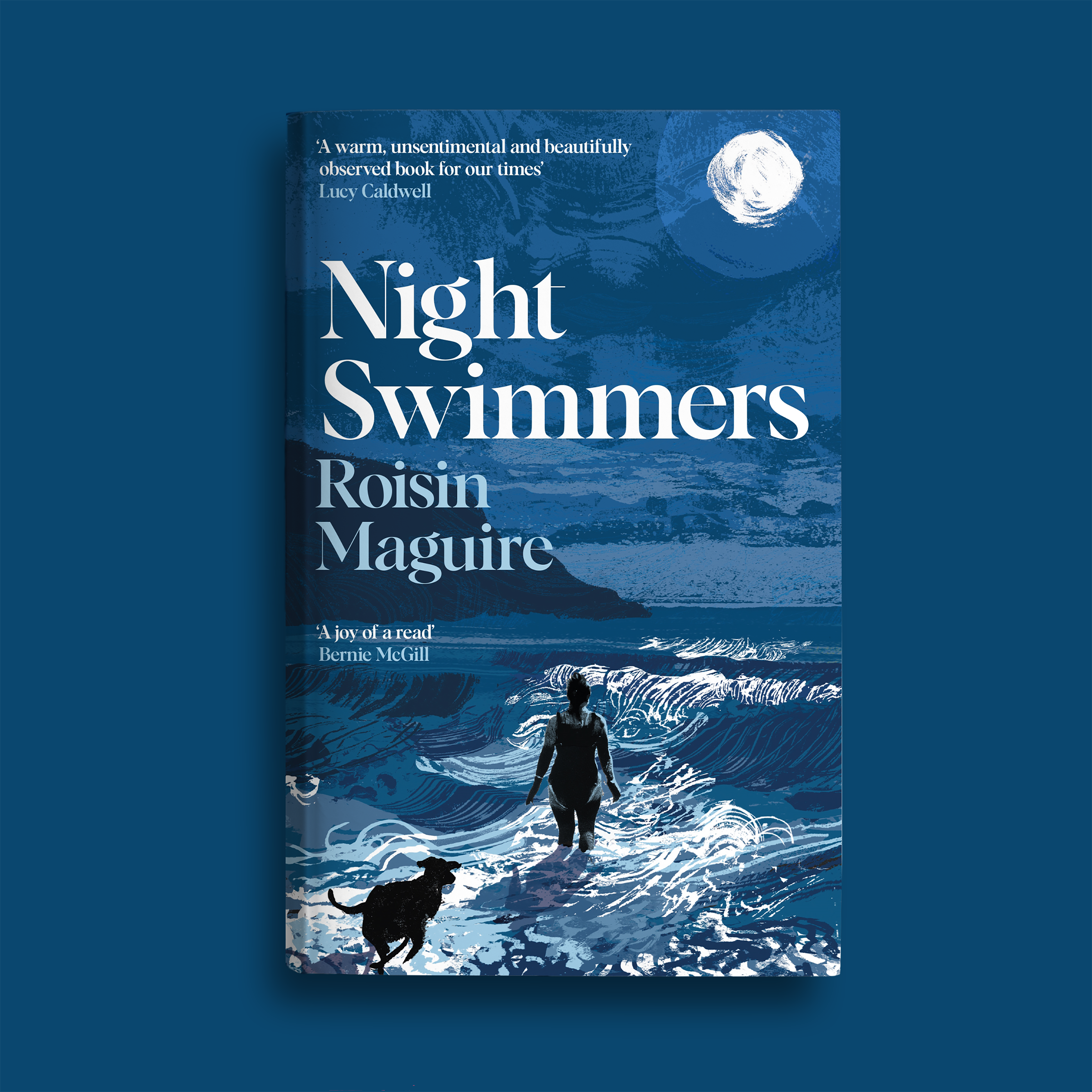
Night Swimmers: Read the First Chapter

  Chapter One


She heard them before she saw them, a cluster of brightly coloured chickens, fussing at the water’s edge, flapping and clucking.

‘Silly bitches,’ she said.

Treading water, blinking the salt from her eyes, she watched them for a moment. They were folding towels, stowing phones in yoga-bags, pulling off sandals. They were toeing the water, expressing dismay at its temperature. They were coming in, now. She could hear the giggles and the tiny little screams of surprise as the water met their smooth white feet. They wore dinky little swim-hats and their shoulders were hunched and pale and narrow.

She flipped herself over and ducked down, down, down under the surface, letting the sparkle of her bubbles soothe her, feeling the cold rush over her skin, her belly, her thighs. A cool hand. She felt the tick of her pulse grow heavy as she dived into the dark, but kept going, kept swimming and wriggling downwards until her heart became a knocking in her throat and temples, forcing her to turn back, push to the surface again, pull fresh air in and blink and drip and breathe and look out to sea and try to pretend she was on her own.

‘What the hell are they doing here?’ she grumbled, lying back crossly and kicking great columns of water up into the air, letting it rain down again, delicious. She could have stayed for ages longer but the shrieking and splashing carried out across the still plane of water in the bay – her bay – and jangled her, spoilt it all. No one ever came all the way around here, to this pebbly, inhospitable place. They put up their windbreakers and their deckchairs and the rest of their shit back around the corner on the main beach where the sand lay golden and inviting and cool and bright, and left this place for her.

Bugger, she thought.

She rolled over, disgruntled, looking out to where the grey sea met the grey sky and disappeared, feeling the depths beneath her dangling toes, dark and heavy and beautiful. It was maybe fifteen, twenty metres deep out here, just at the edge of OK, just before the currents began, those whip-strong lines of muscle from east to west, those unstoppable forces, those dangerous beasts. She could see them from where she was, juddering the water ahead, as if freight trains ran just underneath the surface and dragged the sea along.

She swam away, just to be sure, swam a little distance in, towards the shore.

They were still in a tight group, the other women, but they were in the water properly now at last. Their red and green and blue and white heads bobbed up and down as they sketched a communal breaststroke around and around in tight circles, up down, up down, up down, like that fabulous fairground game where you got to hit rodents with a mallet. She wished she had a mallet, now, she surely did.

They’d be there for ages on her beach, she grumped, even after they’d got out of the water – swaddled in special swimming robes and taking photos of themselves, drinking hot things that steamed from shiny metal cups. Adventurers, all. Triumphant explorers of the deep on social media.

She’d have to go in, then. Get it over with.

Damn.

She headed back, slowly, like a schoolchild at the morning bell.

The dog saw her coming, jumped up from the shelter of the dark rocks, and started barking as it always did.

‘Good lad,’ she said, and smiled a little, felt a teensy bit better.

The dog came to the edge of the water, barking, barking, barking.

The chittering and bobbing stopped among the swimmers, and squeaky wondering began.

‘Oh my god, look at that thing – I wonder where its owner is.’

‘I wonder if it will come in? D’you think it will come in?’

‘Oh god, Ellie, I hate dogs, you know I hate dogs. I hope it doesn’t come in.’

‘That’s not a dog, that’s a monster.’

Nervous giggling, swivelling of bright heads.

‘I’m getting a bit cold. I’ll really need to get out, in a minute.’

‘How can we get out, if it’s there, like that? I wonder how we can get out?’

Their voices, rising, travelled faster over water than on land. She could hear every word, their clear assertive diction shining through.

‘Oh my god, look! There’s someone way out there – I bet it’s their dog.’

‘Where?’

‘Where? I can’t see anything.’

‘They haven’t a hat on, or anything. Look – miles away – that black dot, there, see?’

Pause. Everyone looking.

She felt like waving, but didn’t.

Dog, barking and barking.

Barking and barking and barking.

Paws in the water now, barking and barking.

She imagined its mouth open, doing that frothing thing by now, all the teeth jangling in there, sharp in its blunt ugly head.

The heads turning to her, to the dog, to her again.

All standing now, pimpled and chilly no doubt, their silly orange tow-floats dangling, staring out along a pointing finger to where she swam.

‘Unless it’s a seal?’

‘Oh god, Ellie, I hope it’s not a seal. I hate seals.’

She obliged, with a flip of her feet, ducking under, hearing a shriek before the water bubbled over. It was a pity, she thought, in the murky white of it, holding herself down by letting breath stream out. It was a damn pity she wasn’t a seal. Seals could submerge for six minutes or more. Fantastic creatures, altogether. She could have swum right past them, right in to shore, invisible; lolloped out and up the beach and away, before they knew it.

As it was, she thought, bubbling slowly to the surface, she’d have to go past them.

She began to swim again.

She used long, strong, steady strokes, forgetting the others briefly in the tick-tock-tick-tock of it, loving the stretch and the pull of it, loving the slip-slap of it on her face as she turned to snatch a breath, then turned to swim again. She saw the sleek dark rocks slip past, marked her progress on the familiar spikes and lumps of them, felt herself getting close to shore.

‘Excuse me! Hey, excuse me!’

She kept swimming, tick-tock-tick-tock.

‘Hi!’ On two friendly notes, ‘—Excuse me, is that your dog?’

Dog barking and barking and barking.

Its stump of a tail would be whacking back and forth now at the sight of her approaching head. All four legs would be bouncing on the sand at once, as if she’d been gone for a fortnight – stupid thing.

Tick-tock-tick-tock.

Bark, bark, bark, bark.

‘—Hello? Excuse me?’

‘He won’t answer. Why won’t he answer you, Kate?’

‘Rude thing. Horrible, like his dog.’

‘Honestly!’

She must be almost level with them by now.

She could see the seabed, rippled and light, within a toe’s reach below her.

Tick-tock-tick-tock-tick-tock.

‘Hey! Can you call your dog, please?’

The voice was bawling now.

‘—You shouldn’t just let it run loose like that, you know. Scaring people. Hello? Hello?’

She paused in the water, blinked it out of her eyes and found her feet on the sand. It crisped nicely between her toes like a welcome home. She looked at them, standing there. The woman stopped shouting. Moderated her tone. Straightened her bony shoulders.

‘It’s – your dog’s being a nuisance! Look! It won’t let us out of the water!’

Behind her, the other women closed in, a line of faces with knitted eyebrows, nervous eyes.

Bark, bark, bark, bark.

The leader’s swimming-hat was a deep purple, no doubt she’d say it was mulberry, with daft little rubber flowers dotted around the edge. Grace knew that if she ripped it off, the hair underneath would be long and shiny and perfumed and smooth. She didn’t, of course. She flicked her own wild seaweed lengths back over her shoulder instead, and let the woman register several things. Then she stood up slowly. Felt gravity pull everything back down, that had floated so nicely before. Watched the woman’s face go slack with surprise. Smiled.

‘Good god, she’s got nothing on.’

‘Oh my lord, I wish I had my phone.’

Tittering behind Purple-hat, who didn’t seem to know where to look.

Bark, bark, bark, bark.

‘Em,’ the woman lowered her head and shook it, as if trying to get rid of the image she’d just seen ‘—your dog—’

‘Not my dog,’ said Grace briskly, heading for shore with great long strides, hearing snickers and snorts behind her, ‘never seen it before in my life.’

Posted on

Serpent’s Tail Christmas Gifting Guide

OUR YEAR IN BOOKS


It’s getting colder. Days are getting shorter. Fairy lights are twinkling from windows and balconies. It can only mean one thing… Time for some Christmas reading recommendations!

We present you with a selection of the glorious books we’re extremely proud to have published this year, and which we *bet​*​ any one of your loved ones would also love to read.

From moving literary debuts to alternate worlds, thought-provoking nonfiction and sweet stocking-fillers, Serpent’s Tail has you covered for a truly spectacular Christmas.

Happy reading!

Find us at @SerpentsTail and @ViperBooks


STOCKING FILLERS


Cheri by Jo Ann Beard

A masterpiece of fiction and memory, Cheri is a heartbreaking but glorious celebration of all the moments of beauty and pain that make an individual life, right up until its very last moments.

Seven Cats I Have Loved by Anat Levit

Anat Levit never considered herself a cat lover, but when her life was thrown into upheaval, she found herself adopting one cat at the suggestion of her daughters, and then six more. She delves into the feline mind with gentleness and compassion, while also revealing a moving human story.

Love Me Tender by Constance Debre

‘Destined to become a classic of its kind’ Maggie Nelson
‘One of the most compulsive voices I’ve read in years’ Olivia Laing, Observer

A starkly beautiful account of impossible sacrifices asked from mothers, Love Me Tender is a bold novel of defiance, freedom and self-knowledge.

Alison by Lizzy Stewart

Alison is newly married, barely twenty and struggling to find her place in the world. A chance encounter with an older artist upturns her life and she forsakes convention and her working-class Dorset roots for the thrumming art scene of London in the late seventies.

“Every now and again a book comes along that is such a bright joy, so true, so beautiful and moving. Alison is one of those books. I loved it.” – Jessie Burton, author of The Miniaturist


BEST BY FIRESIDE


Critical Hits edited by Carmen Maria Machado and J. Robert Lennon

Whether you’re an avid gamer, a Twitch subscriber, or just an incidental Subway Surfer, video games have changed the way you interact with the world and have been part of our lives for over fifty years. Critical Hits is a celebration of play and playfulness through sharp, impassioned and inquisitive essays.

Prostitute Laundry by Charlotte Shane

Prostitute Laundry is a taboo-breaking and radically honest account of love, friendship and sex work. This serial memoir follows Charlotte over the course of several years as she falls in and out of love, muses on the nature of sex work and the value of beauty, discovers hidden emotional complexities and contemplates leaving her profession.

Wish I Was Here by M. John Harrison

‘A masterpiece’ Helen Macdonald
‘It will surprise you, sometimes astound you, and leave you profoundly changed’ Jonathan Coe

One of our greatest and most original living writers sets out the perils of the writing life with joyful provocation. This is his first memoir, an ‘anti-memoir’, written with aphoristic daring and trademark originality and style.


DECK THE SHELVES


Queen K by Sarah Thomas

Exquisitely written and deliciously unreliable, Queen K takes the reader to some of the most luxurious places in the world. But a dark refrain sounds from the very beginning of the story and grows towards its operatic finale: a novel about insatiable material desire can only ever be a tragedy…

A Flaw in the Design by Nathan Oates

A nephew. An uncle. A psychopath – but which of them is it?

Gil knows his nephew Matthew is dangerous, but to the women in the family he is charming, intelligent, wry. When he disdainfully joins Gil’s classes at the local university, Matthew makes his real intentions clear. Why is Gil the only one who can see this? Is he losing his mind?

Sanderson’s Isle by James Clarke

1969. Thomas Speake comes to London searching for his father and a place to belong, but instead joins the search for a stolen child through swinging London and the Lake District. There he finds Sanderson instead, a larger-than-life TV presenter, who hosts ‘midweek madness’ parties where the punch is spiked with acid…


THE GHOST OF (POSSIBLE) FUTURES


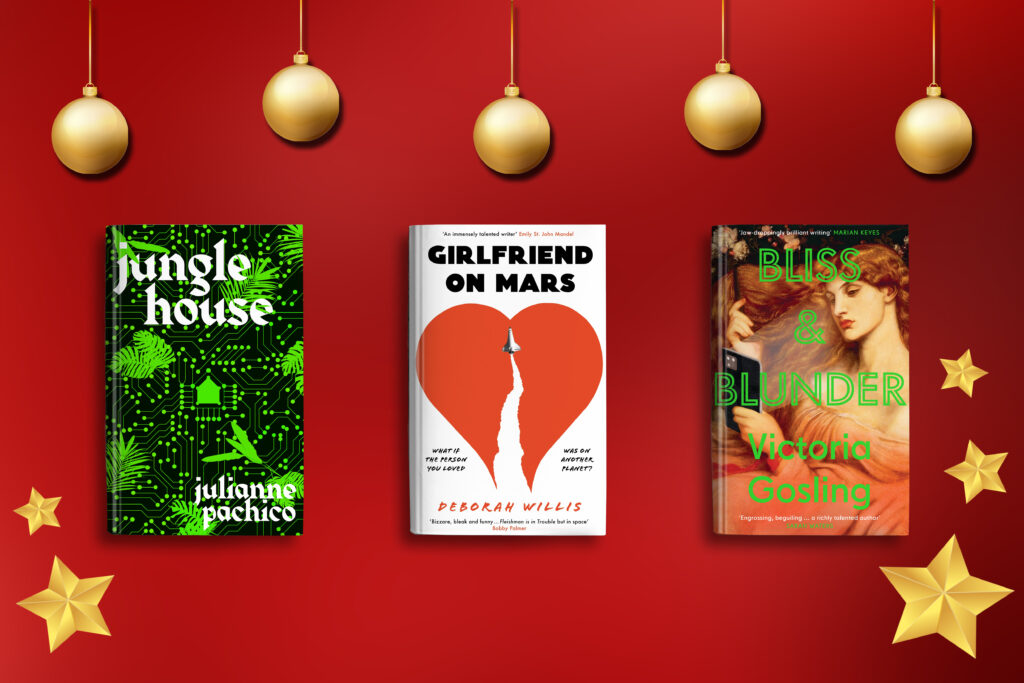
Bliss & Blunder by Victoria Gosling

An inventive, magisterial reworking of the King Arthur legend for the 21st century and a heartrending novel of power, friendship and betrayal.

Jungle House by Julianne Pachico

‘Mother is not like other mothers. She gets angry when Lena draws her with a face. When Lena challenges her to portray herself, she paints a tiny yellow dot surrounded by swirling black. She is a bastion of light, she says, against an army of darkness.’

A suspenseful literary novel, with a premise perfect for fans of Never Let Me Go by Kazuo Ishiguro, that asks: will humans and AIs form families, and what are the implications of this?

Girlfriend on Mars by Deborah Willis

A satirically funny, poignant and dark novel for fans of cool contemporary fiction. Follow weed-growing couple Kevin and Amber, as Amber is selected for a reality TV show to win a one-way ticket to Mars.


THE BOOKS THAT STOLE CHRISTMAS


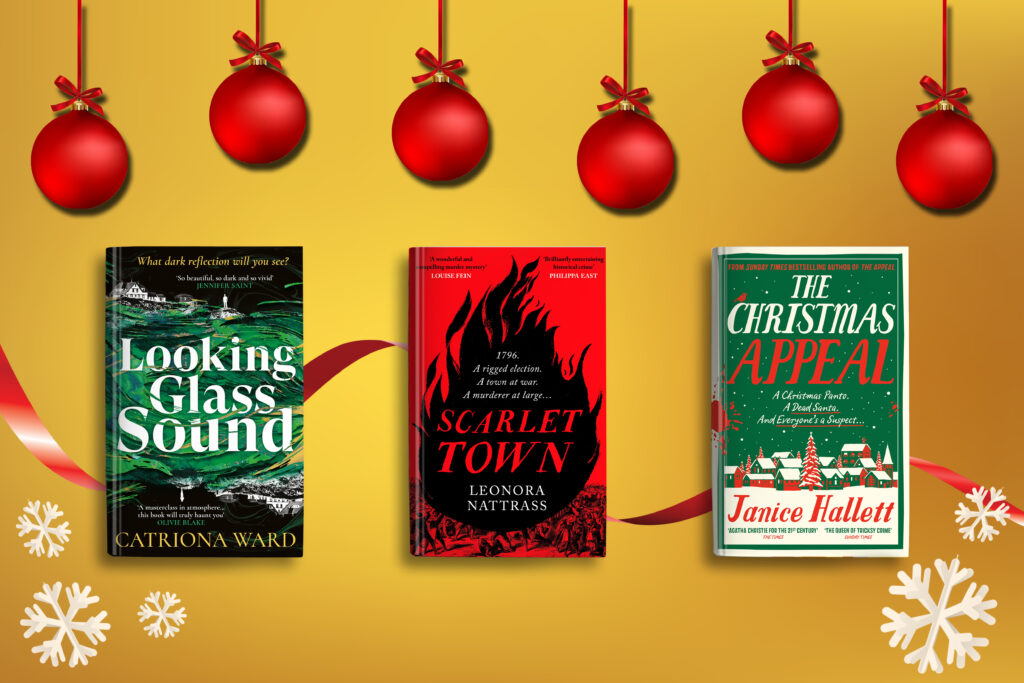
Looking Glass Sound by Catriona Ward

‘Writers are monsters. We eat everything we see…’

This book will be Wilder’s revenge on Sky, who betrayed his trust and died without ever telling him why. But as he writes, Wilder begins to find notes written in Sky’s signature green ink. Is Sky haunting him? And who is the dark-haired woman drowning in the cove, whom no one else can see?

Scarlet Town by Leonora Nattrass

1796. A rigged election. A town at war. A murderer at large…

Disgraced former Foreign Office clerk Laurence Jago and William Philpott have escaped America by the skin of their teeth. In this third instalment in the Laurence Jago series, they return to Laurence’s home town of Helston, Cornwall, where they find themselves in the middle of a tumultuous election that has the inhabitants of the town at one another’s throats.

The Christmas Appeal by Janice Hallett

One dead Santa. A town full of suspects. Will you discover the truth?

Christmas in Lower Lockwood, and the Fairway Players are busy rehearsing their festive pantomime. Sarah-Jane is fending off threats to her new position as Chair, the fibreglass beanstalk might be full of asbestos, and a someone is intent on ruining the panto even before the curtain goes up. Of course there’s also the matter of the dead body. Will the show go on?


Posted on

Critical Hits: Take an Exclusive Peek Inside

‘A loot drop of brilliance’ – Naomi Alderman, author of The Power

Whether you’re an avid gamer, a Twitch subscriber, or just an incidental Subway Surfer, video games have changed the way you interact with the world, and have been part of our lives for over fifty years. Critical Hits is a celebration of play and playfulness, and the lasting impact of videogames.

Composed of sharp, impassioned, and inquisitive essays, this collection begins with an introduction by Carmen Maria Machado and presents video games through the eyes of eighteen writer-gamers as they straddle real and artificial worlds. In games, they find solace from illness and grief, test ideas about language, bodies, race, and technology, and see their experiences and identities reflected in-or complicated by-the interactive virtual realities they inhabit.

From a deep dive into “portal fantasy” games by Charlie Jane Anders and a comic by MariNaomi about her time as a video game producer, to the overlaps in gaming and poetry by Stephen Sexton, Critical Hits illuminates fragments of an industry that is wildly popular, grossly misunderstood, and absolutely spellbinding.

Featuring: Red Dead Redemption, Genshin Impact, Hollow Knight, Halo, Call of Duty 4, The Last of Us, Dragon Age: Inquisition, Fallout 76, Metal Gear Solid, Final Fantasy VI, and many more!

Available from: Bookshop.org | Foyles | Forbidden Planet | Waterstones | Amazon


CONTENTS

  • Introduction
    Carmen Maria Machado

  • I Struggled a Long Time with Surviving
    Elissa Washuta

  • This Kind of Animal
    Nana Kwame Adjei-Brenyah

  • Thinking like the Knight
    Max Delsohn

  • Mule Milk
    Keith S. Wilson

  • Staying with the Trouble
    Octavia Bright

  • Narnia Made of Pixels
    Charlie Jane Anders

  • Cathartic Warfare
    Jamil Jan Kochai

  • The Cocoon
    Ander Monson

  • Video Game Boss
    MariNaomi

  • In the Shadow of the Wolf
    Vanessa Villarreal

  • Clash Rules Everything around Me
    Tony Tulathimutte

  • The Great Indoorsmen
    Eleanor Henderson

  • I Was a Teenage Transgender Supersoldier
    nat steele

  • Ninjas and Foxes
    Alexander Chee

  • No Traces
    Stephen Sexton

  • Status Effect
    Larissa Pham

  • Ruined Ground
    J. Robert Lennon

  • We’re More Ghosts Than People
    Hanif Abdurraqib


Have we made you curious?

Critical Hits will make an exclusive appearance at MCM London Comicon on 27-29 October at Forbidden Planet’s stall (N800) alongside our authors!

And if you absolutely cannot wait to dive in, Critical Hits will also be freely available to read on Netgalley during MCM weekend – but better request it fast, as there are only 50 copies up for grabs! Here is the link you will want to bookmark to get ahead of the queue:

Critical Hits on Netgalley

Posted on

Serpent’s Tail Black History Month Spotlight

SERPENT’S TAIL
BLACK HISTORY MONTH SPOTLIGHT

A letter from our editors…

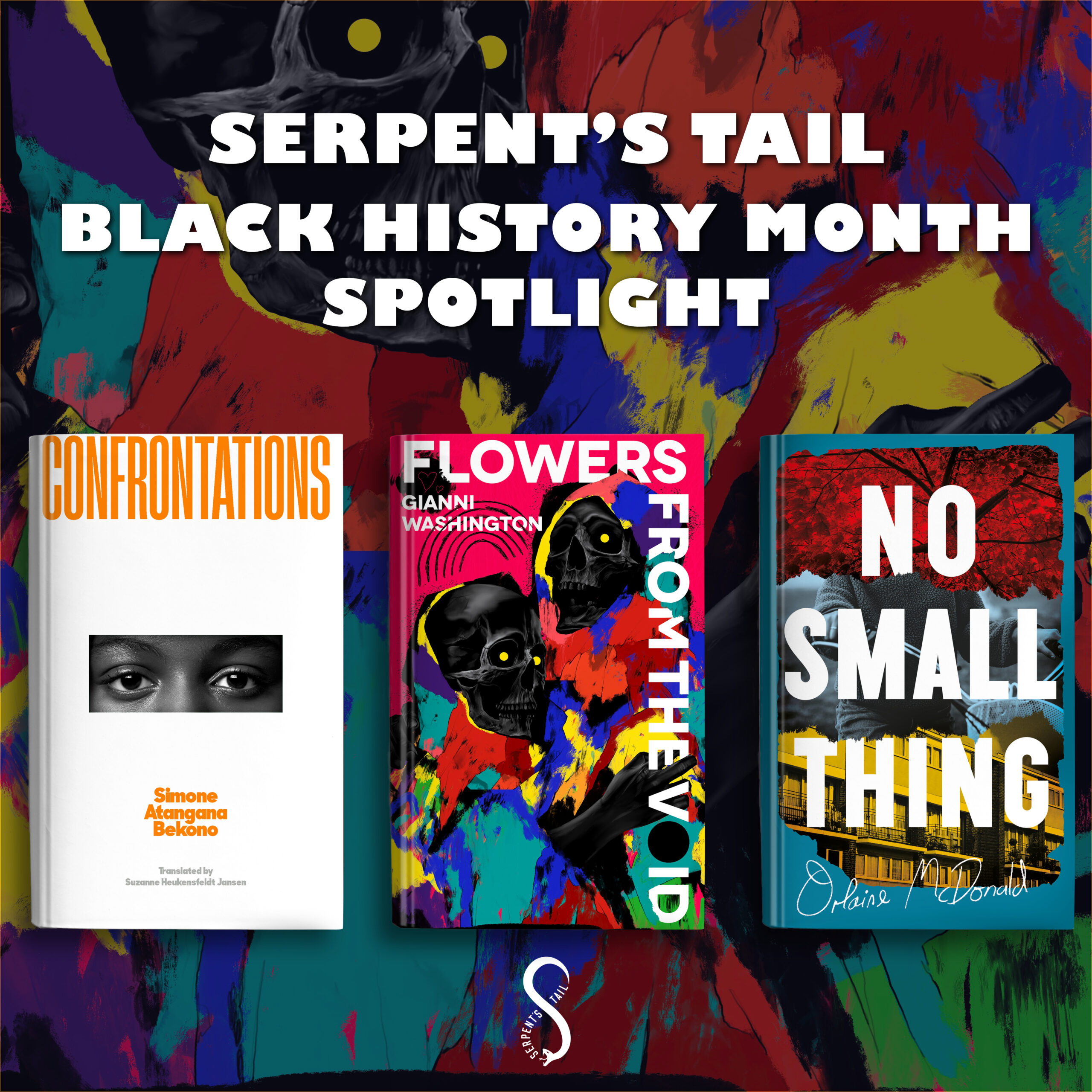
Serpent’s Tail is proud to be publishing three brilliant debuts by Black writers in 2023, with settings spanning from South London all the way to Amsterdam and America.

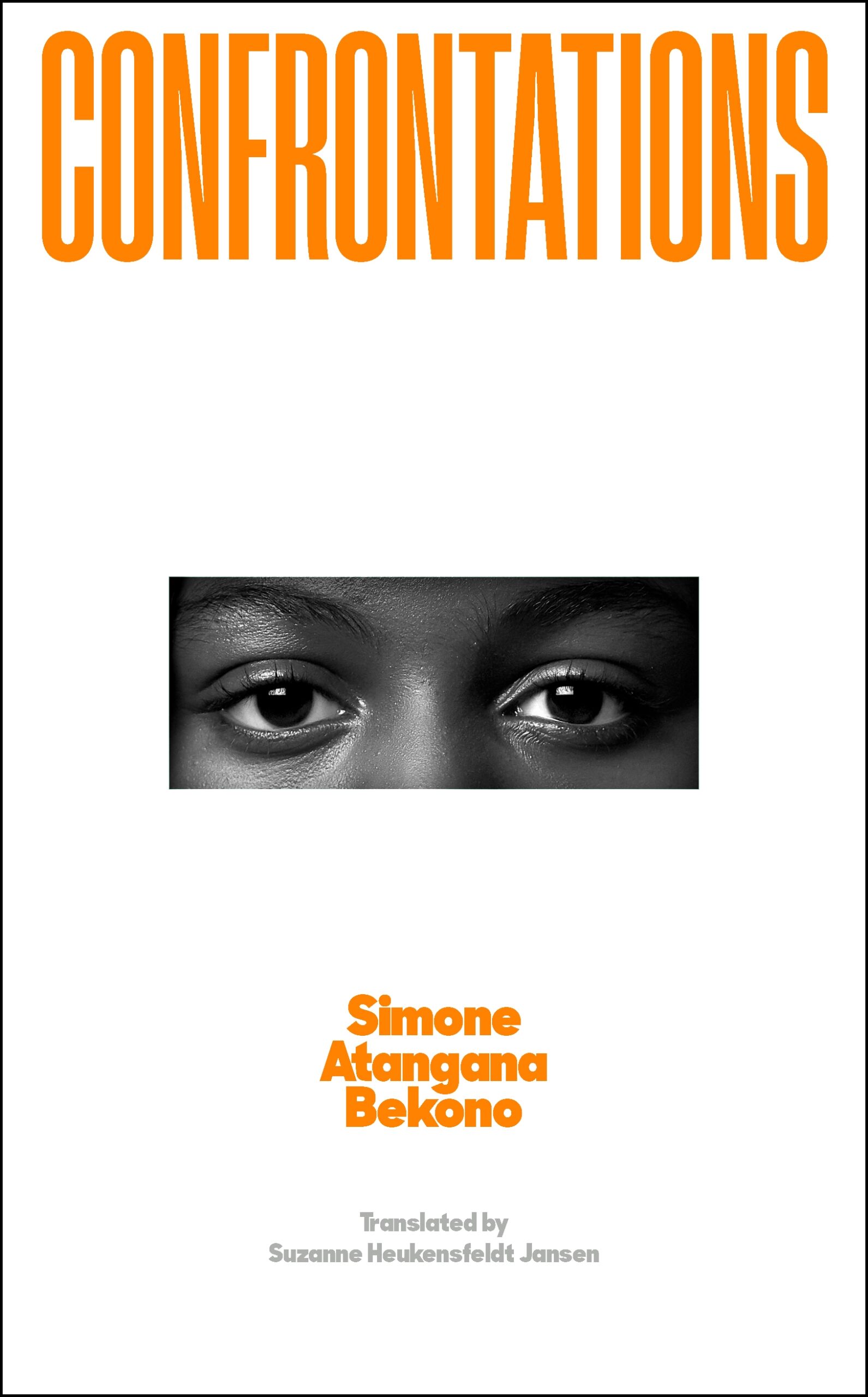
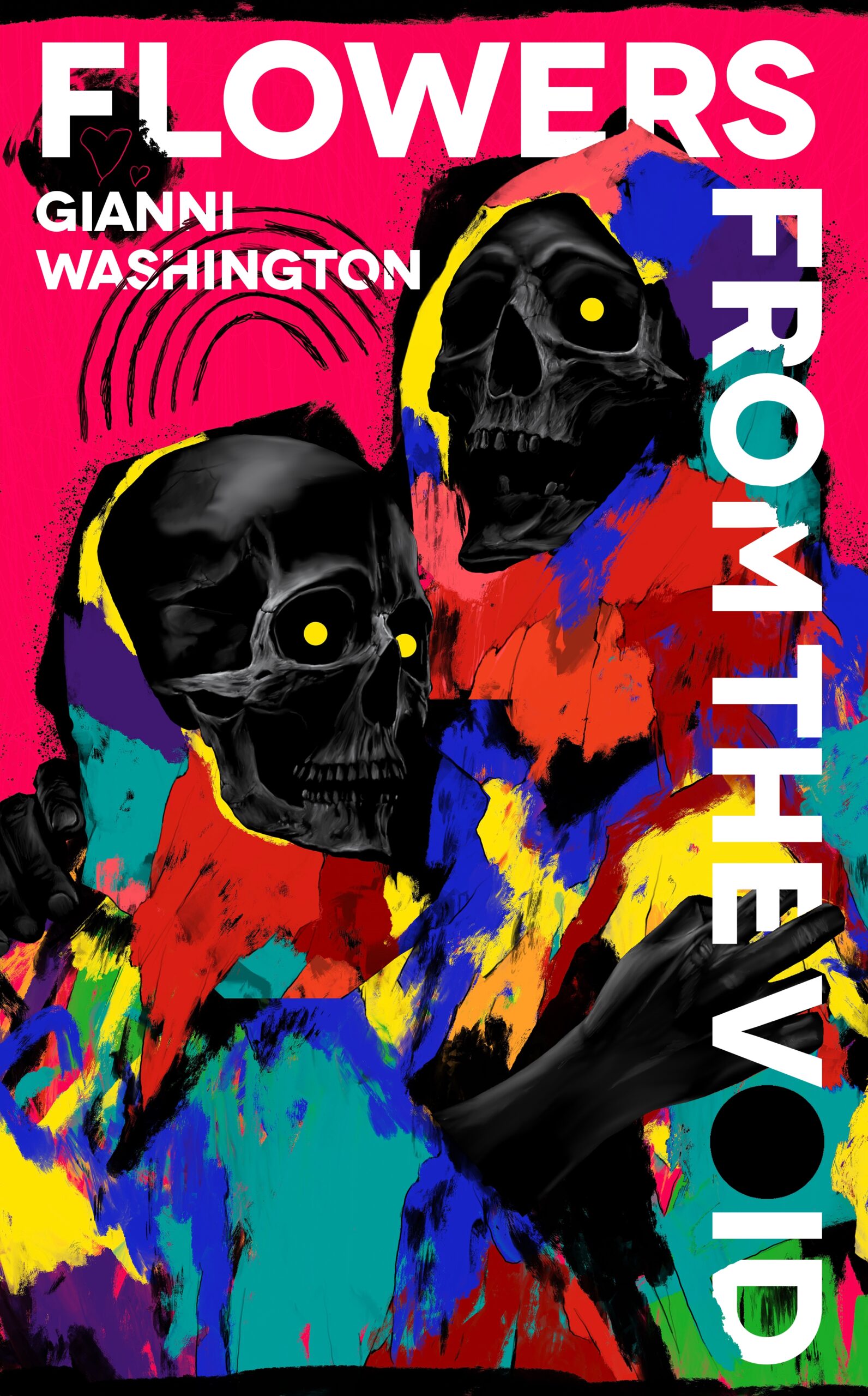
To start the year off, we present prize-winning Dutch star Simone Atangana Bekono, whose novel Confrontations follows a bookish and bullied sixteen-year-old girl in a unit for young offenders. Further into spring, Gianni Washington’s chilling short story collection Flowers from the Void showcases a new and fearsome vision for American gothic fiction. And in the summer, Orlaine McDonald’s No Small Thing vibrantly depicts the joy and pain of Black and working-class life in urban Britain.

With sharp prose and dynamic characters, each of these debuts tell distinctive stories that will entertain you, move you and make you think.

Follow us on X @SerpentsTail | Instagram @serpentstail


Confrontations
by Simone Atangana Bekono

11 January 2024

Salomé was bullied for years and no one did a single thing to help her. One day she finally snapped. Now at just sixteen years old, she’s being held in a secure unit for young offenders. But as time passes, she finds new strength to delve into the reasons for her rage and arrive at her own understanding of punishment, penitence and the paradoxical demands made on her existence as a Black woman.


Leonora Craig-Cohen, Commissioning Editor, on Confrontations

‘In this layered, literary page-turner, the young protagonist upends common preconceptions of justice to tell her own story. Salomé’s voice is instantly engaging and the reasons for her rage difficult to turn away from.’


Flowers from the Void
by Gianni Washington

2 May 2024

Hauntingly macabre and piercingly insightful about loss and loneliness, these gothic short stories lead us into a labyrinth of other possible worlds, each one darker than the last and yet all fearfully close to our own. Living dolls serve as imperfect replacements for the deceased, a girl without a shadow finds her soulmate and spurned lovers’ bodies begin falling to pieces. In this scintillating debut collection Gianni Washington explores the limit of intimacy and empathy with the vivid intensity of your worst nightmare.


Leonora Craig-Cohen, Commissioning Editor, on Flowers from the Void

‘Gianni Washington skilfully blends elements of gothic horror, science fiction and folklore in this deliciously grotesque collection. Read with all your lights on, and sleep with one eye open!’


No Small Thing
by Orlaine McDonald

4 July 2024

Three women. For a year they live in the flat below Earl’s on Blossom View Estate. Then there are two. Spanning a year, this is a novel of hope, desire and loss which explores the damage we do to the people we claim to love the most. Told with grace and compelling clarity, No Small Thing reveals tender truths about motherhood, the intersection of class and race and the legacies of the trauma we inherit.

‘Being a mother is no small thing, and whether or not you agree with mothers Livia and Mickey, you will love them for who they are, as well as who they are trying to be. And of course, there is Summer. Eleven years old and confused, desperate to be seen, and dangerously unaware of her own vulnerability.’


Luke Brown, Publishing Director, on No Small Thing

‘I love the way Orlaine McDonald presents life on a London council estate, with all its ups and down, rather than as a symbol for social depravation. It’s a subtle look at class and race, and how they affect the generations of characters who live there. And it’s a novel that crackles with female desire, with women seeking freedom and transcendence through risky relationships with men. I really hope you’ll like it.’


Explore our backlist…

HARUKO/LOVE POEMS by June Jordan
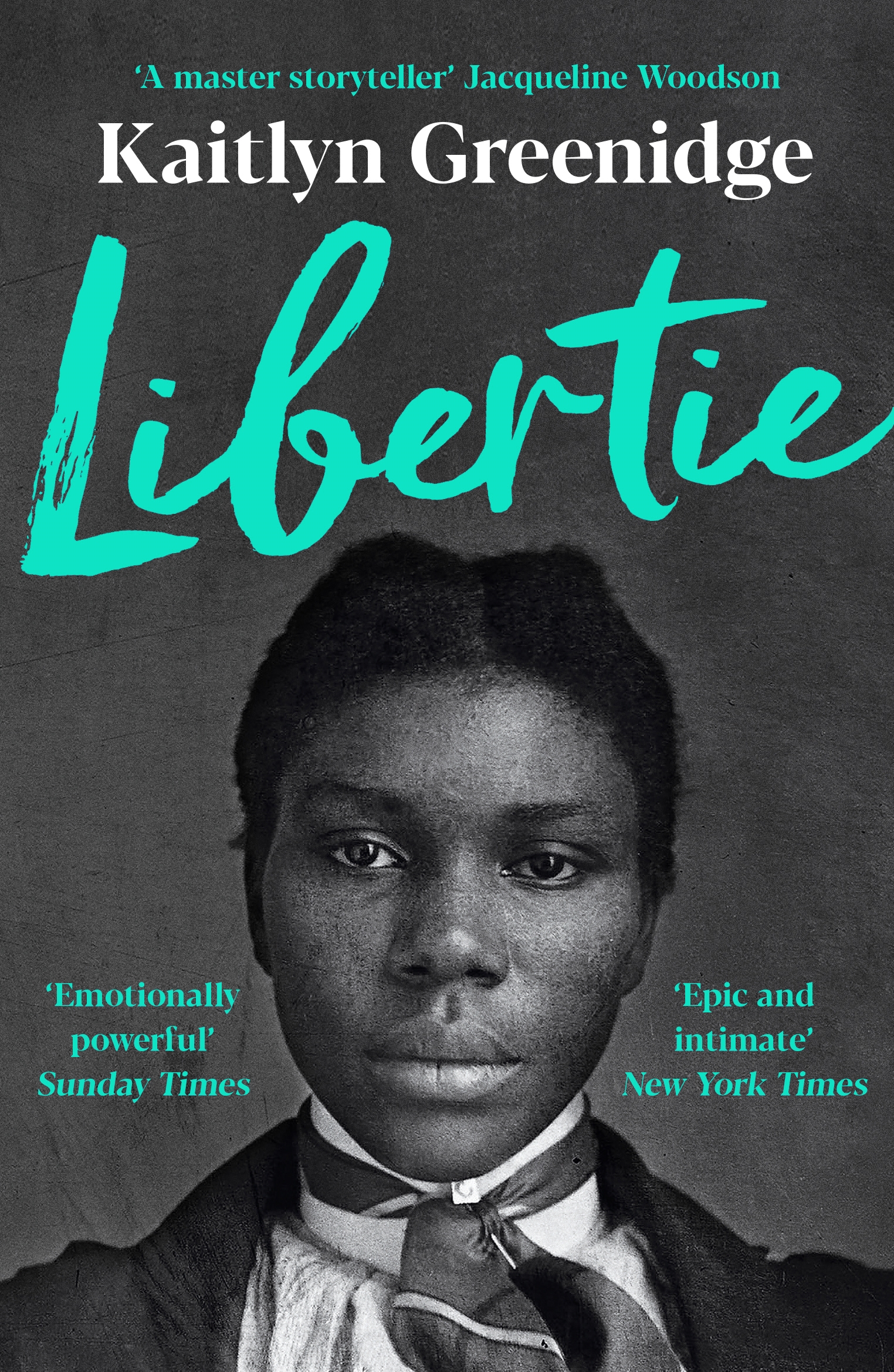
Libertie by Kaitlyn Greenidge
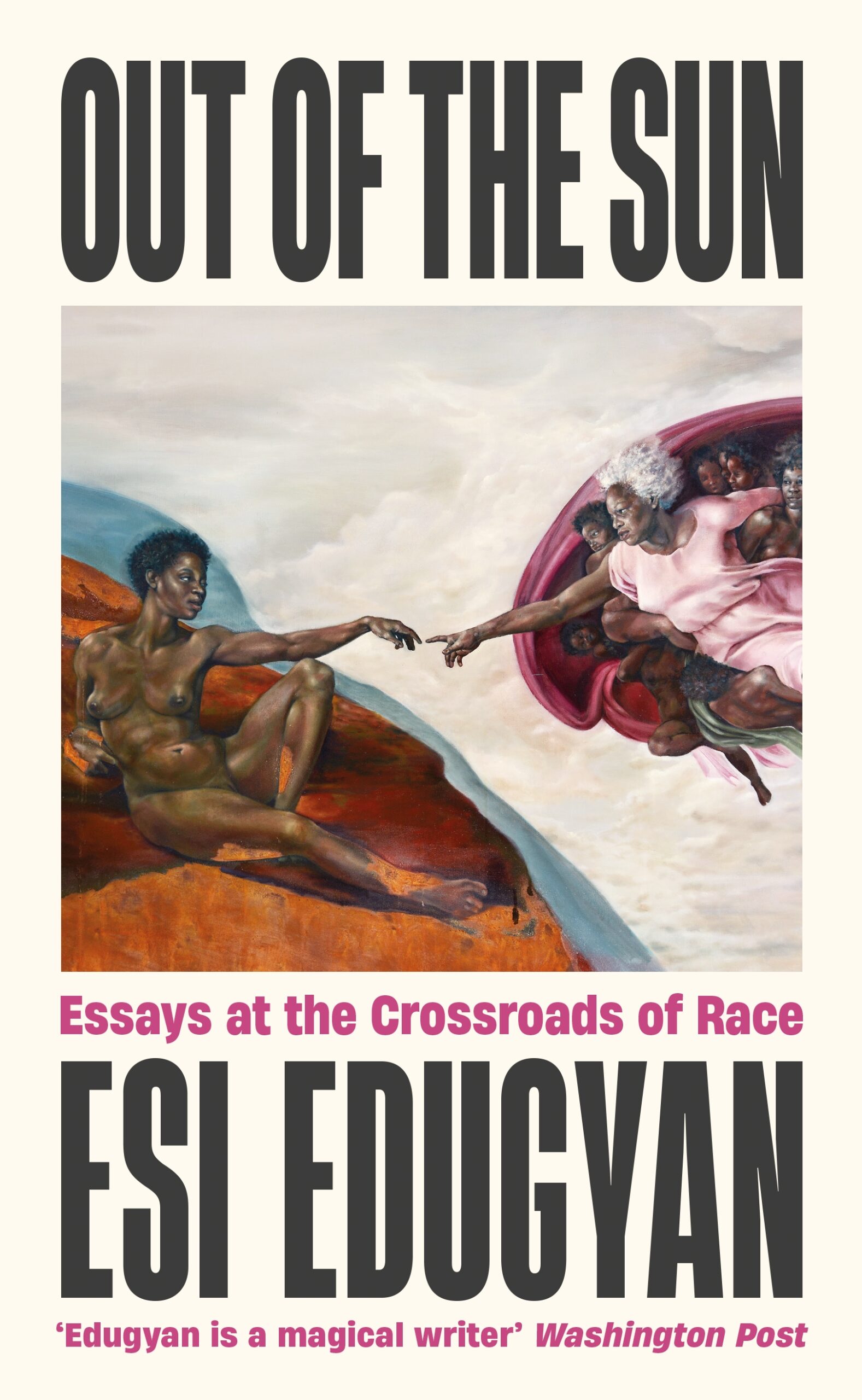
Out of the Sun by Esi Edugyan
The Human Origins of Beatrice Porter by Soraya Palmer
Posted on

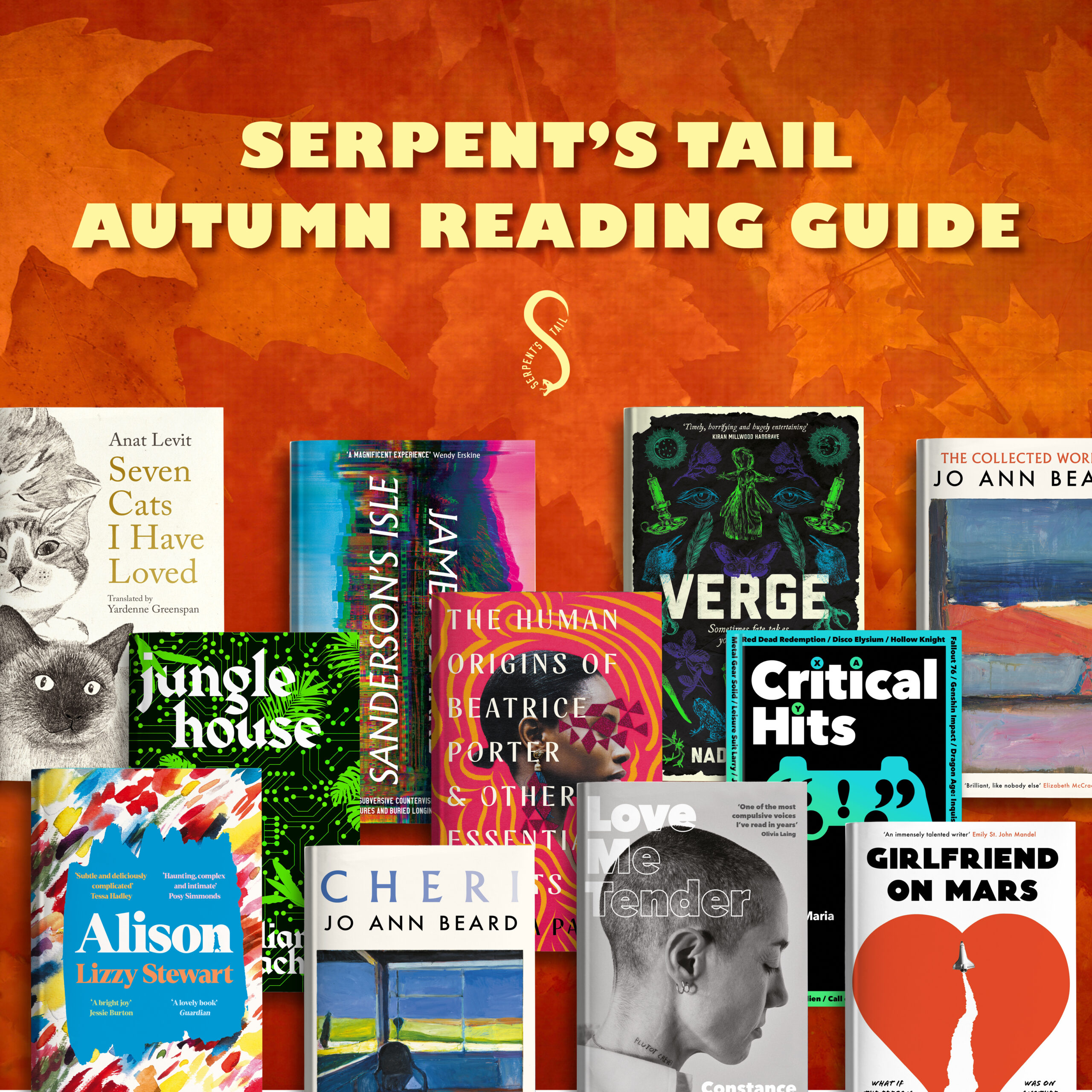
Serpent’s Tail Autumn Reading Guide 2023

SERPENT’S TAIL AUTUMN READING GUIDE

Sweater weather is here…

Which means it’s time to start squirreling away books in preparation for cosy nights curled up reading with a nice cuppa. Lucky for you, we have prepared a wonderful selection of titles to treat yourself with, from stirring novellas to genre-bending fiction!

Which stories will you be falling into this autumn? Let us know by tweeting us @SerpentsTail.


SWEATER WEATHER

Reads that will make you want to stay inside


Critical Hits eds. by Carmen Maria Machado and J. Robert Lennon

Whether you’re an avid gamer, a Twitch subscriber, or just an incidental Subway Surfer, video games have changed the way you interact with the world and have been part of our lives for over fifty years. Critical Hits is a celebration of play and playfulness through sharp, impassioned and inquisitive essays.

Alison by Lizzy Stewart

Alison is newly married, barely twenty and struggling to find her place in the world. A chance encounter with an older artist upturns her life and she forsakes her roots for the thrumming art scene of London in the late seventies.

As the thrill of bohemian romance leads inevitably to disappointment, Alison begins to find her own path – through art, friendship and love.

The Collected Works by Jo Ann Beard

‘The stories are essays, the essays are stories. Even when they are not literally true, they contain the kind of truth that great fiction thrives on’ The Times

‘Literature’s best kept secret’ Independent

Jo Ann Beard, one of the most influential writers in America, illuminates the complexities of the human condition in this career-spanning collection of her best work.


TURNING OVER A NEW LEAF

Genre-bending and escapist fiction for daydreaming


Sanderson’s Isle by James Clarke

1969. Thomas Speake comes to London searching for his father and a place to belong, but instead joins the search for a stolen child through swinging London and the Lake District. There he finds Sanderson instead, a larger-than-life TV presenter who hosts ‘midweek madness’ parties where the punch is spiked with acid…

Girlfriend on Mars by Deborah Willis

A satirically funny, poignant and dark novel for fans of cool contemporary fiction. Follow weed-growing couple Kevin and Amber as Amber is selected for a reality TV to win a one-way ticket to Mars.

Jungle House by Julianne Pachico

‘Mother is not like other mothers. She gets angry when Lena draws her with a face. When Lena challenges her to portray herself, she paints a tiny yellow dot surrounded by swirling black. She is a bastion of light, she says, against an army of darkness.’

A suspenseful literary novel with a premise perfect for fans of Never Let Me Go by Kazuo Ishiguro that asks: will humans and AIs form families, and what are the implications of this?


TRICK-OR-TREAT

Reads with a touch of magic for spooky season


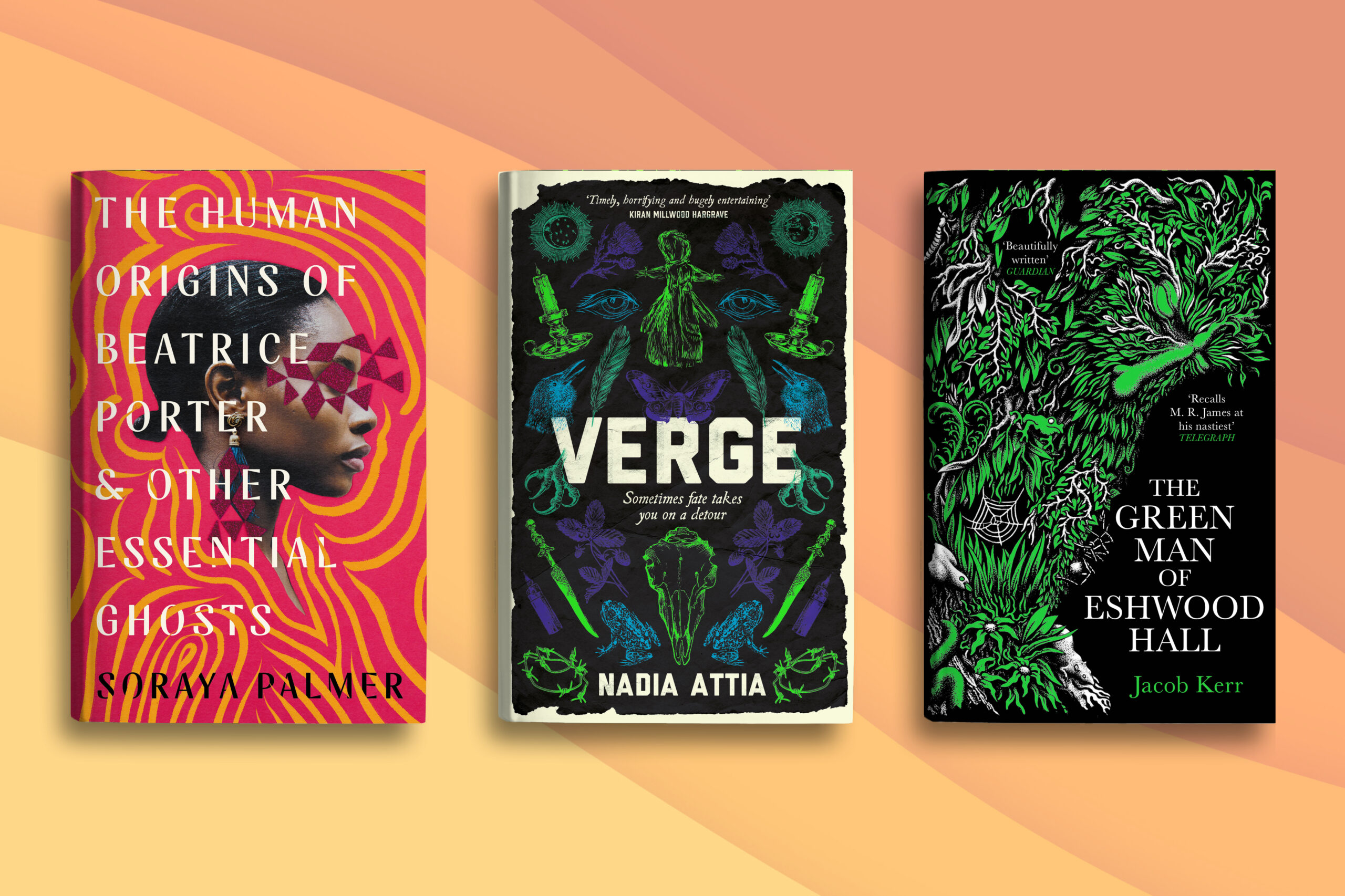
The Human Origins of Beatrice Porter by Soraya Palmer

Life at home has become unbearable for Zora and Sasha. But they can’t hide forever. The Anansi stories stories that captivated them as children begin to creep into the present, revealing truths about the Porter family’s past they must all face up to…

This is an extraordinary debut novel that asks – what happens when our stories are erased? Do we disappear? Or do we come back haunting?

Verge by Nadia Attia

Two strangers bound by fate.
A deadly curse.
An epic road trip across a (dis)United Kingdom.

Exploring belief, loyalty and legacies beyond our control, this thrilling debut is as magnetic and unpredictable as the curse Rowena is racing to escape.

The Green Man of Eshwood Hall by Jacob Kerr

A family story rooted in folk tale, The Green Man of Eshwood Hall shows us the power that the wild still holds on our imagination and the shocking nightmares to which it can give rise.


SHORTER DAYS, SHORTER BOOKS

Short but sweet reads

Seven Cats I Have Loved by Anat Levit

Anat never considered herself a cat lover, but when her life was thrown into upheaval, she found herself adopting one cat at the suggestion of her daughters, and then six more. She delves into the feline mind with gentleness and compassion, while also revealing a moving human story.

Love Me Tender by Constance Debré

Destined to become a classic of its kind’ Maggie Nelson

‘One of the most compulsive voices I’ve read in years’ Olivia Laing, Observer

A starkly beautiful account of impossible sacrifices asked from mothers, Love Me Tender is a bold novel of defiance, freedom and self-knowledge.

Cheri by Jo Ann Beard

A masterpiece of fiction and memory, Cheri is a heart-breaking but glorious celebration of all the moments of beauty and pain that make an individual life, right up until its very last moments.

Posted on

Announcing Cheri and The Collected Works of Jo Ann Beard

On 17th August this year, Serpent’s Tail are very proud to be publishing Cheri and The Collected Works of Jo Ann Beard by the renowned American writer of the same name. Beard is an award-winning essayist who is widely acknowledged as an influential figure in the US. As recently as last year, she received the American Academy of Arts & Letters 2022 Award in Literature.

Cheri navigates the final weeks of the character’s battle with cancer and has been described as ‘Profoundly sad, poignant, and filled with the flabbergasting abundance of life … an extraordinary achievement’ by cult US author Mary Gaitskill. Beard has created a heart-wrenching novella that leaves readers with an appreciation for the brilliance of life.

This publication is paired with The Collected Works of Jo Ann Beard, a combination of Beard’s first collection The Boys of My Youth and the unforgettable pieces compiled within Festival Days, exploring the complexities of the human condition in one career-spanning collection. The compassion and wisdom with which she writes ingrains the experiences of these characters in your minds and hearts. Beard’s masterpieces of empathy are perfect for readers of Andrew O’Hagan or Claire Keegan.

With high profile fans from Francesca Segal to Geoff Dyer, Cheri and The Collected Works of Jo Ann Beard are this summer’s most unmissable literary reads.


Cheri:

Cheri has been living with cancer for many years. Now, she is dying. As she navigates the final weeks of her life, and takes charge of the manner of her death, she is flooded with childhood memories, and returns to the present with a renewed appreciation for the brilliance of life around her: the autumn has never been so beautiful, her daughters never as radiant. Brave, incredibly strong and deeply loved, Cheri makes one last nerve-wracking journey across the country with her girls and her friends, knowing relief waits welcoming as a frozen lake on the other side.

A masterpiece of fiction and memory, Cheri is a heart-breaking but glorious celebration of all the moments of beauty and pain that make an individual life, right up until its very last moments.


The Collected Works of Jo Ann Beard:

Weaving a complex tapestry drawn from interviews, anecdotes, moments from Beard’s own life, and sheer imagination, these extraordinary pieces embody the hospitality of spectacular writing: they are spaces you fall into and are reluctant to leave. From the intimate drama of everyday life – school crushes, dog clinics, divorce – to the terror and excitement of a fox lurking by a campsite or a murderer in your home, Beard flawlessly distils what it means to live deeply as we hurtle through wonder and grief, love and heartbreak.

Bringing together pieces from Beard’s first collection, The Boys of My Youth, and Festival Days, which was published two decades later, The Collected Works showcases Jo Ann Beard’s impressive breadth, quiet brilliance, and timeless prose.