Posted on

The Serpent’s Tail Book Club – SEPTEMBER 2022


SEPTEMBER 2022: THE DISASTER TOURIST

This month, we’ve chosen Yun Ko-eun’s The Disaster Tourist for our Serpent’s Tail Book Club pick. Winner of the 2021 Crime Writers’ Association Crime in Translation Dagger, this is a satirical eco-thriller that deftly navigates the #MeToo movement and our climate crisis, and is perfect for fans of Sayaka Murata’s Convenience Store Woman and Han Kang’s The Vegetarian. 


Find more about the Serpent’s Tail Book Club and FAQs here.

ABOUT THE BOOK

*** WINNER OF THE 2021 CWA CRIME IN TRANSLATION DAGGER ***
**LONGLISTED FOR THE DUBLIN LITERARY AWARD 2022**
*LONGLISTED FOR THE 2021 COMEDY WOMEN IN PRINT PRIZE*

Yona has been stuck behind a desk for years working as a programming coordinator for Jungle, a travel company specialising in package holidays to destinations ravaged by disaster. When a senior colleague touches her inappropriately she tries to complain, and in an attempt to bury her allegations, the company make her an attractive proposition: a free ticket for one of their most sought-after trips, to the desert island of Mui.

She accepts the offer and travels to the remote island, where the major attraction is a supposedly-dramatic sinkhole. When the customers who’ve paid a premium for the trip begin to get frustrated, Yona realises that the company has dangerous plans to fabricate an environmental catastrophe to make the trip more interesting, but when she tries to raise the alarm, she discovers she has put her own life in danger.

ABOUT THE AUTHOR

Yun Ko-eun was born in Seoul in 1980. Her short story ‘Piercing’ won the Daesan Literary Award for College Students the year she graduated from university. She received the 2008 Hankyorek Literature Award for her novel The Zero G Syndrome and in 2015 her short story collection Aloha won the Kim Yong Ik Novel Prize.


READING GROUP QUESTIONS

  1. The original Korean title of this novel was Travellers of the Night. How much of the tone in The Disaster Tourist do you think might have changed during translation?
  2. Did the relationship between Covid, travel and tourism impact your reading of this novel?
  3.  An individual’s success is mostly perceived as a result of merit. How do encounters between rich and poor countries, through excursions such as disaster or volunteer tourism challenge this belief?
  4.  Discuss your own experiences with disaster tourism and volunteer tourism.
  5.  In Ecology without Culture, Professor Christine Marran discusses cultures defining themselves through biological elements, and introduces the concept of biotropes: invoking material elements of nature (such as Japan’s cherry blossoms) as symbols of hope or cultural support. Do you see examples of biotropes in The Disaster Tourist, and how are they used to defend Mui’s culture?
  6.  In a conversation with Yona, the resort manager says that ‘if disaster disappears from Mui, life disappears, too’. Discuss the exploitative qualities of disaster tourism, and the dangers they pose to a country’s development when such tourism is the main source of revenue.
  7.  Yona and her fellow tourists seem to believe that ‘it’s too scary to visit disaster destinations close to home’ because the distance allows them to see situations more objectively. How important do you think distance is to objectivity, and objectivity to progress?
  8.  Do you think performing natural disasters in a safe environment encourages or inhibits empathy?
  9.  Recent years have shown a rise in anti-capitalist Korean narratives that highlight growing wealth disparity and poverty. Did you see links between this novel and Bong Joon-Ho’s Parasite?
  10.  The tsunami at the end of the novel can be seen as divine intervention; nature’s response to Paul’s hubris around creating disaster on the island of Mui. Would you agree, or do you think this reading is the same human-centric narrative that Yun Ko-eun is satirising?
Posted on

An Exciting and Vivid Inner Life: read an extract

A story collection that perfectly captures life in the internet age

Whether working in food service or in high-end retail, lit by a laptop in a sex chat or by the camera of an acclaimed film director, or sharing a flat in the city or a holiday rental in Mallorca, the protagonists of the ten stories comprising Paul Dalla Rosa’s debut collection navigate the spaces between aspiration and delusion, ambition and aimlessness, the curated profile and the unreliable body.

By turns unsparing and tender, Dalla Rosa explores our lives in late-stage Capitalism, where globalisation and its false promises of connectivity leave us further alienated and disenfranchised. Like the legendary Lucia Berlin and his contemporary Ottessa Moshfegh, Dalla Rosa is a masterful observer – and hilarious eviscerator – of our ugly, beautiful attempts at finding meaning in an ugly, beautiful world.

An Exciting and Vivid Inner Life publishes on 2nd June. Find out more here.

Read an extract from the short story ‘Short Stack’ below.


Sam was nineteen and still had baby fat and maybe some real fat and couldn’t enter bars without pulling out his wallet
and repeating his birthdate and star sign. The Pancake Saloon was a suburban restaurant in a franchise chain that twenty-four hours a day, seven days a week, sold pancakes drenched in concentrated high-fructose corn syrup. The restaurant had a western theme, with saloon-style doors, tables with chipped laminate designed to look like dark polished wood, and fixtures imitating nineteenth-century gas lamps that saturated the dining floor in dim, syrupy light. It was staffed exclusively by under-twenty-five-year-olds, its kitchen manned by Nepali migrants on temporary work visas.


Sam worked nights, eleven-hour shifts in the kitchen, not the restaurant. He didn’t cook or make coffee or speak Nepali; he washed dishes, and at times was good at it: stacking glasses in the commercial-grade machine, blasting syrup off plates with a high-pressure nozzle, scrubbing the rubber mats that lined the floor. He was early to work, kept his uniform ironed and was overly enthusiastic in a way most people mistook as a sign of mild developmental problems.


At times, Sam fucked up. Sam fucked up especially on weekends, in the early hours of the morning, 1 a.m., 3 a.m., when the night bus ferrying drunk people from clubs and bars in the city back to their suburban homes would unload at the stop directly in front of the Pancake Saloon. All of a sudden the restaurant would be full, and the customers, often people Sam had gone to school with but who were now in college, were loud and aggressive. They’d empty packets of sugar and cartons of creamer onto tables, vomit in toilet stalls, even perform partially clothed sex acts in open booths. The ambient pressure, almost barometric, moved into the kitchen, and Sam would begin to work in a kind of slow motion. Sam put clean dishes in the dishwasher and moved behind people without saying ‘behind’, causing people to trip, vats of thick pancake batter to spill and the cooks to loudly repeat the Nepali word for idiot.


Then, after four, there would be calm, and by five, when the night manager left to do the night’s cash drop, the floor staff would sit on milk crates behind the restaurant, next to the skip, and smoke weed, and though no one offered Sam weed, Sam would sit with them or stand in their vicinity. Servers would say things like, ‘I think the Pancake Saloon should blow up,’ or, ‘There should be a flood and the flood should wash away the Pancake Saloon.’ And as people got higher they would become more inventive. ‘There should be a flood and the flood washes away the Pancake Saloon but there’s a gas explosion and as the Pancake Saloon washes away it’s also on fire.’ And Sam would say, ‘The Pancake Saloon sucks.’ Not because he thought it sucked but because he wanted to contribute. He liked the Pancake Saloon. He liked it a lot.


If someone asked Sam when he was happiest—no one did, but he held the answer close to him in case the question ever came up in some online survey or chain Facebook post or interview for an unspecified higher position—he would say he was happiest eating a stack of pancakes drenched in high-fructose corn syrup. He was happiest eating them at the Pancake Saloon with his friends who were not his friends but his co-workers.

Posted on

You Will Write Again: A Letter from Jami Attenberg

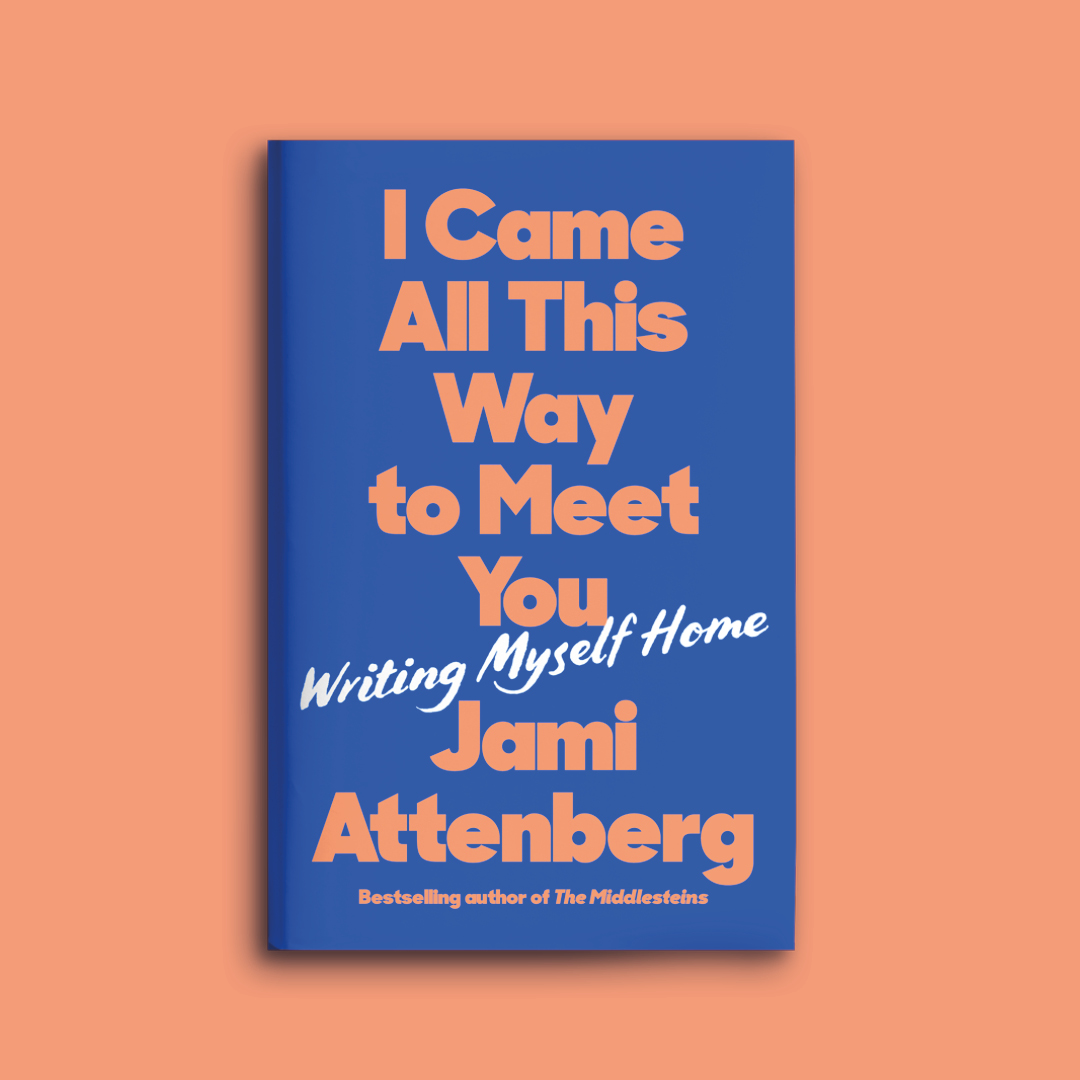
Ahead of the publication of Jami Attenberg’s fierce and funny memoir I Came All This Way To Meet You we’re sharing a piece from her CRAFT TALK newsletter – an inspiring and affectionate letter to fellow writers.

Exploring themes of friendship, independence, class and drive, I Came All This Way to Meet You focuses on how Jami embraced her creativity, and the way in which it saved her. It publishes on 13th January. Order your copy here.

CRAFT TALK is Jami’s weekly newsletter about writing, creativity and productivity. You can subscribe here.


Hi friends.

I have been working on this letter for a few days and was having a lot of trouble getting it done and I could not figure out why, and then last night I was messing around online and your honor, I’d like to present exhibit A in the defense:

So is today the day where instead of banging my head up against the wall, I choose to write in my journal, do a little soft writing, where I’m gentle to my brain and amble along the page like a deer in the woods? Is today the day I just read the two books I have been dying to read and which, at last, are finally sitting in my possession? Is today the day I forgive myself for not being able to be a high-functioning individual in a low-functioning society? Can I declare today, December 20, 2021, National Give Yourself A Fucking Break Day? Why yes, I can.

Give yourself a fucking break today, if you need it. If you’re having trouble right now, I promise you, you will write again. What are you worried about? That you’ll end up living high up in a broken-down castle somewhere like a character in some Gothic novel, and all the townspeople whisper about how you were once a writer but Then Something Happened and you never wrote again?

Well listen: Nothing has happened, not in that kind of way, and you wish you lived in a castle. But, of course, everything has happened and it is hard right now but we will get through all this and then there will be more things to get through because that is how life works. The words will always be there for you, though, I promise, even if your brain, which transmits those words, needs a little time to pause or heal or relax or take a goddamn nap because this world, right now, at least for today, wins a little bit. But just the battle and not the war, baby. I promise.

You will write again.

Posted on

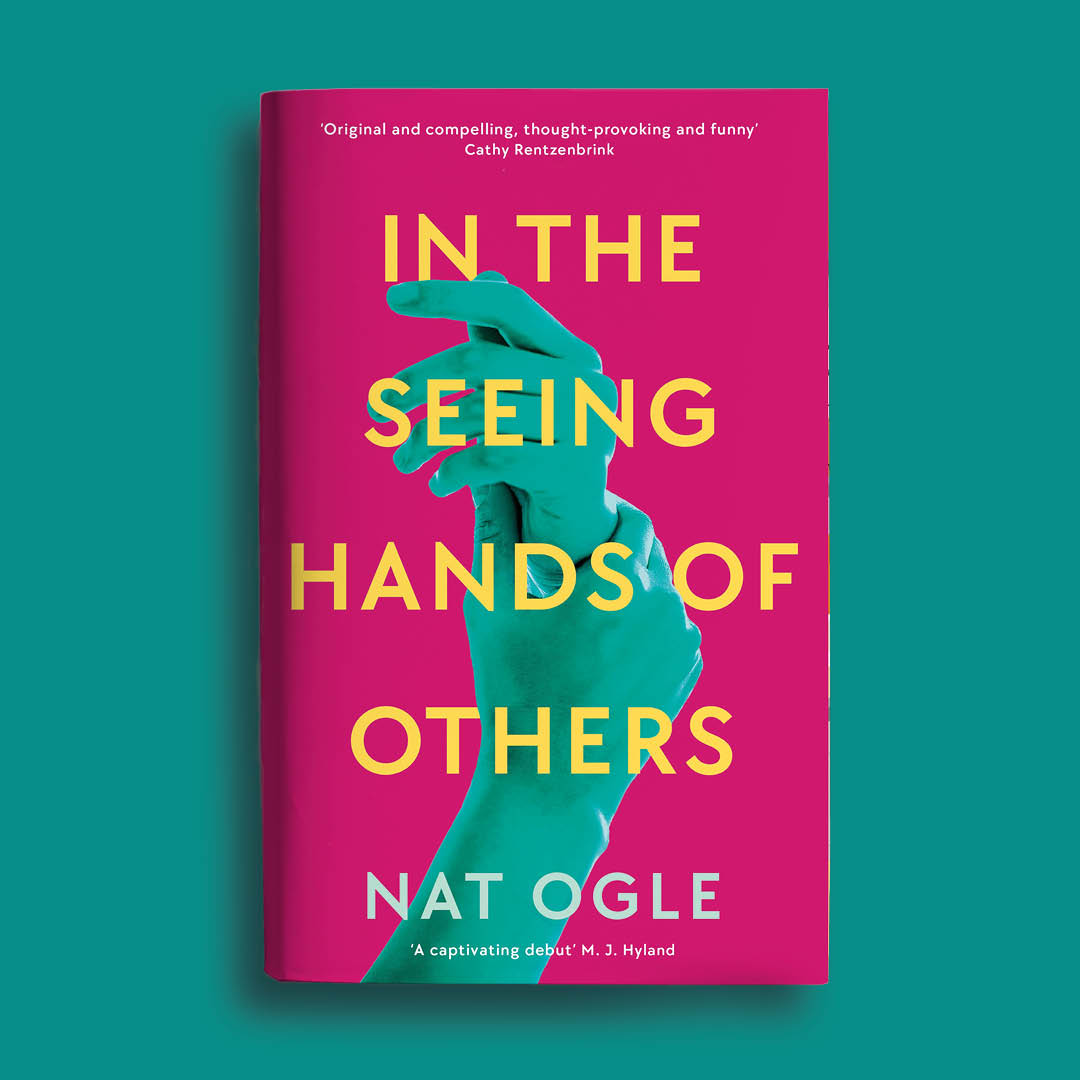
In the Seeing Hands of Others: read an extract

‘Life can be devastating and devastated at any point, but this is exactly why it can be beautiful.’

In the Seeing Hands of Others by Nat Ogle is a ground-breaking debut novel telling the story of a contentious trial, pieced together in documents from the accused and accuser.

Follow the blog of a nurse on a dialysis ward attempting to live in the aftermath of bringing a rape trial to court in which the defendant was exonerated. Read the transcripts of the police interviews with her, and the accused, the emails and texts between them submitted for trial; his journal, his conversations on 4chan, his drama scripts, him, him, him. How will the nurse, Corina, ever get him out of her head?

In the Seeing Hands of Others is a highly original debut novel. Provocative, blackly funny and moving, it announces a new voice unlike any other.

Publishing 13th January. Find out more here.

Read an extract below:


COPIED POSTS FROM CORINA SLATE’S
BLOG, ‘WITNESS’
SEPTEMBER 2016 (2)

On Borough High Street, buses push bright, cold wind. The sun is hot, just far away. A rough sleeper holds himself in a ski jacket and sleeping bag by the cash machine outside the Sainsbury’s. I want a Dairy Milk, 20 Superkings. It’s so far from here to my bed. I want someone kind, quiet there waiting for me. A female Michael Palin. Clare Balding?

‘I don’t have any change on me,’ I say.

I don’t expect him to believe me. He nods. I think to ask him if he wants me to buy him something to eat, but nearly bump into a man in a suit in the doorway.

‘Oops. Sorry, petal,’ says the man.

And I find that I can’t move. I feel the sun inside my clothes. The world around me deflates, flattens. Traffic. Gliding past. Everything gliding past on stretchers. Someone is stealing my breath, chasing my pulse. The buildings are toppling over like playing cards. Onto me. The roads are falling into the earth. I’m about to die. I’m about to puke. I’m about to shit myself. Black stars eat into everything. I count my breaths. That’s too many breaths. Speeding up? Don’t know what I can do. There’s nothing I can do. Automatic doors keep trying to close. They slide a little way together, detect me stood there, eyes closed, sticky with sweat, then, embarrassed, they open again. There’s nothing that I can do.

There was no turning back when my birthday drinks collided with your mate’s stag do in Soho.

‘Weird thing is that I kept thinking how great it would be to bump into you this weekend,’ you said, ‘and in spite of how unlikely, I did sort of expect it was inevitable.’ I said I felt the same, though I’m not sure that I did.

You bought us a round. ‘Where is he, then?’ you said.

‘He couldn’t make it,’ I said. ‘Rehearsals, then after-rehearsal drinks.’

‘Sounds about right. Well, let’s forget about him.’

I was glad for the encouragement, and I don’t think that I did think about him. Not when you were making us laugh with tales of kitchen mishaps. Not when we were dancing together. Not when we all ended up at your hotel bar. Not when you waited with me for my Uber. Not when you said, ‘It’s weird, but I feel sort of safe from the world when I’m around you.’ Not even when I kissed you. Only after that, when we were on our way up to your room, but not caring.

In the morning, when you woke up, you made a sound like you were disappointed in something, which scared me, but I quickly learnt it’s just a sound you made to displace silence, which you found uncomfortable. I remember lying next to you, holding your hands to my face. Your thumbs, thin at the knuckle, wide around the nail, like a spade, always tucked in behind your fingers. I would pull them out, fan your hands, slip my fingers between yours, my thumbs around yours.

Posted on

Passing: New Netflix Tie-in Edition

To coincide with the new Netflix adaptation of Passing featuring Tessa Thompson and Ruth Negga, we are very excited to be publishing the official tie-in edition of Nella Larsen’s Harlem Renaissance classic novel.

Childhood friends Clare and Irene are both light-skinned enough to pass as white, but only one of them has chosen to cross the colour line and live with the secret hanging over her. Clare believes she had successfully cut herself off from any connection to her past. Married to a racist white man who is oblivious to her African-American heritage, it is vital to her that the truth remains hidden. Irene is living as a middle-class Black woman with her husband and children in Harlem, taking on an important role in her community and embracing her origins.

Both women are forced to re-examine their relationships with each other, with their husbands and with the truth, confronting their most closely guarded fears. Nella Larsen’s powerful, tragic and acutely observant writing established her as a lodestar of America’s Harlem Renaissance. Almost a century later, Passing and its nuanced exploration of the many fraught ways in which we seek to survive remains as timely as ever.

Watch the trailer here:

Our new edition of Passing by Nella Larsen publishes 18th November.

Posted on

Black History Month: Recommended Reading

For Black History Month, we asked some of our Serpent’s Tail authors – present and future – as well as members of our publishing team to write a little something about their favourite book by a black author. Take a read of their excitingly varied recommendations below!


Ghulami ain Azadi Ja Ibratnak Nazara (Eye-Opening Accounts of Slavery and Freedom) by Mussafir
Chosen by Alice Albinia, author of Cwen

Pakistan has a small black community, the Sheedis, descendants of slaves brought from east Africa. In 1952 a Sheedi writer who went by the pen-name of ‘Mussafir’ (traveller) wrote a polemical book in Sindhi, a language of southern Pakistan. Ghulami ain Azadi Ja Ibratnak Nazara (Eye-Opening Accounts of Slavery and Freedom) describes both the inter-racial aspect of early Islam, the slavery era from eye-witness accounts (Mussafir’s own father was sold into slavery in Zanzibar), and how this mistreatment has lasted into modern Pakistan (seventy years on, not much has changed). This important book has not yet been published in English.


Quicksand & Passing by Nella Larsen
Chosen by Flora Willis, Head of Marketing 

Probably my favourite book in the Serpent’s Tail Classics series is Nella Larsen’s Quicksand & Passing (two novellas in one book). A key figure of the Harlem Renaissance, Larsen writes powerfully about being mixed race at this time. Her women are both fierce and vulnerable, navigating an often hostile world. It’s soon going to be a Netflix film with Ruth Negga and Tessa Thompson – look out for our new edition.


Zong! by M. NourbeSe Philip
Chosen by Nat Ogle, author of
In the Seeing Hands of Others (publishing January 2022)

Zong! is a majestic and mournful memorial to the 150 enslaved Africans who were thrown overboard the slave ship Zong in the belief that its owners could collect insurance monies on destroyed “cargo”. It’s a reparative invocation of the massacred, composed entirely from the texts of the legal case between the owners and their insurers. Voices irreconcilable with the coloniser’s syntax emerge from vast breaths of remembrance, drifting, fragmenting and assembling over the “water / of / w/ant” for justice. In its disentangling and abstracting the legal document, where human experience intersects with cold-blooded taxonomy, where lives are rendered into contestable property, Zong! reclaims the human from inhumanity: my high-water mark for documentary literature formed through a poetics of care.


The Sum of Us by Heather McGhee
Chosen by Georgia Poplett, Editorial Assistant 

What was the fastest way to drain a swimming pool in 1950s America? The answer, as Heather McGhee says in The Sum of Us: integrate it. This grim reality forms the central image of the system undercutting the story of American racism in McGhee’s trailblazing book. A former Demos president and expert in economic and social policy, she investigates why white voters support racist legislation – even when they disadvantage themselves in the process. McGhee writes with clarity and compassion, making this an exceptional read which should be on everyone’s bookshelf.


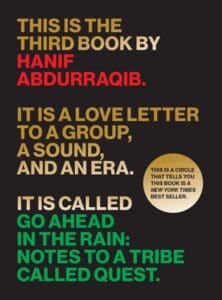
Go Ahead in the Rain: Notes to A Tribe Called Quest by Hanif Abdurraqib
Chosen by Gurnaik Johal, author of We Move (publishing April 2022)

Charting the career of A Tribe Called Quest from the 90s to 2016, Go Ahead In The Rain is an intimate exploration of one of America’s most influential bands. Abdurraqib situates Tribe in a long tradition of American musicians but grounds the book in a fan’s perspective, making it as much a personal coming of age story as a music biography. Written in rhythmic prose and made up of essays, memoir and letters, the book is as compellingly patched together and richly textured as a Tribe sample, and I’d recommend it to anyone who enjoys reading about music.


Dirty South by Alex Wheatle
Chosen by Niamh Murray, Campaigns Director

I loved Alex Wheatle’s Dirty South when we published it for Serpent’s Tail a few years back – set in Brixton, it follows a teenager who drifts into street dealing and evokes the lives of his friends and family brilliantly. We’re delighted to have another book from Alex on the list in 2022, part of the Quick Reads series for adults working on improving their literacy, Witness is published next spring.


White Teeth by Zadie Smith
Chosen by Rosie Parnham, Marketing Executive

Zadie Smith’s debut White Teeth is without a doubt a modern classic. Smith deftly captures our multicultural capital, following three generations of Londoners and their interlinked stories. It covers serious topics, whilst still being laugh-out-loud funny – don’t get me started on one of my favourite scenes in any book: a brilliant rant about Harvest Festival from central character Samad. It is a novel to which I return and recommend time and time again.